May 26, 2004

Hugo Chavez in translation

From the Washington Post...


Ready for a Recall Vote


By Hugo Chavez

Wednesday, May 26, 2004; Page A27


CARACAS, Venezuela -- For the first 24 hours of the coup d'etat that briefly overthrew my government on April 11, 2002, I expected to be executed at any moment.


The coup leaders told Venezuela and the world that I hadn't been overthrown but rather had resigned. I expected that my captors would soon shoot me in the head and call it a suicide.


Translation*: For the first 24 hours after the uprising that briefly overthrew my government on April 11, 2002, my paranoia reached unheard of heights.


General Lucas Rincon, my most trusted officer in the armed forces and my current Interior Minister, told Venezuela and the world that I hadn't been overthrown but rather had resigned. I expected that my captors would soon shoot me in the head and call it a suicide.


Instead, something extraordinary happened. The truth about the coup got out, and millions of Venezuelans took to the streets. Their protests emboldened the pro-democracy forces in the military to put down the brief dictatorship, led by Venezuelan business leader Pedro Carmona.


Instead, something extraordinary happened. The coup plotters blundered, refused my offer to fly to Cuba, and soon tens of thousands of Venezuelans took to the streets, with some rioting. Their protest emboldened the pro-Chavez forces in the military who, together with the officers who first rebelled against me, ended the brief dictatorship, led by Venezuelan business leader Pedro Carmona.


The truth saved my life, and with it Venezuela's democracy. This near-death experience changed me. I wish I could say it changed my country.


Having swept under the rug all of the uncomfortable bits from that story, I find it comforting to use it to bolster my position. But it's true, the near-death experience changed me. I decided politics was a fight to the death, and that only the elimination of my opponents could ensure my stay in power.


The political divisions in Venezuela didn't start with my election in 1998. My country has been socially and economically divided throughout its history. Venezuela is one of the largest oil exporting countries in the world -- the fourth-largest supplier to the United States -- and yet the majority of Venezuelans remain mired in poverty.


The political divisions in Venezuela didn't start with my election in 1998. My country has been socially and economically divided throughout its history. Venezuela is one of the largest oil exporing countries in the world - the fourth largest supplier to the United States -- and yet while poverty shrank dramatically from 1930 to 1979, since then living standards have fallen by half, with the period of fastest impoverishment coinciding with my administration.


What has enraged my opponents, most of whom are from the upper classes, is not Venezuela's persistent misery and inequality but rather my efforts to dedicate a portion of our oil wealth to improving the lives of the poor. In the past six years we have doubled spending on health care and tripled the education budget. Infant mortality has fallen; life expectancy and literacy have increased.


I rationalize my authoritarian excess is by telling myself that what has enraged my opponents, (about a third of whom come from the middle and upper class, but whom I choose to mischaracterize in public as uniformly rich) is not Venezuela's persistent misery and inequality, but rather my efforts to dedicate a portion of our oil wealth to improving their lives. In the past four years we have vastly expanded the scale of existent of government services. Infant mortality has continued to fall; life expectancy has continued to increase.


Having failed to force me from office through the 2002 coup, my opponents shut down the government oil company last year. Now they are trying to collect enough signatures to force a recall referendum on my presidency. Venezuela's constitution -- redrafted and approved by a majority of voters in 1999 -- is the only constitution in the Western Hemisphere that allows for a president to be recalled.


Having failed to force me from office through the 2002 uprising, my opponents answered a calculated series of escalations on my part to shut down the government oil company last year. Now, with the leaders of that strike largely sidelined from the opposition leadership, a new group of more moderate leaders is trying to collect enough signatures to force a recall referendum on my presidency. Venezuela's constitution - redrafted and approved by a majority of voters in 1999 - is the only constitution in the Western Hemisphere that allows for a president to be recalled.


Venezuela's National Electoral Council -- a body as independent as the Federal Election Commission in the United States -- found that more than 375,000 recall petition signatures were faked and that an additional 800,000 had similar handwriting. Having been elected president twice by large majorities in less than six years, I find it more than a little ironic to be accused of behaving undemocratically by many of the same people who were involved in the illegal overthrow of my government.


Venezuela's National Electoral Council - a body appointed by my cronies in thhe Constitutional Hall of the Supreme Tribunal, which everybody and his cat in Venezuela knows I control but which, for more than obvious reasons, need to assert is independent -- found that more than 375,000 of the recall petition had technical problems, the nature of which they failed to specify, and that an additional 1.2 million had similar handwriting in the personal data, though not necessarily in the signatures. This, predictably, feeds into my persecution complex: I seem certain I can make political points by pointing out that the very people who rebelled in 2002 when I gave the army orders to clear the streets by force continue to accuse me of behaving undemocratically!


The National Electoral Council has invited representatives of the Organization of American States and the Carter Center to observe a signature verification process that will be conducted during the last four days of this month. That process will determine whether the opposition has gathered enough valid signatures to trigger a recall election, which would be held this August. To be frank, I hope that my opponents have gathered enough signatures to trigger a referendum, because I relish the opportunity to once again win the people's mandate.


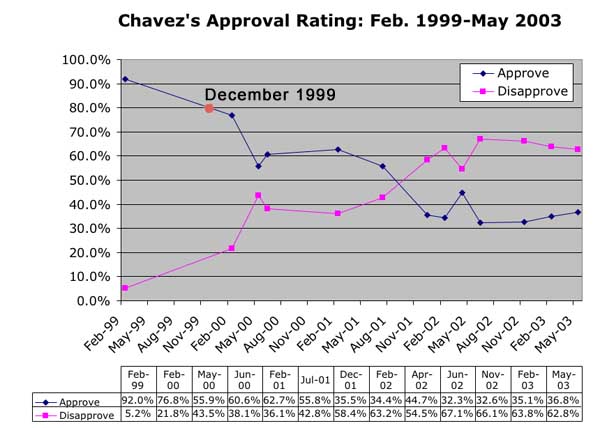
The National Electoral Council has invited representatives of the Organization of American States and the Carter Center to observe a signature verification process that will be conducted during the last four days of this month. That process will determine whether the opposition has gathered enough valid signatures to trigger a recall election, which would be held this August. To be frank, I'm half petrified by the prospect of having to face the voters, wallowing as I am in the mid-30s in the polls. This is why my cronies have conducted a series of raids, arrests, and acts of judicial intimidation against the organizers of the signature petition drive.


But it is not up to me. To underscore my commitment to the rule of law, my supporters and I have publicly and repeatedly pledged to abide by the results of that transparent process, whatever they may be. My political opponents have not made a similar commitment; some have even said they will accept only a ruling in favor of a recall vote.


But it is not up to me. To continue the sick charade of feigning a commitment to the rule of law, my supporters and I have publicly and repeatedly pledged to abide by the results of the process run by my other supporters, whatever they may be. My political opponents have not made similar commitment, deferring instead to the judgement of international observers who have repeatedly stated that the CNE's procedures and legal standards run counter to basic standards of electoral fairness.


The Bush administration was alone in the world when it endorsed the overthrow of my government in 2002. It is my hope that this time the Bush administration will respect our republican democracy. We are counting on the international community -- and all Venezuelans -- to make a clear and firm commitment to respect and support the outcome of the signature verification process, no matter the result.


The Bush administration was one of the few in the world when it welcomed the announcement of my resignation as delivered by my most trusted lieutenant. It is my hope that the Bush administration will be a little more circumspect this time around and continue to voice agreement with the increasingly untenable notion that my government constitutes a republican democracy. I'm counting on the international community - and all Venezuelans - to make a clear and firm commitment to respect and support the outcome of the signature verification process as announced by my cronies at the CNE, whatever international observers might opine.


The writer is president of Venezuela.


The translator doesn't buy a word of it.


*to honestese

May 25, 2004

The Guardian 1 - Patton Boggs 0

The government can spend as much as it wants on lobbying fees, but as the autocratic fangs come out more and more clearly, the foreign press will be less and less manageable for them. Even that paladin of the English metropolitan left, The Guardian, refuses to parrot the heroic-Chavez line. A capable Sibylla Brodzinsky does one of the best jobs in recent memory in trying to tell a balanced story.

On Chávez's Economic Boom

from VenEconomy


The Central Bank has released its estimates of the economy's performance during first quarter 2004. As expected, the numbers are spectacular with the economy showing growth of 29.9% compared to the first quarter 2003 (oil, up 72.5%; non-oil activities, up 18.9%.)


But the numbers point to little more than a statistical anomaly. The fact is that the economy was severely depressed during last year's first quarter, due to the direct and indirect impacts of the national work stoppage (paro cívico nacional) - an exogenous shock that President Chavez has admitted he consciously sought to provoke. Last year, the economy shrank an incredible 27.9% in the first quarter (oil, down 47.0%; non-oil, down 19.2%.) Thus, it should come as no surprise that the economy was statistically "up" in this year's first quarter .


The first quarter of 2002 is a better basis for comparisons. The economy was running "normally" at that time. Yet, in the first quarter 2004 GDP was 6.3% below its Jan.-Mar. 2002 level (oil, down 8.5%; non-oil, 4.0%). The sectors doing best, as compared with two years ago, are Communications (up 10.4%), Government Services (up 9.5%) and Electricity & Water (up 6.3%). The largest declines were registered in Construction (down 52.7%), Commerce (down 11.1%) and Mining (down 9.4%).

May 24, 2004

Two Stories: Darius Rejali and Julia

Story 1: In college, I was fortunate enough to learn from Darius Rejali, a brilliant Iranian-American political scientist specializing in Torture. He taught a class called Comparative Revolutions, which I took and, if I remember, got an A for. Darius is a wonderful flamboyant character with a razor intelligence. One memory stands out from that class, though:


Darius brought in an English translation of the Chinese People's Republic constitution. He started reading its procedural clauses, and, remarkably, it sounded not unlike a Western constitution: there was a legislative branch, an executive, courts, civilian control of the state, social rights, the works.


Next, as an assignment, he asked us to use the then new-fangled thing called the "internet" to look up constitutions of other authoritarian states. Somebody did North Korea, someone else did Cuba, then Vietnam, Egypt, Burma etc. And, surprise surprise, every dictatorship out there we could find had a sterling democratic-seeming constititon. What it didn't have, Darius argued, was the cultural or social institutions to sustain real democracy, or the political will to build them.


Something to keep in mind as you consider the implosion of Venezuelan Institutions


Story 2:
There's something horribly stereotypical about telling stories about caraqueños' house staff to make political points, but this once I will make an exception. One of my sisters, a Sumate volunteers, tells me the story of the psychodrama in her kitchen on the evening of February 27th, the start of the week of anti-CNE rioting in Eastern Caracas.


My sister had hired a cook, Julia, to feed her sprawling family. Julia is a chavista, my sister a Colomina listener, but also enough of a comeflor to refuse to let politics interfere in their relationship. So, they agreed simply not to talk about politics. My sister watched Globovision and Julia watched VTV and they didn't communicate about it.


This uneasy situation changed on the evening of February 27th, when the news showed that CNE had called into question 876,000 signatures from the recall petition drive. Julia, who had barely a few years' formal education, heard the TV presenter say that many of the questioned signatures were "planillas planas", i.e. forms filled out on behalf of the signer, which the signer then signed.


The TV presenter went on to say that many such signatures were gathered at hospitals, from very old or sick people who could not write easily, or from people with limited literacy, who might make mistakes filling the form.


At this she broke down crying and told my sister that that was it, she couldn't support the government anymore. Julia, who can barely write herself, was deeply offended that the government was maneouvering to stop people like her from registering their views officially. "Wasn't this what Chavez promised?"


My sister, not wanting to be overbearing at a time like this, suggested simply that she take a piece of paper and a pen and try to write down how she was feeling just then, and why she had come to change her mind like that.


In heartbreakingly misshapen handwriting, with no punctuation and no spaces between words, Julia wrote of her bitterness at the desperate and deteriorating economics of being a barrio dweller, and at how impossibly competitive the job market for people like her was. "The situation is really not right in the barrios now," she wrote.


My sister tells me she talked about the three chavistas in CNE as kinds of devils for all the mischief their decision was causing. Certainly, she had never before held a job where she had to pack sandwich lunches for the señora to eat at the barricades.


I don't think Julia will be joining my sister in any marches, but I do think the story is significant, and touching. Chavistas have eyes to see, and ears to listen...

May 22, 2004

Ripley's Believe it or Not...

This weekend, a number of Círculos Bolivarianos - pro-Chavez civilian neighborhood groups - are slated to organize a number of seminars to "train" volunteers to witness the opposition's reparos process against Chavez. The training courses will take place in Petare - a sprawling Caracas slum - today and tomorrow.


And where does the money come from? From the U.S. taxpayer, that's where! Word around the campfire is the American money is footing the bill...


It's true, folks...

May 21, 2004

Mandela sez...

from Long Walk to Freedom


Mandela is describing life in prison on Robben Island in the early 1970s, under a new Prison Comander, Colonel Piet Badenhorst, the most brutal prison administrator he met in 27 years on that island:


We felt the effects of Badenhorst's regime before we ever saw him. A number of the newer regulations regarding study and free time were immediately rescinded. It was obvious that he intended to roll back every privilege we had won over the years. Our old warders were transferred off the island and replaced by Badenhorst's handpicked guards. They were younger, coarser men who enforced every niggling regulation, whose job was to harass and demoralize us. Within days of Badenhorst's appointment, our cells were raided and searched, books and papers were confiscated, meals were suspended without warning and men were jostled on the way to the quary.


Badenhorst attempted to turn back the clock to the way the island was in the early 1960s. The answer to every question was always no. Prisoners who requested to see their lawyers were given solitary confinement instead. Complaints were completely ignored. Visits were cancelled without explanation. The food deteriorated. Censorship increased.


After several years of this, Badenhorst is reassigned to a different post...


A few days before Badenhorst's departure, I was called to the main office. General Steyn [Badenhorst's superior] was visiting the island and wanted to know if we had any complaints. Badenhorst was there as I went through a list of demands. When I had finished, Badenhorst spoke to me directly. He told me that he would be leaving the island, and added, "I just want to wish you people good luck." I do not know if I looked dumbfounded, but I was amazed. He spoke these words like a human being, and showed a side of himself we had never seen before. I thanked him for his good wishes, and wished him luck in his endeavours.


I thought about this moment for a long time afterwards. Badenhorst had perhaps been the most callous and barbaric commanding officer we had had on Robben Island. But that day in the office, he had revealed that there was another side to his nature, a side that had been obscured but that still existed. It was a useful reminder that all men, even the most seemingly cold-blooded, have a core of decency, and that if their hearts are touched, they are capable of changing. Ultimately, Badenhorst was not evil; his inhumanity had been foisted upon him by an inhuman system. He behaved like a brute because he was rewarded for brutish behavior.

May 20, 2004

Eva Golinger, Foreign Money, Double Standards and Jail

Isn't transparency a wondrous thing? First, thanks to the Freedom of Information Act, we learned that the US National Endowment for Democracy - a 100% US government funded institution - has financed a number of anti-Chavez institutions in Venezuela.


Now, thanks to the US Department of Justice's Foreign Agents Registration Act (FARA), we learn that the Venezuelan-American pro-Chavez activist who first uncovered that fact herself receives foreign money - in fact, money from the very government she spends so much time defending in public fora.


Eva Golinger would like to be known as the Brooklyn-based lawyer who blew the lid on the US conspiracy to topple Chavez. It was Ms. Golinger who first exposed NED's funding of Sumate through her website: VenezuelaFOIA.info.


First, the facts: On November 7th and November 9th, 2003, the Venezuela Information Office in Washington cut Ms. Golinger two checks to help pay for a conference on Media Reform in Madison, WI. Now, the Venezuelan taxpayer money that ended up in Ms. Golinger's bank account is hardly going to make her rich - less than $10,000 in all, from the FARA records Orlando Ochoa of El Universal and Quinto D%ED%E1, managed to dig up. Ms. Golinger - who is also a member of the Venezuelanalysis.com editorial board - had not disclosed her financial ties with VIO.


The sums are small - nothing that will go very far in New York these days. Just far enough, it seems to me, to put Ms. Golinger into a conflict-of-interest at least as serious as the one she denounced regarding NED and Sumate.


What precisely the difference is between Sumate taking money from NED and Eva Golinger taking money from the VIO? In some ways, VIO money is even more politically tainted than NED money: the NED is a quasi-NGO, a bipartisan organization fully funded with public monies but not directly controlled by the US government. VIO, on the other hand, is an appendage of the Venezuelan Embassy in Washington, fully funded and fully controlled by chavistas. NED is at least bipartisan in nature, while VIO is strictly a pro-Chavez regime outfit.


It's unlikely Ms. Golinger will deny the facts - the FARA documents are there, they're public, and they're publicly accessible. She could claim that the sums involved are relatively modest, certainly, but then Sumate could claim that $53,400 is not really very much money either given the nationwide scale of their activities. Surely, Ms. Golinger is not really suggesting NED funded most or all of Sumate's activities, and neither am I alleging VIO funded most of hers.


I wonder if Ms. Golinger will have the presence of mind to understand the parallels between her situation and Maria Corina Machado's, Sumate's chief spokesperson.


Presumably Ms. Golinger went after Sumate because she thought accepting even a small sum of money from a foreign agent makes a political organization suspect - but then, why doesn't that reasoning apply to the small sums she has received from the Venezuelan government?


At this point, if she's reading this, I imagine Ms. Golinger will be feeling quite annoyed, peeved, even unfairly treated! "But I've done soooo much work on VenezuelaFOIA and all those other activities because I believe in it, damn it! What could be more unfair than to dismiss all the honest work I've done, on my beliefs, on the basis of two measly little checks from way back in November?"


...which, of course, is exactly what my sister says after she comes back, tired but proud, from a day of volunteering for Sumate together with dozens of other unpaid volunteers only to see chavista spokesmen on State TV slam the organization as a US puppet.


So I'm afraid Ms. Golinger is storing her rabo'e'paja in a big glass house. There are too many rocks around for that, and too many matches.


Y'know, what angers me the most about Ms. Golinger's VIO funding pecadillo is her unwillingness to just come clean about it. In email to the escualido blogosphere (Alek Boyd, Daniel Duquenal and yours truly) sent on May 7th, she closed with:


"Finally, I will reiterate again, published personal attacks basedfalsitesties fall outside the realm of protected speech and basic respect. Please, get it through your heads: I don't get paid to write or speak about Venezuela and I do not answer to absolutely anyone. Stop the madness boys! A little serenity would do you all well."


Eva Golinger is a lawyer, of course, and writes like one (i.e.: carefully.) Her little denial is both strictly speaking correct and obviously misleading. Her profession of impartiality obviously looks rather different in light of her VIO billing history.


Shouldn't we expect a crusader for openness on foreign funding of political activists to disclose that she is herself a political activist who receives foreign funding?


The question is when, exactly, Ms. Golinger was planning to disclose her financial ties with VIO. If Orlando Ochoa - a lawyer with years of experience on this - hadn't dug up VIO's FARA files, would we ever have heard of it? What's your guess?...


One final thought: Ms. Golinger will, I imagine (and intend) be embarrassed by this entry. She does not - thank God - face a prison sentence for what she's done. That is as it should be. Because only a despotic government would threaten to put someone in prison for something as minor as what she's done


Yet, while Ms. Golinger kicks back comfortably in NYC reading this, Maria Corina Machado is in Caracas facing a criminal investigation and possible jail time on charges related to Ms. Golinger's allegations. And that, when you get right down to it, is the only difference between their situations...


Eva Golinger replies


Thanks, Francisco. Then feel free to publish my response, as it would only be just, since I don't own your website or have all the media on my side able to "inform the world of the truth", small world that it is anyway who reads your (and my) websites. I'll include to you the letter I wrote to El Universal in response to their article entitled "Influencias Alquiladas". And, I will clarify that the only reason I remotely feel I should respond to your "blog" is because I did send you and those others mentioned in your note a letter reiterating that I am not financed and receive no financing from the Venezuelan government for my political activities. Nor am I
directed by the Venezuelan government in absoultely any way.


Certainly you don't think that I am not aware of the FARA regulations? Well, if you must know, the work I did for the Venezuela Information Office actually had to do with ensuring they were following the FARA regulations, writing contracts and providing legal assistance in the creation of their legal entity. As a lawyer, that is precisely the type of work I am capable of doing and, when possible, should be compensated for. There really is not much more to the work I did for that office, and, as you must know, the
quanity compensated was not very high. I can assure that my earning capacity is much higher than that as a result of my very successful private practice in which I've helped hundreds of artists, superstars and others come to the U.S. and pursue their "dreams." Some of your friends may be amongst them.


In any case, your comparison to Súmate is ridiculous. The funds that Súmate receives from the National Endowment for Democracy, an entity of the US government, not only are directed and controlled by the US government, but also are used for an entirely political purpose. Surely providing counsel on compling with US laws and drafting employment contracts cannot be a form of
work compared to being paid to mount a massive propaganda and political campaign to recall an elected president from office prematurely. I am not being paid to overthrow and destablize the US government, as Súmate is being subsidized to do with the Venezuelan government. Mr. Toro - you must be able to figure out that one on your own. You are really stretching far, Mr. Toro,
and obviously grasping at air - something that you and your colleagues are well full of.


Again, I have absolutely nothing to hide in my work or my finances. Say or write what you wish, but you will find no evidence of any financing of political activities that I have carried out - nor have I done any legal work for the Venezuela Information Office since the initiation of my investigation into the financing of various Venezuelan organizations and individuals. Not that there would be anything wrong if I were - after all, being paid for your expert services as a professional is vastly different from receiving funding from a foreign government to build a political movement intended to result in a regime change.


One of your colleagues pointed out something critical to me regarding your "blogs" - he made clear that what you all write is just merely opinion, with no legal weight and no evidentiary burden. You can freely be reckless and irresponsible in your essays with no legal repercussion because you are bound by no editorial policy or legal rules that obligate you to base your writings in fact.


I happen to be more ethical and responsible than that, Mr. Toro. I base my accusations in hard evidence and fact. But then again, I am a lawyer bound to professional responsibility regulations and you and your colleagues are just blogging away in cyberspace with no one to answer to.


Cordially,

Eva Golinger

May 19, 2004

Where's Janette when you need her?

I can't even blog today. The situation is too depressing. I'm headed for Cardinale-level despair. My major is in jail on bizarrely trumped up charges. Sumate's leaders are up next. Chavez wants to arm his supporters to the teeth and there's no way to stop him. The very notion of a recall referendum is starting to look like a sick joke. Crazy (seeming) rumors are flooding into my inbox - too far-fetched to repeat, but still worrying. I try to picture Venezuela on the morning of August 20th, 2004, and every version I can come up with is a horror story. Sorry folks, wish I was more inspired.


And as though all of that wasn't bad enough, Janette - our resident radical optimist - is awol...

May 18, 2004

Strictly for nerds

Why have I been blogging so sparingly? Cuz I've been working on my research proposal, that's why...

Conversation with Juan Forero

Date: January 2003. (During the paro.) Citing from memory...


JF: I just don't see why the opposition can't wait until the mid-way point in the guy's term and go for the revocatorio. It's the one constitutional option y'all have, and the only one you can imaginably get international support for.


FT: But Juan, see, you're treating Chavez like a normal politician again. If we wait that long, there's no guarantee at all that the country will still have institutions anywhere near independent enough to actually hold a referendum.


JF: But see? Attitudes like that are precisely the sort of thing that convince tons of people abroad that the opposition is just paranoid, or at least so short-termist that it can't be trusted...I mean, hardly a week goes by when Chavez doesn't mention the revocatorio as the logical, legal, sane way for the opposition to go about this...how on earth is he going to then turn around and deny it?


FT: No somos suizos, Juan, and Chavez especially. Man, he's really, really not Swiss...the country can't hold out until the recall, or, the institutions can't...


JF: So then a coup is basically alright?


FT: I'm not saying that, I'm just saying that the opposition is not acting totally irrationally when it doubts the chances of a recall actually taking place...


JF: I dunno man, I don't see it...

May 14, 2004

Is this an ambiguous sentence?

CNE recall regulations, artitcle 31...


...el elector que alegue que no firmó la planilla, podrá acudir al Consejo Nacional Electoral a los fines de solicitar su exclusión inmediata del cómputo de las firmas..."


"...electors who allege that they did not sign the petition form may go to the National Electoral Council to petition their immediate exclusion from the signature tally..."


Is this a difficult statement? Do you find it confusing? Ambiguous? Open to interpretation? Grab the nearest 11 year old, read it to him. Did he understand? Was he confused? What part of "electors who allege they did not sign the petition" is hard to understand?


Please note that it was the current CNE itself that drafted and approved article 31. Now, lets look at what Carter Center/OAS actually had to say about it:
"We understand that the purpose of the reparo period, established by the CNE in the current regulations (Article 31 of the Reparo Regulation dated Sept. 25) is to guarantee the citizens' free expression of will. These regulations establish that individuals who have had their signature invalidated due to a material error by the CNE during the verification can now include their signature as valid, and those who allege that they did not sign can exclude and invalidate their signature. In both cases, the goal is to avoid new verifications, and the simple manifestation of the citizen is sufficient. Thus, according to the CNE regulations and all international standards, the act of petition signing-the same as the act of voting-is a singular expression of will that cannot be subsequently changed during the reparos."


"Both the OAS and The Carter Center are deeply concerned by reports of intimidation of signers. We reiterate that each individual signer should be able to freely exercise his/her right to reparo, without harassment or coercion, whether it is exercised directly, or indirectly through the deprivation of rights or benefits to which all should have equal access."


When the opposition made this point, we were ignored. When Carter Center/OAS make it, they're threatened with expulsion. CNE insists that the opposition agreed to a new set of reparo regulations that means anyone can withdraw their signatures without having to answer questions, meaning people who did intentionally sign will be able to "repent" and withdraw their signatures. Is that what article 31 says? Read it carefully, one more time. Is it alarming that Carter Center and the OAS are being threatened with expulsion for saying out loud what is plainly evident?


Happy Birthday, Andrés!


Cardinale turns 41 today!...I propose a comments debate about how to cheer him up...


(Incidentally, no more blogging from me until next week - too much schoolwork!)


Before leaving, though, I'll put up one last thing: the masterful Editorial from yesterday's TalCual:


Castro and Chavez


Yesterday during his televised speech, Chavez recalled El "Mocho" Hernandez, a general from our 19th century civil wars who, though he was an enemy of then president Cipriano Castro, nevertheless joined with him when German and Italian navy ships attacked Venezuelan ports, in 1903, with the pretext of collecting on overdue debts. Chavez said he wished he had an opposition like that, able to close ranks with the government when an external threat to our sovereignty arises.


In his peculiar way of interpreting our past, Chavez forgot a "little detail": when the foreign ships started to shell Maracaibo and Puerto Cabello, President Castro (Cipriano, of course), didn't rush out to accuse "Mocho" Hernandez of siding with the aggressors. Instead, he called for the whole nation to unite to face down that rank imperialist operation.


But what did Chavez do? Exactly the opposite. They had not even finished jailing the Colombian mercenaries and already he, (Infrastructure Minister) Diosdado Cabello, (congressmen) Barreto, Tarek and Lara and any number of other government opinion peddlers, as well as the state TV channel, rushed to blame the Coordinadora Democratica. Unlike Cipriano Castro, Chavez made the incident a new chapter in his confrontation with those who oppose him and, faced with such an obscene manipulation, it was not hard to conclude that the whole episode had been a frame-up to obstruct, or even stop the reparos process and the organization of a recall vote. If the government treated with such levity a matter so obviously grave, if Chavez thinks that confronting the Coordinadora is more important than the presence of the "insolent boot of the foreigner", why should the democratic opposition take on the matter ignoring the abusive attacks it has been subjected to?


It has been the government itself that's made a mockery of this matter. Not just because it didn't provide a single official, detailed account of the facts and the way the arrests were carried out, but because of its spokespeople explained the events in a way that inevitably called up the sturdy jokester spirit of this nation. When the ineffable Lucas Rincon considers that some cachitos are an important clue, whose presence from Chacao and Baruta bakeries make them suspicious, how could Venezuelan humor fail to christen the whole episode "Bay of Cachitos" [Bahia de los Cachitos - a play on the Bay of Pigs - "Bahia de los Cochinos"]? How can Chavez expect to be taken seriously when Rangel affirms, with his best poker face, that the fact that the Metropolitan Police was on the spot merely hints at some kind of stitch-up with the mercenaries? They left so many loose ends that, fully justifiably, skepticism took hold of the country. So much so that they made doubters even out of those of us who barely doubt that ultra right-wing sectors in Venezuela are capable of hatching such demented and stupid plots involving foreign mercenaries.


Meanwhile, a curious and significant detail: the investigations and raids continue, but not precisely on Coordinadora targets. Will the government apologize for the baseless attacks it launched against it?


One addendum: In 1903, when Venezuela was blockaded and shelled by European powers, it was the United States that stepped in to assert the Monroe Doctrine and kick the Europeans out. Similarly, in 1899, it was the US that pressured the Court of Arbitration in Paris to allow Venezuela to keep El Callao and the navigation rights to the Orinoco River during the arbitration dispute over El Esequibo - which contrary to popular belief was a draw between the UK and Venezuela, not a British drubbing (because we kept those two key strategic assets - El Callao with its gold, and control over the mouth of the Orinoco.)


This is what used to be called "Venezuelan Exceptionalism" - almost alone in Latin America, Venezuela has never been invaded by the US, never seen a US-led military operation on home soil, and when the US has intervened (1899, 1903, 1960-61) it has been to help Venezuelan governments deal with outside threats. I think this is an important reason why US-bashing is such a barren strategy in Venezuela. We're not Guatemala, or Haiti or Colombia - people are not viscerally anti-yankee simply because the gringos have never screwed us in the way they've screwed some of our neighbors.

May 13, 2004

The speck in your neighbor's eye...


Excerpts from yesterday's front-page editorial from TalCualDigital, translated by ft.


Faced with an event as grave as the arrest of these [alleged Colombian paramilitaries], how did the government react? Did it provide precise information about those who might be responsible for the presence of so many alleged paramilitaries? Or, supposing it didn't have such information, did it announce that it would disclose the information in the coming days, without rushing to speculate? No! From the start it raced to make far-fetched and generic accusations, without any sort of grounding, against the Coordinadora Democratica, going as far as to accuse Enrique Mendoza by name.


The cheap politicking surrounding what ought to have been a most serious allegation immediately set off the suspicion that it could all be a show, a set-up meant explicitly to damage the forces of democracy - all, coincidentally, just two weeks before the reparos.


So if anyone should stand accused of not taking this matter seriously, it's the government itself. It was the government that turned this very serious matter into a show, a parody. It was Chavez supporters who first made a mockery of this affair, starting with the president himself, who with characteristic recklessness repeated irresponsible allegations against political groups the government knows full well are not involved in subversive activities.


Democratic Venezuela condemns and rejects the use of foreign mercenaries to promote violence.


But what might have been the near unanimous condemnation against such loathsome behavior was pre-empted by the government with an attitude that could only stir legitimate doubts about the veracity of the fact.


In a country full of joke-tellers, one cannot present to the public a matter of such gravity side-by-side, for instance, with the picturesque guesswork of Lucas Rincon regarding the subversive threat represented by some cachitos.

May 12, 2004

Carter Center, OAS to Observe Recall Reparo Period in Venezuela


Carter Center/OAS Statement, May 12, 2004


CARACAS, VENEZUELA - The Organization of American States and The Carter Center will observe the two scheduled reparos (recall signatures corrections) processes in Venezuela, May 21-23 and May 28-30. This observation occurs at the invitation of the National Electoral Council (CNE) and in the context of the Accord of May 2003. Former U.S. President Jimmy Carter and O.A.S. Secretary General Cesar Gaviria will lead the observation mission and will arrive in the country on May 29th to be present for the conclusion of the reparos.


The OAS and The Carter Center plan on deploying a joint mission of more than 100 international observers. Observers will be deployed in and around Caracas and many other cities, providing a strong international presence around the country. The joint mission will conduct a "quick count" -- a statistical projection of the results based on observing the count of signatures each night in a statistically representative number of centers. This quick count will provide independent information to the joint mission and to the CNE in order to corroborate the official results.


By authorization of the National Electoral Board, the mission, starting this week, will observe the Quality Control process and the development of the Electoral Notebooks and will have access to computer programs, the transmission of data, and the result totals directly in CNE headquarters. Observers will be present at the closings of the voting stations and, in addition, will receive copies of the actas. Furthermore, in the coming weeks, the joint mission will send several teams of observers to evaluate the pre-reparos environment in various cities located in the interior of the country.


We understand that the purpose of the reparo period, established by the CNE in the current regulations (Article 31 of the Reparo Regulation dated Sept. 25) is to guarantee the citizens' free expression of will. These regulations establish that individuals who have had their signature invalidated due to a material error by the CNE during the verification can now include their signature as valid, and those who allege that they did not sign can exclude and invalidate their signature. In both cases, the goal is to avoid new verifications, and the simple manifestation of the citizen is sufficient. Thus, according to the CNE regulations and all international standards, the act of petition signing-the same as the act of voting-is a singular expression of will that cannot be subsequently changed during the reparos.


Both the OAS and The Carter Center are deeply concerned by reports of intimidation of signers. We reiterate that each individual signer should be able to freely exercise his/her right to reparo, without harassment or coercion, whether it is exercised directly, or indirectly through the deprivation of rights or benefits to which all should have equal access.


Finally, in light of the growing tensions, we urge all political forces, social actors, media, and the population in general to demonstrate to the world in the coming weeks the strength of the democratic spirit and the desire for peaceful coexistence among Venezuelans. We reiterate our promise to continue working together with the authorities and all political actors to strengthen democracy in Venezuela.

Poll results

From a GQR poll of over 1100 respondents in face-to-face interviews, carried out in the last five days of April.


Comments software went down...

...took down the whole site with it. Apologies. Mentadas de madre should go direct to Haloscan

Venezuela: Human rights under threat


from amnesty.org


All parties involved in the political conflict in Venezuela must show real commitment to respecting the rule of law if they are to break the violence cycle. In a new report launched today, Amnesty International highlights cases of excessive use of force, torture and ill-treatment committed by security forces in the context of demonstrations that took place between February and March 2004 and raises serious questions about the commitment of key institutions to prevent and punish such abuses impartially.


At least 14 people died in these demonstrations in circumstances that have yet to be clarified. As many as 200 were wounded. Several of those detained were severely ill-treated or tortured by members of the security forces.


"Many demonstrations were violent with the use of barricades, stones, Molotov cocktails and in some cases, firearms," said Amnesty International. "However, the response of the security forces frequently involved excessive use of force, contributing to spiralling violence rather than preventing or controlling it."


Subsequent investigations to establish the facts around these alleged abuses have been slow and inadequate. "There are serious questions about the commitment of key institutions to investigate and prevent human rights abuses impartially. Failure to ensure that these institutions carry out their duties effectively and impartially will weaken the fragile rule of law and fuel Venezuela's political crisis," added the human rights organization.


More...

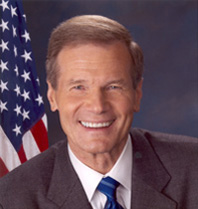
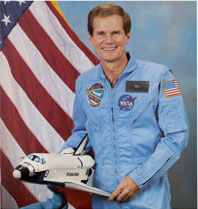
Senator Nelson's Speech: Visionary or blunderer?

I have to study today, so I'll just throw up this speech delivered to the US Senate by Bill Nelson, the Democrat from Florida. A few comments:

1-Nelson is gunning for that VP slot on the Kerry ticket, it's really obvious.

2-From the way he talks about Kerry's statement on Venezuela, it gives me the strong impression Kerry's and Nelson's staffs work closely together - it's almost like Nelson is taking credit for the statement.

3-On the one hand, Nelson's line is unconsciously neoimperialist, self-righteously interventionist, and plays right into Chavez's strategy, since it provides him with that necessary "enemy" on the other side - it's the same mistake Ike and JFK made with Fidel all those years ago, saving him by antagonizing him. On the other hand, the Chavistas will slur the US as the source of all their problems whether or not the US hits back, so why not hit back?

4-Nelson has become a "policy entrepreneur" in Washington with regard to Venezuela. This is his issue now, and he won't let go. A vicepresident Nelson would give Venezuela a level of attention in Washington it's never had before. This is either great or an utter disaster depending on your point of view.


Senator Nelson: Statesman or Space Cadet?


Speech delivered by Sen. Bill Nelson on the Senate floor - April 24, 2004

Mr. NELSON of Florida. - Madam President, while we are getting all of our ducks in order with regard to the procedure and there is this momentary lull in the consideration of the instant legislation, I rise to discuss conditions facing the United States with regard to an important neighbor of ours in this hemisphere; that is, Venezuela.


Venezuela is a country in deep crisis. I worry, as has been the case with so many of our neighbors to the south, that it is not getting enough attention in relation to this crisis. We all should know the President of Venezuela, President Chavez, is right now the subject of a petition drive aimed at holding a referendum on a recall of his Presidency. That is provided for under section 72 of the Venezuelan Constitution. What is also well known is President Chavez and his allies have done everything in their power to make it impossible to hold a legitimate referendum.


A week ago I was in Venezuela. I spoke to numerous officials of the Chavez government, including the Foreign Minister, the Energy Minister, the Vice President of the National Assembly. I also spoke to leaders of the opposition who have been leading the drive to hold a recall referendum under the provisions of the Venezuela Constitution. This is a recall on whether the President will continue in office.


In addition, I met with numerous business leaders from American companies, many in the energy sector, to hear their views on what is likely to happen to Venezuela, what is going to happen to Venezuela-United States relations, and what our policy should be there.


Everyone I spoke with recommended the United States must strongly support a negotiation led by the OAS and the Carter Center aimed at resolving disputes related to holding the referendum. Typically, this would not be a dispute. They have many more signatures than is required for the referendum. However, an objection has been raised that signatures are not accurate as to the people. That is easy to check.


I met with one of the mediators at the Carter Center who described to me the proposals his team and the OAS team had made to try to bridge the gap between the Chavez government and the opposition. When I asked if anyone outside of the government, any of the opposition in the business leaders actually think the Chavez government, and specifically President Chavez, will allow the continuation of this referendum to go forward, I got the same answer from all quarters. It was, ``No.''


Because of the way President Chavez has governed, because of the way he has tried to silence opponents, it is widely believed he will never allow the recall referendum to go forward. I hope he will hear this chorus of concern being expressed now from the Senate that under section 72 of the Venezuelan Constitution he should allow the process of democracy to work.


Much more...

May 11, 2004

The lowest form of mobocracy...

The web poll...


The capture of the Colombian paramilitaries...


"Looks like a piece of theater put on by high school students"
Has a kernel of truth, but is being manipulated for political purposes
Is mostly true, and the opposition is clutching at straws
Is entirely real and fully justifies the raids and arrests
Is too murky to even comment about, so why speculate?


Current Results

Free Web Polls

Sanity on the Paramilitaries

Well, it's still hard to know what to make about this whole hubbub. A few things we can say for sure:


With astonishing speed, the chavista propaganda machine has moved to twist and distort the story. The uncomfortable fact that opposition-led police forces were first on the scene and called in the chavista authorities is simply never mentioned in Chavista accounts. Video evidence or no video evidence, this particular event has been scrubbed from official history. This in itself speaks volumes about the government's iron determination to politicize and twist absolutely everything.


Attempts to link the Colombians to the Coordinadora Democratic look especially manipulative and indefensible - a blunt ploy to justify arrests and raids against opposition leaders. In short, even if - as seems possible - parts of the Bloque Democrático had a conspiracy to use Colombians to spark a coup against Chavez, the government has squandered the upper hand through its typical mix of selective vision, exaggeration, and plain old lying.


I'll save the reader the tedium of having to go through another impassioned plea for a credible impartial investigation we all know will never take place.


Venezuela: Headed Toward Civil War?


By the International Crisis Group


About ICG


Venezuela, the world's fifth-largest oil exporter and wealthiest member of the Community of Andean Nations (CAN), is in deep political crisis, with high risk that its democratic institutions could collapse, and some possibility of civil war.


During the first months of 2004, tension between the government of President Hugo Chavez and the political opposition, organized under the umbrella Democratic Coordinating Instance (Coordinadora Democratica, CD),[1] approached a breaking point. The Chavez administration's apparent determination to do everything in its power to block a recall referendum has angered growing sectors of society.


Between 27 February and 4 March, clashes between the national guard (GN) and opposition protesters left at least fourteen dead and close to 300 wounded. Torture, arbitrary detention and excessive use of force were reported.[2] There is a clear trend of increasing and unpunished human rights violations since President Chavez was inaugurated in 1999.[3] While the press has not been openly restricted, and several leading journals are vitriolic in their criticism, the government exerts multiple pressures on reporters, journalists and TV stations. Several opposition politicians who exercised their constitutional right to sign a petition for the president's recall have been arrested, and public employees reportedly were threatened with dismissal.[4]


Following the collection of recall signatures, the government-controlled National Electoral Council (CNE) entered into direct confrontation with the electoral chamber of the Supreme Court (Tribunal Supremo de Justicia, TSJ), which had declared the signatures valid and ordered the CNE to schedule the referendum.

Much more...

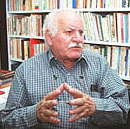
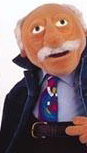
Compare and Contrast

Interior Minister Lucas Rincón and alterego muppet Sam the Eagle.


Opposition leader Pompeyo Márquez and his long lost twin, Waldorf

Bolivarianismo as Ideology

Excerpt from Ideology and Terror by Hannah Arendt.


An ideology is quite literally what its name indicates: it is the logic of an idea. Its subject matter is history, to which the "idea" is applied; the result of this application is not a body of statements about something what exists, but the unfolding of a process in constant change. The ideology treats the course of events as though it followed the same "law" as the logical exposition of its "idea." Ideologies pretend to know the mysteries of the whole historical process-the secrets of the past, the intricacies of the present, the uncertainties of the future-because of the logic inherent in their respective ideas.


Ideologies are historical, concerned with becoming and perishing, with the rise and fall of cultures, even if they try to explain history by some "law of nature." The word "race" in racism does not signify any genuine curiosity about the human races as a field for scientific exploration, but is the "idea" by which the movement of history is explained as one consistent process.


The "idea" of an ideology is an instrument of explanation. To an ideology, history does not appear in light of an idea, but as something that can be calculated by it. What fits the "idea" into this new role is its own "logic," that is a movement which is the consequence of the "idea" itself and needs no outside factor to set it into motion. Racism is the belief that there is a motion inherent in the very idea of race, just as deism is the belief that a motion is inherent in the very notion of God.


The movement of history and the logical process of this notion are supposed to correspond to each other, so that whatever happens, happens according to the logic of one "idea." However, the only possible movement in the realm of logic is the process of deduction from a premise.


As soon as logic is applied to an idea, this idea is transformed into a premise. Ideological world explanations performed this operation long before it became so eminently fruitful for totalitarian reasoning. The purely negative coercion of logic became "productive" so that a whole line of thought could be initiated, and forced upon the mind, by drawing conclusions in the manner of mere argumentation. This argumentative process could be interrupted neither by a new idea (which would have been another premise with a different set of consequences) nor by a new experience. Ideologies always assume that one idea is sufficient to explain everything in the development from the premise, and that no experience can teach anything because everything is comprehended in this consistent process of logical deduction.


The danger in exchanging the necessary insecurity of critical thinking for the total explanation of an ideology is not even so much the risk of falling for some usually vulgar, always uncritical assumption as of exchanging the freedom inherent in man?s capacity to think for the strait jacket of logic with which man can force himself almost as violently as he is forced by some outside power.


The "idea" of chavismo is not so hard to discern. Ever since Bolivar's time, Venezuela has seen a struggle between the forces of progress, social justice, and equality - bolivarianism - and the privileged enemies of that cause - the reactionary godos. Contemporary history is witnessing the long-delayed comeupance of the godos, and the final, irreversible victory of the Bolivarianos. "Accelerating" the development of this central idea is the point of chavismo. "This argumentative process cannot be interrupted either by a new idea or by a new experience."

May 10, 2004

How do you really know what you think is true really is true?

The latest scandalet in Caracs, over the government's discovery of a group of alleged opposition paramilitaries brought from Colombia, is a fine example of the strange way Venezuelan political life now boils down to a debate over epistemology.


As soon as the government made its claims and showed its TV footage, the response was automatic, unthinking, pavlovian. Reactions are hardwired into the political rhetoric of each of the sides, so they were fully predictable. A journalist could've written them up without much listening to what each side said; we've been down this road so many times before. The government and its supporters accepted the allegations as unquestionably true while the opposition rejected them, equally mechanically, as self-evidently bogus. Meanwhile, the other third or so of the country presumably shakes its head in disgust.


In a democracy, it's natural and healthty for political interpretations and opinions to diverge. But for a democracy, it's unnatural and unhealthy for our understandings of the facts, of what actually happened, to start to diverge systematically as well. People who can't agree about what happened can hardly be expected to establish a meaningful political dialogue. And it's this divergence over the factual bases for political debate that is one of the most striking features of Venezuela in the Chavez era.


Why has Venezuela settled into this pattern? What are the forces that have pushed us into this epistemological blind alley, where the sides cannot even agree any longer on the factual bases of what it is they're arguing about? And how do you rebuild the possibility for some kind of civilized interchange between people who can't agree with you about the facts, about what happened, let alone over the much thornier and "inherently contested" issue of the political interpretation of those facts?


Part of the problem for someone in my position is that, while I think it's crucial to rebuild the shared-understandings about the world that can serve as the basis for a sane discussion, my Conspiracy Theorist Mind (CTM) can't quite buy it, because my CTM is quite convinced that negating the possibility of a cross-class dialogue and understanding is part of the government's strategy. This is not a big leap for anyone who's listened to Chavez's radical class-baiting rhetoric, I should say. So again and again I find myself caught in the contradiction between my third-sidist instinct and a government that has spent five years diligently undermining the possibility of third-sidist solutions.


Generating information like the Baruta Paramilitary hubbub and handing it off only to pro-Chavez media (RNV, Venpres, Channel 8) deepens the epistemological gulf. The government must realize at this point that its PR management strategy deepens both the unquestioning credulity of supporters and the furious, damn-the-facts-my-mind-is-made-up incredulity of opponents. And when the government pursues these kinds of strategies consistently, again and again, for over five years, it's easy to conclude that widening the epistemological gulf is, in fact, part of the government's overall plan.


Shielding events like this from proper sceptical journalists willing to ask proper sceptical questions turns it into just another ritual in the chavista liturgy, just another presidential assertion that must be believed on faith rather than investigated on evidence. It's another item in the drip, drip, drip of pressures that are driving Venezuelans to see each other in hyper-simplified terms, as cardboard cutouts or political strawmen rather than complete human beings. As the epistemological gulf widens, the preconditions for a violent outcome are put into place more and more fully. How do you stop this pattern at this point? I have no clue.


But I know that we will not have peace and stability until the entire country can agree on one version of what actually happened, until the epistemological gap is bridged. This is why countries that go through deeply traumatic historical periods need Truth and Reconciliation Commissions afterwards. It's where Venezuela will end up for sure.

May 9, 2004

Owning up...

...Antonio Ledezma - like Cristina - doesn't exist. He's on Globo now ranting about how CNE cheated him out of his signature. It's understandable that Cristina and Antonio feel angry about this, but the P.R. line many (including, mea culpa, me) have used on this issue is misleading.


The reason most of these signatures "disappeared" - and do not show up in the reparable category - is that there was some kind of mistake or problem with the actas, the official daily tallies kept at each of the signing centers. Since the signing centers were run by opposition operatives and only supervised by CNE, Jorge Rodriguez says that the mistakes in the actas cannot be attributed to "material errors" by CNE, since CNE was not in charge. Moreover, Felipe Mujica and Quiroz Corradi knew full well this was what they were agreeing to when they agreed with CNE's reparo procedures two weeks ago.


So the opposition is being somewhat disingenuous when it heavily implies these signatures just vanished - they didn't they; were ruled invalid according to rules set out way the hell back in September 2003. In fact, this may be one of the only rules of the game CNE hasn't changed in the middle of the game.


But you can only take the rehabilitation of CNE so far. It stands to reason that if you're going to rule out categorically signatures whose actas had defects, you implicitly accept the acta as the prime arbiter of the validity of the signature - acta mata firma. The will of the signator is a secondary matter. These are just warmed over AD tactics that have now been co-opted by chavismo.


What's worse, even the acta-centric interpretation is applied unevenly, and plainly unfairly. If signatures accounted for in flawed actas are presumed to be invalid, how can it be that hundreds of thousands of other signatures, accounted for in flawless actas signed by everybody and their cousin, are not presumed to be valid? Either CNE trusts its own actas or it doesn't.


But, predictably, the government insists on having it both ways. CNE seems to act under the guiding principle that the government is from Jalisco, si no gana, empata. Actas constitute prima facie evidence when it suits the Chavez project to paint the opposition as fraudulent, but they don't constitute prima facie evidence when accepting them as such could work against the government's interests.


Actas are both binding and not-binding at the same time. CNE joins the campaign to scrub the legacy of Aristotle from Venezuelan public life.

May 8, 2004

Just Imagine: Two dead after US troops set iraqi prisoners on fire

SUBHEADS: New reports from Abu Ghraib prison include reports of deaths, all-night beatings, rape, electric shocks, tear gas used in confined spaces, and prisoners forced to eat their own hair and feces.


President Bush calls officers responsible for Abu Ghraib prison "heros", plans to decorate them...


Imagine that? Unimaginable. Impossible. Far fetched. Yet this is precisely what happened in Venezuela, where the government first covered up allegations of serious abuse against opposition activists held in custody, and president Chavez then went out of his way to honor the "revolutionary courage" of those responsible, going as far as to give them medals for their role in the violence!

Que molleja, primo!

May 7, 2004

Accountability and silence

There's a funny dynamic at work in my comments forum - every few weeks some brave government supporter desides to chip in and post a comment, and then, well, all hell breaks loose. Though we've gotten better at treating chavista commenters with respect, we don't always manage to be entirely pleasant. Poco a poco...


The thing that strikes me is that the chavista posters are invariably, in no time at all, deluged with questions from the opposition posters. What happened to the more than $2 billion that disappeared from FIEM in 2001? Why did Chavez continue talking through the April 11th cadena instead of stopping to halt the violence? Who killed the protesters in the Autopista Regional del Centro in October 2002? In Charallave in Jan. 2003? Who killed Evangelina Carrizo and Juan Carlos Zambrano and Pedreañez? Where did García Carneiro get the money to buy a yatch? How can Chavez condemn what happened at Abu Ghraib Prison while ignoring the abuse at Fuerte Mara? How can a Supreme Tribunal decision be both final and not-final at the same time? Is article 31 of the Recall Referendum Regulations approved last August still in force? How can it be in force if the regulations published to operationalize it are in direct contradiction with what it says? If there was a megafraude with the planillas planas, how come there were more planillas planas in the government's recall request against the opposition assemblymembers than in the opposition's recall request against Chavez? If there was a megafraude, why would you go out of your way to violate article 31 and allow people who recognize that they did sign validly back in November to go back and take it back? The list, obviously could grow and grow and grow...


Now, some chavista posters make an attempt to answer, others - who can blame them - don't. But what I find significant about this little phenomenon is the nearly bottomless thirst antichavistas have for some kind of reasonable explanation from the government side. Any government supporter who pipes up gets the deluge of queries, for the simple reason that the government itself never answers any of these questions.


The mechanism that brought us to this point is itself a serious cause for concern. Government spokespeople long since stopped inviting non-chavista media outlets to their press conference, long since stopped going to opposition-controlled radio and tv shows, long since stopped answering questions from the opposition. Really the only time they face questions is when faced with a State Radio, State TV or State Press Agency type - and the questions they make are invariably pathetically easy. Chavista ministers and officials just don't put themselves in a position to hear tough questions, much less to have to answer them.


It's true that the opposition media bears some of the responsibility for this situation - its treatment of government spokespeople has often been disrespectful and at times openly slanderous. But the outcome is an incredibly destructive escalation of the two-entirely-separate-worlds dynamic between pro- and anti-Chavez sectors of society. The government simply does not feel obliged to answer questions from those who don't subscribe to the Chavez cult of personality. This liberates the government to behave in ways that are plainly indefensible since, after all, they know full well they'll never be called on to defend their behavior.


What's worrying about this dynamic is that it shows a government that thinks it can pick and choose between its citizens and decide who it will be accountable to and who it won't be accountable to. (Some citizens are obviously more equal than others.) Instead of establishing institutions that may force it to answer all questions from all comers (say, oh, a Freedom of Information Law, just to pick a policy idea at random) the government picks first and second class citizens - those who subscribe to the cult of personality and therefore obtain the privilege of asking questions, and those who don't and therefore lose that privilege.


Just to end this little riff, I'll mention one of those extravagant Chavista lies that show how destructive this whole answer-questions-only-from-sycophants policy can be. Sitting in for a sick Chavez in the next-to-last Alo, presidente, Education Minister Aristobulo Isturiz proudly announced to the country that his ministry had created some 60,000 school libraries over the last few years. Had an critical mind been allowed anywhere near a microphone at that time, that voice might have pointed out that there are only 20,000 public schools in Venezuela, total. Either Isturiz expects us to believe he's built an average of three new libraries per school, or when he says "library" he means "bookshelf." I'd like to know which one it is - but guess what! I don't suck Chavez's member in print! So I don't get to ask!

May 6, 2004

La Alpargata Insolente del Extranjero

Expect to see Eva Golinger blow a gasket over this delicious bit of reporting by El Nuevo Herald, revealing that Citgo made campaign donations to both the Democratic and Republican parties in the 2002 election season. A $15,000 Citgo contribution apparently reached the GOP just two weeks before the April 2002 coup.


Citgo, just to refresh foreign readers' memories, is a 100% Venezuelan owned oil company based in Tulsa (though soon moving to Houston.) Citgo is a "US-based" company, so I guess it's not technically illegal for them to contribute to US political parties. It's just irresistably delicious to write about, though, after the oceans of ink and, erm, gillions of pixels mobilized to castigate US for funding political groups in Venezuela.


Can you say rabo'e'paja??

The Nadir of the Ni-Nis...

Datanalisis says...


...polarization is increasing in Venezuela, with the ni-ni (apolitical) camp dwindling to just 30% of registered voters, the lowest it's been in years.


Datanalisis now figures the breakdown is like this:


Opposition - 37%

Ni-Ni - 30%

Pro-government - 28%.

No answer - 5%


They also estimate that 77% of the electorate would turn out for a referendum, but they do so using the stupidest methodology in the book: by asking people directly whether they plan to vote. This, as everyone knows, is badly misleading, since people are often embarrassed to tell pollsters the truth if they don't really plan to vote. So, one big demerit point for Datanalisis on this score.


Still, if 37% of the electorate can be relied on to turn out to recall Chavez, that's 4.4 million votes. Plenty...more than enough...


More..

Kerry! Amigo! El pueblo está contigo!

John Kerry ran his mouth on Spanish language gringo tv last night:


[...Univision interviewer Jorge] Ramos asked Kerry if he thought that Venezuela's President Hugo Chavez was a dictator and Kerry responded, "Chavez is fast on the road of becoming exactly that. He is breaking the rules of democracy. I think it is very important for him to allow that referendum to take place and for this administration and others to put more visibility on what is happening so we can hold him accountable to international standards of behavior. Democracy is at risk." [...]


More...

May 4, 2004

Democracy or Revolution?

For six years now, Hugo Chavez has been promising Venezuelans a Democratic Revolution. The crux of the political crisis in Venezuela lies in the fact that this is a contradiction in terms.


Revolution will not share power, it cannot share power. Reaching an accomodation with opponents is precisely the opposite of a revolution


Democracy, particularly in the way it's been understood in Venezuela for half a century, means powersharing.


Revolution assumes that there is a single acceptable understanding of political reality, only one approved understanding of the reasons for the problems in society, and therefore a single acceptable political stance.


Democracy assumes that reasonable people may disagree on matters of politics, and that it's healthy for a society to have a multiplicity of competing understandings vying for favor at any given time.


Revolution divides the world up between good guys and bad guys, between the people and the enemies of the people, between those who subscribe to the revolution's sanctioned understanding of political reality and the "unreliables" who don't.


Democracy accepts that political differences need not imply imply differences in honesty, virtue, or integrity. It sees those who disagree politically as opponents or adversaries rather than enemies.


Revolution demands total control over all branches of the state, at least, and of society as a whole in extreme cases.


Democracy accepts the variety of political views in society, and sees as normal and healthy that different branches of the state should be under the control of various groups in society.


Revolution sees consultation and negotiation with the enemy as treason.


Democracy sees consultation and negotiation with adversaries as the bread-and-butter of political life.


Revolution demands unquestioning loyalty.


Democracy demands citizen participation.


The phrase revolución democrática is, strictly speaking, meaningless. The government has to choose one or the other. For years the question of which way the Chavez adventure would go seemed up for grabs. Today, after the Referendum shenanigans and the approval of the TSJ law, Chavez's choice has become crystal clear: he's devoted to his revolution, and to get it, he's willing to destroy our democracy.

May 3, 2004

Guest Post: Packing the TSJ...again!

by Jimmy Humboldt


Let's be honest here, people love to hate Chavez. Venezuelans are great at pretending that they never voted for the guy, and the country does seem to have forgotten the nasty stuff that went down for years before he came to power. Personally, I'm more than a little skeptical of the opposition's screeching about the "end of democracy" and "takeover of state institutions" on the part of the ineffable Hugo Chavez. After all, he is the president - they're just the guys that tried to overthrow him a bunch of times.


Now, I've given Chavez as much of the benefit of the doubt as anyone. But this week I just about ran out of steam. I ran out of ways to describe this government as democratic or legitimate. In fact I got so pissed I could hardly even see straight, much less have a civil discussion about Venezuelan politics.


Early Friday morning the Venezuelan National Assembly approved the Supreme Justice Tribunal Law, opening the way for the chavistas to pack up the high court with revolution-sympathetic justices.


I'm so bored of the "authoritarian Castro-crony" cliches to describe Chavez that I don't know how to express how much this law flies in the face of democracy. The opposition has churned through the same old stale accusations so many times that the world is desensitized to how serious they are. We've been hearing that Chavez is a totalitarian dictator worse than Hitler for so long that it's hard to make the case competently without sounding like another bleating sheep in the pack.


But here's my honest opinion - the TSJ Law is an obvious threat to democracy. The law expands the high court from 20 to 32 justices, adding 12 news faces that will be designated by a simple 50% + 1 legislative majority, and gives the National Assembly power to fire justices with the same voting scheme.


There are any number of reasons to describe this as unconstitutional - which I'll get to in a minute - but the real reason it pisses me off is not just that Chavez is packing the courts, it's that he's packing the courts for the second time!


Everyone, even the chavistas, agree that when the court was first created in 2000, Chavez's top political advisors packed it full of magistrates they expected to control. Through the standard intellectual gymnastics, this was defended on the grounds that anyone who supported Chavez supported the Revolution, and was therefore patriotic and ergo good for the country.


This analysis sidesteps a fundamental element - the Revolution is a political movement run by a political party, and - according to the little blue book - TSJ magistrates cannot be chosen on the basis of political affiliation. The chavistas assured us for years that of course, the magistrates were completely impartial and only concerned about ensuring the legality of the Chavez reforms.


But unfortunately Chavez let the underhanded, backstabbing Luis Miquilena, the political brains behind his rise, hand-pick "his" magistrates for him. When Miquilena parted ways with Chavez, he took his Supreme Cronies with him. In August of 2003, the TSJ refused to hold a trial for military officers implicated in the 2002 coup - a decision reached as a result of heavy pressure by Miquilena.


Now, here was a moment for the chavistas to step up to the plate and accept defeat. The poetic justice was so evident; the revolutionaries had used the same slash-and-burn tactics that came before them, the same institutional degradation that their movement was built on criticizing. A quick mea culpa could have salvaged the Bolivarian Revolution in the eyes of those with some semblance of critical thought.


Instead Venezuela was treated to a sermon preached from Mount Miraflores about how "powerful economic interests" had bought out the court to ensure that no justice was carried out against the coupsters.


It's like the chavistas forgot they had schemed to bring those justices onto the bench, and had defended them for years against attacks that they had been designated through cronyism. Suddenly, these 11 magistrates became Martians that had somehow, magically, inexplicably, appeared on the bench of the country's top judicial authority.


Instead of an apology for their retrograde politics, the National Assembly launched a witch hunt to fire the magistrates that had voted against trying the officers. That witch hunt failed - the constitution explicitly states that only the attorney general backed by 2/3rds of the Assembly can remove magistrates from the bench, and only after an investigation proving misconduct.


On Friday, the Bolivarian Revolution was officially given permission to re-launch that witch hunt - with the new law, chavistas can fire magistrates at their discretion. Of course, to their credit, they most likely won't need to resort to that - they just have to squeeze 12 more magistrates on to the bench and magically the balance of power shifts back to the Chavez camp - just like in the good old Miquilena days when the court knew how to take orders from the executive without talking back or asking questions.


The 1999 Constitution - you know, the one Chavez keeps in his breast pocket - expressly forbids much of what's in the TSJ law. No sane interpretation of the constitution could allow what they're doing. The legislature is supposed to have a 2/3 majority to ensure there is enough political consensus to change a major (organic) law. Furthermore, the constitution stresses the independence of the branches of government - the assembly can't fire magistrates or hire new ones any more than the TSJ can decree that the assembly should have 200 deputies instead of 165 - and then proceed to appoint 35 new ones.


So this is where I appeal to the best minds of chavismo to explain why I'm wrong? I'm more than willing to listen. The only possible explanation I can see is that the chavistas want control of the high court again, particularly now that Chavez may be facing a referendum, and are not shy about using old-style Venezuelan politics to get it.


I've heard some deputies say the poor TSJ magistrates are so overworked that they need more bodies on each bench to get their work done. But if there really is a need for this, why are some magistrates so violently opposed to it? And if it really is so important, why not develop the 2/3 majority established in the constitution?


Now I have to ask my audience of chavistas brave enough to suffer through pages of ranting on CaracasChronicles - if you were not in government, would it be acceptable for the majority to pack the courts with its friends? Would you consider this democratic behavior if it did not work in your favor? What would be your reaction if Henrique Salas Römer filled the high court with familiar faces from the April 11 coup through evidently extra-legal maneuvers? Would you want a hyper-powerful executive if the executive currently in office were not a friend of yours?

May 1, 2004

Very bad things

The approval of the new Supreme Tribunal law is a disaster. Pro-Chavez assembly-members approved the law to expand the Tribunal from 20 to 32 judges, in a blatant court-packing exercise. Judicial review wasn't doing great in Venezuela recently. But now it's unequivocally deaditie dead dead dead.

April 30, 2004

Lets talk about investment...

It's heartwarming to see Martin Sanchez of Aporrea and Venezuelanalysis suddenly take an interest in investment. His latest dispatch is breathless about DaimlerChrysler's announcement that they will invest $20 million to "expand production" in their Valencia plant, apparently for export.


I'm glad Martin agrees with me about the importance of investment in general, including private sector investment. I wonder if he's had a look at the Central Bank's own figures on overall investment in the Chavez era. Since it is a bit of a pain to see the data, I took the time to do it for him...


100% official Venezuelan government sources:
Central Bank for the Gross Fixed Capital Formation statistics and the 2001 Census for the population data.


[Note: I only go up to 2002, because that's the latest data our bureaucratic hare of a Central Bank has published. I use the BCV's own inflation-adjustment, the 1984-base bolivar.]


Just to put Martin's write-up in a bit of perspective, $20 million, works out to less than 12 constant 1984 bolivars per person per year, so less than a dollar a year per capita. That's less than half of 1% of the total gross fixed capital formation in Venezuela in 2002.


Don't get me wrong, I'm thrilled for those Valencia auto workers who get to keep their jobs. But we need to recognize they're a distinct minority. If you want to discuss investment in Venezuela, lets do it openly, with the facts on the table, not as a propaganda exercise. Un poco de seriedad, por dios...

April 29, 2004

Oddly fun...

I must have been in a very odd mood last night. I spent over an hour listening to this speech Chavez gave on December 5th, 1999 (Real audio stream). It's an eye-opener.


The first half an hour is an impassioned defense, an apology even (in the Greek sense) of the February 1992 "military rebellion" Chavez led. He carefully explains that February 4th was a military rebellion not a coup - the difference apparently being that a rebellion is when Chavez is on the giving end, a coup when he's on the receiving end.


He waxes lyrical about the feverish, even obsessive (Chavez dixit) efforts the conspirators made from 1989 to 1992 to plan the coup and "accelerate what needed to be accelerated." Extra schadenfreude comes our way around minute 14, when he "honors" his fellow conspirators one by one, stopping to say a few kind words about each...Francisco Arias Cardenas, Jesus Urdaneta, Acosta Chirinos, any number of people who've since switched sides. "True patriots!" he calls them, then adds "it honors me and commits me even more to the cause to share a stage with them!" He also saves some flattery for Kleber Alcala and Felipe Acosta Carles, brother of Luis, who apparently died in the riots of February 1989.


The speech then descends into a torrent of praise for the new constitution - which was voted on ten days later - and eventually widens into a veritable flood of abuse hurled at the opposition. This is curious. Remember, it was December '99. Chavez had an 80% approval rating - the opposition was in no way a threat to him, or even a serious political force to contend with. It was mostly a rump, really, with neither a real following nor real power. That doesn't dissuade Chavez from spending half the speech attacking them, villifying them in aggressive and willfully provocative terms. I say "willfully" for a reason, Chavez makes it clear he knows exactly what he's doing. "Para que mas les duela," ("so it stings more,") he says, just before launching into one of his more colorful attacks.


Chavez's 1999 Approval Ratings: Those were the days!


I admit I was a bit disappointed with the speech, in that I was hoping to hear more about popular sovereignty and then blog about the way the phrase has disappeared from the official lingo.


What I found was something a bit different - a demagogue who uses his astonishing rhetorical ability to paint a highly simplified, Manichaean view of the world. Chavista rhetoric inevitably dissolves into a Disney style moral universe where those who follow him are good, really good, inherently good and virtuous as revealed by the very fact that they follow him, and those who oppose him are deeply, fundamentally evil, as revealed by their opposition to the revolution. Hammering in this point seems to be the point of the speech.


It's easy to forget, but thanks to the internet, easy also to remind ourselves. The class-warfare rhetoric, the divisionism, the hate-mongering, the conscious effort to intensify class antagonism, all of that has been there from the start. It was even there when Chavez had no effective opposition, two and a half years before April 2002, when there were no marches, no signatures, no cacerolazos, no National Assembly, no one really to challenge his power.


To be a chavista, to my mind, is to accept this moral universe, to wallow in the dumbed down certainties of an ideological orthodoxy that demands your total acritical loyalty and counts anyone who raises a critical voice as an enemy.


Seen in this way, polarization is not the accidental by-product of Chavez's rule. As Chavez obliquely hinted in his letter to Carlos in his parisian jail, polarizing society along class lines has been the chavista plan all along. It's been pursued with the bloodymindedness of a true believer and the skill of a born demagogue. And as I try to work out the implications of that strategy, I do get the feeling that a diet of geraniums is particularly ill-suited to combating it.


So listening to that 5 year old speech left me quite pessimistic about the possibilities of building a dialogue across ideological lines. Long before the "positive feedback loop" that Sabatier writes about had taken hold, Chavez's strategy was already founded on the old leninist maxim of "deepening the contradictions." The worse it gets, the better it gets. Even all those years ago, enshrining the positive feedback loop of polarization was the cornerstone of government policy. So how the hell do you get around that?


I have no idea, but the speech did leave me with one (semi-)conforting thought: it's the comecandelas who are playing into Chavez's hands. Chavez relies on polarization, but it takes two to positive feedback loop!


Chavez's political program makes no sense outside a context of systemic polarization. In a sense, Chavez is polarization. So if you want to fight Chavez, fight polarization!

April 28, 2004

Cristina's predicament

...or...

La arrechera de Cristina


No one who's ever met my sister Cristina could even imagine her filling out her firmazo form wrong. Cristina's an elementary school teacher, and a rigorous one at that. My mental image of her is inseparable from the piles of notebooks she's permanently correcting with an attention to detail that keeps her students on the straight and narrow. Her handwriting has the exacting precision of a self-proclaimed neat freak. There is no question of her screwing up her data on something as important as the firmazo.


Yet, when Cristina checks her ID number with the CNE signature database, she's told "she did not sign, or her signature was not processed by CNE." As far as CNE is concerned, it's like she never signed at all!


Now, someone made a mistake here, that much is clear. A "material error", one might even say. Cristina meant to sign, and she did sign, but her signature just vanished. There ought to be some way for her to set the record straight, to make sure her will is reflected in the final tally, don't you think?


Well, that's what CNE thought 9 months ago, but it's now what they think anymore. What's ironic about Cristina's situation is that the rules CNE published way back in September did provide a remedy for people in her situation. In fact, protecting people in this situation is what the original reparo mechanism was all about.


To quote the original CNE regulations, article 31:


In the five following days after the publication (of the valid and invalid signatures), electors whose signatures are rejected may personally go in front of the National Electoral Council in order to correct any material error that the Electoral Administration may have committed in verifying his data. If he fails to do so, the rejection (of the signature) shall stand. Equally, electors who allege they did not sign the forms shall be able to go in front of CNE to ask to be excluded immediately from the signature tally.


(En el plazo de cinco días continuos siguientes a la publicación, el elector firmante que fuera rechazado podrá acudir personalmente ante el Consejo Nacional Electoral, a los fines de subsanar cualquier error material en que haya incurrido la Administración Electoral durante la verificación de sus datos. En caso contrario, quedará firme su rechazo. Asimismo, el elector que alegue que no firmó la planilla, podrá acudir al Consejo Nacional Electoral a los fines de solicitar su exclusión inmediata del cómputo de las firmas.)


Great, a rule that makes sense! If only. Under the rules CNE approved this week, Cristina's signature is simply not eligible to be repaired.


It's not just that the rules published this week are different from the ones approved all those months ago, it's that this week's rules do exactly the opposite of what the original rules were meant to do. Once all the bla, bla, bla dies down, Cristina's signature will be kept out of the total, whatever article 31 says. Y punto.


Sumate says there are 200,000 such Astonishing Vanishing Signatures. Lindo, ¿no?

The decision is made...

The Coordinadora Democratica will participate in the reparos process. For once, expectations are low: we can only be pleasantly surprised if CNE comes around and calls a referendum, but we'll not be animically crushed again if they don't.

April 27, 2004

Open Letter to Eva Golinger

Dear Eva,


I don't know you, except as a byline over articles that I strenuously disagree with. I'm writing to you out of a concern, voiced again and again by some of my readers, to try to build some kind of understanding, some kind of common action with people on the other side of the political divide that's grown so deep and corrosive in Venezuela these last few years.


In some ways it's natural for political opponents to distrust each other, and each other's motives - it's happened in any number of political conflicts before and it'll happen in many to come. It's hard to get over the impression that, well, your motives are noble, your command of the facts extensive and your understanding clear, and that therefore anyone who disagrees with you must be either evil or working with an ulterior motive. I know this is as much a part of how chavistas perceive opositores as vice versa.


The escalation of mistrust and animosity that ensues is destructive and dangerous, and needs to be considered as a big problem in its own right. At some point, the causes of polarization become almost secondary: it's the polarization that sparks off civil wars. In Venezuela, we're still early enough to prevent things going that far.


Sooner or later, people from opposite sides of the Venezuelan divide have to come together in a spirit of cooperation, making an effort to bracket those points where we can't agree and to focus on those where we can.


When I lived in Caracas, I volunteered for a journalists' NGO called Los Del Medio, founded precisely on this principle. Remarkably, given the atmosphere, the group was non-partisan, including both pro- and anti-government members who agreed that the Venezuelan media is failing its citizens by painting a polarized and hyper-simplified image of what is happening in the country.


I bring this up because one initiative Los Del Medio briefly considered taking on was a proposal to approve a Freedom of Information law in Venezuela. At this point, Venezuela is one of the last countries in the Americas that lacks Freedom of Information legislation, and as Los Del Medio knows only too well, this can make impartial reporting quite difficult.


And then it struck me, this is an issue where Eva Golinger and I actually might agree. You've already shown what a powerful tool for citizen participation laws like the FOIA can be. You understand as well as anyone could how such transparency can play a critical role in citizen activists' drive to hold their governments accountable. You know how important this kind of scrutiny is to real democracy.


Venezuelan citizens need and deserve the same legal mechanisms for participation and for holding their elected leaders accountable as U.S. citizens, and certainly is a natural fit with the calls for radically increased citizen participation President Chavez built his presidency on in 1998-2000. It strikes me that with from your position, and with your impeccably clean revolutionary credentials, your view would carry at least some weight in the government. What's more, an initiative of the sort could make a start, just one small, tiny, but symbolic contribution, to showing that people with radically different views of the world can still recognize one another's humanity and come together to affirm the values they have in common.


Hoping you'll read this letter with an open mind,

ft