March 15, 2004

You think this was too confusing before?

The recall saga just got 40% more confusing thanks to the Supreme Tribunal Electoral Chamber's just announced "preliminary injunction" temporarily resuscitating the 876,000 questioned signatures, por ahora.

The preliminary ruling is the start of what promises to be an intricate courtroom battle inside the Supreme Tribunal...just like a Grisham courtroom battle, with the exception that at least 9 of the 20 magistrates on the court are openly on the side of the government.

Who's who in the Supreme Tribunal?
The first thing to understand is that under the 1999 Constitution (i.e. CHAVEZ'S constitution) the Supreme Tribunal is composed of four chambers, salas in Spanish. Two of them are relevant here: the Sala Electoral and the the Sala Constitucional. The Sala Electoral has been siding with the opposition, the Sala Constitucional is on Chavez's side.
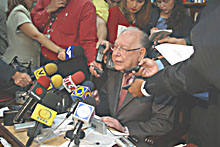
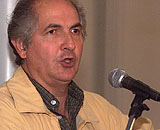
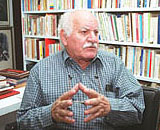
Sala Electoral head (and new opposition hero) Alberto Martini Urdaneta

The Sala Constitucional is first among equals on the court. At the same time, the salas are also supposed to be autonomous from one another. According to precedents set in the Sala Constitucional's own jurisprudence, each sala is supposed to have exclusive jurisdiction over its constitutionally delimited area of endeavour. It would seem straightforward to assume that the whole purpose of having an electoral chamber would be to decide on electoral cases like the one now in front of the court.

But, of course, it's not so simple: too much is at stake.
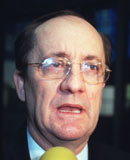
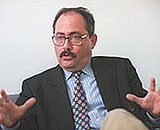
Sala Constitucional head and Supreme Tribunal chairman: Iván Rincón, chavista duro.

The current Tribunal was selected after the 2000 elections, when chavismo had a 109-56 majority in congress, but not the required 110-55 (2/3rds of the chamber) needed to select all the magistrates all on its own.

Back then, the government was not as sectarian as it is now, and Chavez allowed his then number 2 man to cut an old-regime, old-style, fourth republic deal with a part of the congressional minority to get the needed majority. The government would keep 14 magistrates on its side - proportional to its majority - and the opposition would get six. Within the opposition, only AD and Proyecto Venezuela participated: AD got four magistrates, the smaller Proyecto Venezuela got two.

The AD-PV-Government carve-up outraged the rest of the opposition at the time but, with the benefit of hindsight, it looks like a smart move.

AD party boss Henry Ramos Allup is not a complete idiot. He knew that base of six opposition magistrates put the opposition within striking distance of the government if only some of the more moderate chavista appointees bolted from an increasingly radical government. In fact, that's exactly what happened.

The hands of Luis Miquilena
Towards the beginning of the current political crisis, all the way back in December 2001, Chavez's key political operator, the man who had brought him from the political wilderness into Miraflores, his most trusted lieutenant, the man he chose to run the Constituent Assembly and then sent to the all-important Interior Ministry, number 2, in short, walked away from the government. That's when Chavez's trouble started.
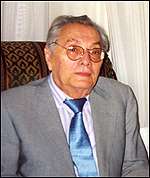
Miqui - más sabe el diablo por viejo...

Luis Miquilena was well past 80 even then, and though these days you never see him on TV, his hands are all over the machinations that are deciding Venezuela's future. Miquilena has been a left-wing political operator for literally seven decades, yet he remains sprightly and clear headed, if a bit curmodgeonly. He was a relative moderate in the early, moderate phase of Chavismo, and he placed key personal loyalists throughout the state aparatus on behalf of the regime.

So when Miquilena turned his back on Chavez, a number of the justices turned with him, leaving the government with an unstable tie in the full 20-member court. In fact, on sporadic occasions, the court has even ruled against the government by 11-9, exasperating Chavez who called their decision at the time "a turd." That precedent is surely worrying Miraflores now.

Now that, as oft predicted, the entire National Crisis has come crashing onto the Supreme Tribunal, the exact arithmetic of Miquilena's friendships becomes critically important. There are surely waverers, even if most counts suggest a 10-10 split.

Miquilena's shift was also decisive in the National Assembly, where the government's sizable lead shrunk to a near-tie within months of his decision to leave the fold. Since, the government has attempted to use the Natonal Assembly to pack the court illegally with 12 new hardline pro-Chavez judges. But the opposition thankfully had sufficient numbers in the National Assembly to fillibuster the attempts, again drawing furious ire from the government and the chavista assembly leadership. Again, the hands of Luis Miquilena were crucial in allowing the opposition to resist as long as it has.

Today, we see that the opposition has been right not to abandon the state's institutions, even as chavismo works to destroy them. Its fight in the Assembly prevented a total takeover of the court before this critical moment. Its "unpalatable choices" of 2000 mean it has at least some sympathizers in the courts.

This should not be taken to mean that Chavez has basically played fair, allowing these institutional spaces to be occupied by opponents willingly. To the contrary, the government has a long and dark record of subverting constitutional principles in issuing more or less direct orders to nominally independent institutions. It also has a long habit of attempting to re-write the rules of the game in its favor, arbitrarily, whenever it fails to railroad the opposition altogether. The episode of the "assisted" signatures needs to be kept in this context, in the context of a government that has re-written the Assembly's rules of procedure eight times in three years, each time to take procedural spaces away from the minority in the chamber, who represent the majority in the country. Now, the chavista assembly leaders propose a ninth and more radical reform to turn the Assembly into what Chavez has always wanted it to be, a rubber-stamp.

Pissing on the "little blue book"
The reality is that Chavez doesn't care a damn about the procedures and rules in the constitution. Everyone in Venezuela knows this. The constitution is a stage prop for Chavez, nothing more. Still, its rules constrain him, and more and more he finds that he can't force people to do what he wants just by issuing an order, like he could in the military.

What follows will not be pretty. And it could take weeks to sort out - weeks the opposition can barely afford with that August 19th deadline looming. The chavistas are clearly in charge of the Sala Constitucional by 3 solid votes to 2. The sala electoral just voted 3-0 in favor of the referendum. The question now is, which sala makes the final decision?

According to Dr. Duque Corredor, who knows more about these things than most, the correct procedure if the Constitutional Chamber tries to poach the case from the Sala Electoral would be for the Sala Electoral to call for a session of the full court to decide which of the two chambers should have jurisdiction. Here the math is far less certain. For sure the chavistas will try to keep the matter away from the full court if they can, it's just too risky for them - but it is not a foregone conclusion that they would lose in the full chamber: indeed, they might win.

For what it's worth (i.e. not a lot these days) the constitution is remarkably clear on this one. Article 297 of the "librito azul" doesn't leave much room for interpretation: "Jurisdiction over contentious electoral affairs shall be exercised by the Electoral Chamber of the Supreme Tribunal of Justice and the other tribunals determined by the law." If only we had any faith at all that the hardline chavistas in the court would even listen to juridical reasononing at this point...

It'll be close, though...complicated but close...stay tuned...

Adopt-a-lie update

Over the weekend, 20 lies found happy, loving homes. Six others I managed to substantiate myself. But that still leaves 74 poor, forlorn lies, all alone in the world, craving a bit of warmth and attention. Won't you please, please open your heart to one of these disadvantaged lies?

Go through the list and adopt a lie today!

Please download this Lie Substantiation Form, fill it out and email it back to me.

Also, please be sure to contact me if you find any inaccuracy in the document, or if you run into a lie that cannot be substantiated.

Venezuelanalysis' moral compasses

Venezuelanalysis.com is horrified. It echoes a letter from a number of African ambassadors in Caracas saying "racist Comments in Venezuelan TV are 'an Offense to the African People'.

Click on the piece and you'll realize that these racists comments were a crass attempt at poking fun at Zimbabwean president Robert Mugabe, a leader documented to have set up several large training camps that to teach teenagers how to torture and kill people. Apparently Mugabe, who is documented to have manipulated food-aid distribution to punish dissident ethnic groups - literally starving his opponents to deat - fell asleep during a Chavez speech at the G15 summit in Caracas. He also dropped a replica of Bolívar's sword, a very high State honor Chávez had chosen to bestow him.

The trouble, you see, is not that Chavez singles out mass-murderers for condecoration, no. The problem is that Aló, ciudadano, the detestable Globovisión-CNB call-in show hosted by maracucho loud-mouth Leopoldo Castillo - decided to poke fun at the blunders.

Now Castillo's language is out of line, no doubt. One should know better than to describe a scene featuring two black presidents as "Planet of the Apes." Monkeys are noble creatures who couldn't conceive of the planned cruelty of people like Mr. Mugabe.

Yes, I accept that mono is a racial slur in Venezuela, and I do think what Leopoldo Castillo did is wrong even if he cloaked it as "simios." It's deplorable and sad. But so is attempted genocide. One wonders where these people's moral compass has gone when they pay more attention to one ill-judged comment on one Venezuelan broadcast than to the years of torment Mugabe's detractors have had to endure. I can't for the life work out how Venezuelanalysis gets worked up over Castillo, but can't seem to work up any righteous indignation over Mugabe's brutal, bloody, murderous, long, exceedingly well-documented campaign of dictatorial aggression.

Apparently these things are not "an offense to the African people."

Does Venezuelanalysis wish to comment on the merits President Mugabe exhibited to be judge especially honorable and worthy of the liberator's sword? Can they natre understand the message Chavez sends to the world and to his domestic detractors, when he embraces those who repress dissent with mass-scale violence?

Government supporters need to face up to their authoritarianism problem.

[For details of the frightening scale of Mugabe's sociopathic barbarism, look here, here, and, especially, here]

March 14, 2004

Adopt a lie!

As you know, the Top 100 Government Lies have been collected, but the project is not finished. I want to document as many of them as possible. But I need help! I just don't have the time to track down dates, quotes, and details for all 100 items.

What I need is help from you, gentle reader. Have ten minutes to spare? Select a lie, Google it, run it through the eud.com search engine, do what it takes to find the details surrounding it. Pick lies dealing with subjects you're especially familiar with. Miguel, help me document the Intevep lies, Tuti, help me with the education policy lies. Just send me an email with the number of the lie you want to help me document, then dig up the information and email that to me as well.

The idea is to eventually turn the list into a nicely produced, high-impact printed brochure - some collaborative agit-prop, if you will. I can't do it alone, though, so do give me a hand! The internet opens up great possibilities for collaboration of this kind - together we can do stuff I alone just can't. So join in, adopt a lie today!

(ps: Mora, please let me know which specific lies you're willing to work on.)

March 12, 2004

Is it just me...

...or has it been a really long time since Chavez waved around the little blue book?

Constitution of the Bolivarian Republic of Venezuela:

Article 297. Jurisdiction over contentious electoral affairs shall be exercised by the Electoral Chamber of the Supreme Tribunal of Justice and the other tribunals determined by laws.

[Original wording: La jurisdicción contencioso electoral será ejercida por la Sala Electoral del Tribunal Supremo de Justicia y los demás tribunales que determine la ley.]

Like anyone cares...

It can't last, it's too stupid...

For some reason, today I woke up thinking about this piece, which Ibsen Martinez wrote in October 2002. It starts with a Camus quote translated from French to Spanish and then translated again to English by me (sorry, Albert!)

The bicycles are for summer
By Ibsen Martinez, Translated by FT

"Plagues are, in fact, quite common, but it's hard to believe in them when you see them about to strike. There have been in the world as many plagues as wars, and yet, plagues and wars always catch people by surprise. When a war starts, people say 'this can't last, it's too stupid.' And, without a doubt, war is obviously too stupid, but that doesn't keep it from lasting. Stupidity always insists; you would realize that if you weren't always thinking of yourself. Our countrymen, in this respect, were like everyone else. They were humanity. They didn't believe in plagues.

"The plague is not made on a human scale, and therefore men always say that the plague is unreal, a bad dream that must pass.

"But it doesn't always pass, and from one bad dream to the next, it's the men who pass, and the humanists first of all, because they haven't taken precautions.

"Our countrymen were no more guilty than others; they forgot their humility, that's all. They thought everything was possible for them, which meant, as a matter of course, that all plagues were impossible.

"And how could they have thought of the plague, which suppresses the future, their movements and their discussions? They thought themselves free and no one could be free so long as there were plagues."

On this Saturday, I want to call the reader's attention to a disquieting notion that Camus slides in front of us: that plagues and wars always catch people unaware. Especially civil wars, I'd add.

It bears stopping to reflect on Camus' words, right now, in the wake of a well justified protest work stoppage [Ibsen is referring to the one-day National Strike in October 2002] that some - very few, but very powerful - people would like to twist and stretch until turning it into the pretext for military intervention.

Camus, as is well-known, wasn't precisely the contemplative type, much less a coward: with daring and intelligence, he did for the French resistence what very few of his own intellectual establishment did during the nazi occupation. So Camus knew what he was talking about when he said that the first reflex you have towards the absurdity that war engenders is to tell yourself that "this can't last, it's too stupid."

"This can't last: it's too stupid," says the father in "The bicycles are for the summer," the acclaimed Spanish film by Jaime Chavarri, based on a play by the great Fernando Fernán Gómez, to the whole family gathered round the dinner table, one evening in July 1936, commenting on the news that had just come over the radio that afternoon: in a remote overseas garrisons an obscure colonel named Francisco Franco had led an uprising against the Spanish Republic.

The head of the family shrugs his shoulders and, next to him, all the characters keep on living their petty bourgeois Madrid lives, neither too rich nor too poor, neither conservative nor leftist enough to feel that what had just started could have anything to do with them, much less that any of its consequences might reach them.

But things don't turn out the way they'd imagined - "how could they have thought of the pest, which suppresses the future, their movements and their discussions? They thought themselves free and no one could be free so long as there were plagues" - and the movie ends when only the viewer knows that there will be no other summer with bicycles because that "which couldn't last, because it was too stupid" has become a frightful war that in three indelible years would leave a million dead and one of the most abhorrent and ignominious dictatorships of the last century.

It just happens that both sides made the same mistake: underestimating the other. The fascists thought it would be enough to carry off a military coup, the republican government calculated that it could put the coup down easily.

It's taken almost sixty years for the philosopher Julián Marías - the father of Javier, the novelist - to come to grips with the decisive event for three generations of Spaniards. He does it in Ser Español (To Be Spanish) a book that should be required reading for all - chavista or not - who aspire to act constructively in Venezuela's XXI century politics.

They would encounter Marías account of how it was possible to reach war, and see that, to our discomfort, the ultimate cause of the catastrophe was not "the disagreements, or the confrontations, not even the struggle, but rather the will to not get along, the determination to see the 'other' as unacceptable, intolerable, unbearable."

It's inevitable to think of today's Venezuela when Marías carefully recreates before our eyes the mechanism whereby "groups were formed that would enter into the category of the mutually irreconcileable." Or when he points out how that diabolical will to not get along brought about "the successive entry of parts of the social body into what one might call automatic opposition."

Slowly at first, but later on incredibly fast, the entire material and social life of Spain caved in to the primacy of the political, "such that every other aspect was obscured: the only thing you needed to know about a man, a woman, a book, a company, a proposal, was whether it was from 'the right' or 'the left' and your reaction was automatic. Politics eclipsed every other consideration."

These burning pages, written by a Spaniard on his own history, dissect something that many people suppose cannot happen in Venezuela "because it's too stupid." What's interesting - and alarming - is that almost every paragraph seems to refer to the current political scene in Venezuela.

The similarities are laid bare when Marías discusses the way the intellectual life and the social production of meaning in Spain went up in smoke, in what he describes as "a collective retreat from intelligence, a frightful narrowing of the mind by way of simplification: the infinite variety of reality was, for many, reduced to mere stencils or labels, designed to unleash automatic reflexes, elementary, unnuanced reflexes. This led to a tendency towards abstraction, dehumanization, a necessary condition to generalized violence. And laziness, especially, when it came to thinking, to looking for intelligent solutions to problems; to imagine the others, to imagine their point of view, to understand their reasons, their fears. And also to carry out with continuity the acts needed to solve or abate those problems, to put in place an attractive alternative. Magic was easier, verbal solutions that do away with thought.

"The war was a consequence of frivolity. This seems to me the key word. Spanish politicians, almost without exception, most of the church, a large number of those who thought of themselves as 'intellectuals' (and, of course, of the journalists), most of the economically powerful (bankers, businessmen, large landholders), trade union leaders, gave themselves over to playing with the gravest of matters without the least sense of responsibility, without imagining the consequences of what they did, said, or failed to say.

I was urged to read Ser Español by a friend who had found in it the same parallels with our current situation that I comment on today. When I closed it, I realized that if we went and asked people like Hugo Chávez, or Carlos Ortega, or Diosdado Cabello or Andrés Velásquez, or Carlos Fernández, or Willian Lara or Cecilia Sosa or Iris Varela or Marta Colomina if they want a Civil War in Venezuela they would surely answer that of course not, heaven forbid! who would wish a thing like that?

But one can only consider with infinite sadness the clear-eyed wisdom of Julián Marías, poured into words that read as though composed for us: "They didn't want a civil war, but they wanted what turned out to be a civil war: A) Dividing the country in two bands. B) Identifying the 'other' with evil. C) Not taking them into account, not even as a real danger or an efficient adversary. D) To eliminate them, get them out of the way (politically; physically if necessary.)"

And then: "Stupidity always insists. You would realize that if you weren't always thinking of yourself." Will we Venezuelans know how to prove Camus wrong, just once? There may be less than a week to go to decide.


Man is Ibsen hard to translate...

March 11, 2004

The eminent Dr. Duque Corredor opines

The war of the salas continues in the Supreme Tribunal, with too many machinations to keep track of. Duque's dad says the Sala Plena is the chivo que más mea in the Supreme Tribunal. He says the (opposition leaning) electoral chamber still has jurisdiction over the signatures, but that if there is a jurisdictional conflict, the Sala Electoral should take the matter to the entire court. Does anyone have a proper head-count there?

100 Lies collected!

The Top 100 list is ready now. Thanks to everyone who pitched in with particular lies.

If you're still up for it, the next step is documenting each of the lies: going through the search engines to put a date and a quote to as many of them as we can. I can't possibly do that part by myself, but if you want to give a hand...

Regime Change or Bust

As per usual, the Economist has the most perceptive analysis around. Don't they read the Economist at the NYT?!

Mar 11th 2004 | CARACAS
From The Economist print edition

How does Venezuela's increasingly authoritarian president get away with it?

EVEN before the election of Hugo Chávez, Venezuela was in trouble. But in the five years since he became president, Mr Chávez has steered his country into the abyss. The economy is disintegrating; the opposition is trying to oust him through a California-style recall referendum; other leaders revile him. Yet Mr Chávez still looks safe in his job. Why?

In part, because of some old-fashioned Latin American strong-arming. The opposition groups allege that around a dozen people have been killed in the last two weeks, during street protests at the scuppering of their referendum campaign. Venezuela's electoral commission, the CNE, controversially disqualified over 1m signatures on the recall petition; its organisers will imminently decide whether to try to get some of those names reinstated—thus meeting the threshold required to trigger a referendum—or give up altogether. The chances of a referendum actually being held look slim.

The Organisation of American States reports on events in Venezuela.

Another part of the answer is Mr Chávez's judicious use of electoral bribes. During 2002 and 2003 alone, abetted by strikes and lockouts, his government presided over a drop of at least 18% in GDP. Venezuelans are now living on income levels lower than any since the 1950s. Yet by diverting resources into programmes that benefit his own constituency among the poor, Mr Chávez has retained popularity ratings of between 30% and 40%.

He can afford the bribes because he has oil. After an abortive opposition attempt to force him from office by paralysing the oil industry, Mr Chávez introduced price and exchange controls, which have proved formidable tools for keeping the rebellious private sector in check. In 2003, the average price of a barrel of Venezuelan oil ($25.65) was around 17% higher than the year before. In 2004, it has remained above $27. In theory, the windfall profits that the high prices bring to the state oil corporation, PDVSA, should go into a fund to compensate for the vicissitudes of the oil-price cycle. But Mr Chávez has raided the fund, and now argues that such revenues should pay for economic subsidies.

He has other sources of income, too. His bid to persuade the central bank, the BCV, to hand over $1 billion of its reserves—which Mr Chávez wanted to distribute in the form of agricultural loans—failed. No matter; now PDVSA is to shunt part of its income into government agriculture, housing and “social” programmes, a transfer that may well violate Venezuela's constitution. Moreover, stringent restrictions on foreign exchange have boosted the BCV's international reserves from around $13 billion in January of 2003 to over $22 billion now. In conjunction with that growth, a devaluation of the official dollar exchange rate, from 1,600 to 1,920 bolívares, has created notional bolívar “earnings” that Mr Chávez's government has grabbed.

As well as the loans and subsidies, the cash has been channelled into social programmes of doubtful durability. These should boost the vote for the president in the unlikely event of a recall referendum, and for his candidates in the mayoral and gubernatorial elections due in August. Parliamentary elections are due next year. Despite its experience with the thwarted recall campaign, the opposition is unlikely to boycott them altogether, thus lending the votes a semblance of credibility.

Oiling the revolution

These shenanigans, of course, have a price, and not just in protesters' lives. On the black market, the bolívar is plummeting. Partly as a result, inflation is the highest in the region: over 27% last year. Internal debt, which most Venezuelan banks have little choice but to keep refinancing, has spiralled. So Mr Chávez's economic populism is unsustainable; but if he manages to crush the opposition, he won't have to sustain it. Then, Venezuela's economy may come to look like look Cuba's. “It doesn't matter if we go hungry or barefoot,” Mr Chávez once said, “so long as we preserve the revolution.”

What can the rest of Latin America do about him? If (and probably when) the opposition pulls out of the rigged referendum process, or is finally defeated by the CNE's machinations, the verdict of international observers will doubtless be harsh. The Organisation of American States (OAS) may debate the imposition of sanctions. The United States would like Brazil to take the lead in punishing Mr Chávez; and Luiz Inácio Lula da Silva, Brazil's president, is himself increasingly disenchanted with his one-time ally. But even if Lula obliges, the OAS is unlikely to agree on anything much.

Quite apart from the welfare of Venezuelans, George Bush's administration has plenty of reasons for wanting to see the back of Mr Chávez. He is implacably opposed to the Free-Trade Area of the Americas, and to Plan Colombia, the campaign to defeat guerrillas and drug-trafficking in Venezuela's neighbour—two of America's most cherished regional initiatives. And he has created serious instability in a country that accounts for around 13% of American oil imports. This week, he threatened to cut the oil supply to America altogether, should Mr Bush try to dislodge him.

Given his country's dependence on the dollars that the exports to America bring in, the threat was a little outlandish (and Mr Chávez later toned it down). But, equally, Mr Bush cannot himself afford to ignore the danger of a fuel price hike, especially in an American election year. With his hands on the oil pump, and the recall campaign almost snuffed out, Mr Chávez looks set to hang on indefinitely.

Update: Electoral Chamber magistrates refuse to disqualify themselves

The "Tribunal de Substanciacion" has rejected requests to have the Electoral Chamber magistrates disqualify themselves from the Recall Referendum case.

What are the implications? It's not yet clear.

From a some readers who are way better informed than me:


The Electoral Chamber is made out of 3 magistrates: Martini Urdaneta, Rafael Hernandez and Luis Martinez.

Luis Martinez was (Chavista hardline assembly member) Ismael Garcia's private attorney when he was mayor of La Victoria, Aragua State. The other two I've heard are somewhat befriended to a certain Mr. Miquilena (the one-time Chavez number 2 man who turned against him in December 2001 and now supports the opposition.)

The Comando Ayacucho (the group charged by Chavez to collect signatures to recall opposition congressmen) and the CNE tried to recuse Martini and Hernandez for various reasons but mainly beacuse they suspect them of being close to the opposition. Primero Justicia, or the CD tried to reccuse Mr. Martinez for his relation to Mr. García.

It's all related to the Oppostion's request for a Constitutional injunction from the Supreme Tribunal which would make all signatures valid again and trigger a referendum. My guess is it might get through this instance but not through the Chavista majority in the more senior Constitutional Chamber. There, the 3 pro-Chavez magistrates - Rincon Urdaneta, Delgado Ocando and Cabrera - will be approached by the Government and will say it's unconstitutional and ONLY the CNE has a say on the referendum, which would put the ball back in Carrasquero's court.
Jose R. Mora | Email | 03.11.04 - 11:21 am | #


Martini had links with Copei in the past, though I'm not sure how strong.

Anyway, so typical of the government to try and disqualify Hernandez for his links with Miquilena, when that was the reason they put him there in the first place!

Any chance the case will go to the whole court? I heard this could happen when there was a conflict between the courts.

Another thing I don't understand: if the Electoral court is not there to supervise the CNE on its decisions, then what is its purpose??
Juan | Email | 03.11.04 - 12:54 pm | #


Juan,

Somewhat absurdly, the Sala Constitucional actually outranks the Sala Plena (the full court) on these matters, as I understand it. And there, it's 3-2 for the gov't. But if the Sala Constitucional overrules the Sala Electoral, there will be another huge crisis, and probably be even more violence. Can you imagine?
F. Toro

Guess the author

Sometimes, I like to clip the newspapers, cutting out references made by the President and his ministers against the opposition, the generalized attacks against the business sector, the disrespectful phrases, and even the insults they let out, and I really believe there is no precedent for this in our country...

Practically no one in the country is excluded from official aggressiveness. On the one hand towards institutions and on the other towards people, groups, professional associations, etc.

It bears pointing out that as the crisis deepens and the official failure increases, official aggressiveness also increases. From this point of view, what happens does have an explanation. I mean it does have a political explanation. The government is sinking, as as happens to all who are caught in quicksand, the effort consists in thrashing about even more, which only makes you sink quicker...

Picking fights doesn't pay. Especially for governments. Because citizens elect their governments not to promote fights and waste their time in minor confrontations, but to work for all.

So, can you guess who wrote it? Click here for the awful truth.

The whole recall mess ends up at the Supreme Tribunal...

...it was bound to happen. Eventually the constitutional injunctions started to fly, and by now it looks as though it will be the Supreme Tribunal who will decide on the recall's fate. True to form, the government immediately set out to meddle in the composition of the body that will make the decision.

At 1:22 pm yesterday, the Comando Ayacucho leadership was at the Supreme Tribunal trying to get two of the three judges in the electoral chamber to take themselves off the case due to excessive antichavismo. At 2:48, the CNE legal advisor was at the Tribunal for the same reason.

Charming.

The government is terrified that the electoral chamber will reverse the planas decision and order CNE to hold a recall. Their strategy to defeat this is twofold. First, pressure independent-minded Electoral Chamber magistrates to take themselves off the case so as to leave the decision fully in the hands of chavista activists. If that doesn't work, appeal the Electoral Chamber's decision to the Supreme Tribunal's higher ranking Constitutional Chamber, where the 3-2 chavista majority looks more solid. The notion of accepting a decision made by a body that does not take orders from Chavez runs so deeply counter to the bedrock ideology of the regime that it's not even been considered.

One way or another, chavismo refuses to stand in front of any judge it cannot control. The government continues to work to put the final decision in the hands of ideologically pliable cronies. It's what they've been doing for five years: why stop now?

Moreover, opposition journalists spotted CNE head Francisco Carrasquero once again meeting TSJ chief justice Ivan Rincon. The fate of the country in the hands of two chavistas maracuchos. Que desgracia.


[Note: if you're desperately curious about the Schumpeterian take on the dynamic effects of international trade on economic growth, you might want to look at this new Maastricht Chronicles post.]

March 10, 2004

Financial Times yawns at smoking gun...

This Financial Times piece can't get worked up over a revelation that, two weeks ago, would've caused an uproar.

"Diplomats say that a sampling of the disputed signatures, carried out by the Organisation of American States, found that 93 per cent were valid."

Now you understand why the government didn't accept the sampling methodology.

March 9, 2004

100 Good Reasons Not to Believe Chavez

One of the most difficult points to put across to foreign readers, especially those who may be inclined to sympathize with a leftwing regime in a poor country, is the consistently, systematically, unabashedly deceptive nature of the Chavez regime. It's not that regime leaders lie now and then about this or that, or that they bend the rules beyond breaking point now or then, it's that foul-play is their default mode, standard operating procedure, on most issues most of the time. This list contains just 100 particularly public and blatant lies, deceptions, dirty tricks and abuses of power - but comes very far from exhausting the possibilities. In a proper democracy, any one of these lies would have set off a major scandal, and any two or three of them together might set off a constitutional crisis. In Venezuela, they're so common, they barely make the headlines anymore.

[Note: I am in the process of finding volunteers to help substantiate the items on this list. Items marked "TAKEN" have already found volunteers to substantiate them. Please download this Foul Play Substantiation Form and join in!]

    Since 1998, the Hugo Chavez and his cronies have:

  1. TAKEN: M. Madrigal. Broken the law on campaign funding in 1998: President Chavez took $1.5 million in illegal campaign contributions from Spain's Banco Bilbao Viscaya and lied about it. The contributions were only discovered due to a judicial investigation by judge Baltazar Garzon in Spain. No investigation was carried out in Venezuela before, during, or after the Spanish inquiry.

  2. TAKEN: Lin. Deceived about Bolivar's teachings: President Chavez has consistently portrayed Bolivar - Venezuela's 19th century national - as a proto-Marxist. Scholars agree that Bolivar was no such thing - he was a 19th century style liberal.

  3. TAKEN: BN. Subverted the constitution in ramming through the June 1999 referendum: President Chavez claimed to have the legal authority to convene a referendum on whether to call a constituent assembly to write a new constitution. The legal framework in force at the time contained no such provision.

  4. TAKEN: Lin. Lied and broke anti-corruption laws about the missing payments to FIEM: The government has lied systematically over a period of years over the funding of the Macroeconomic Stabilization Fund - FIEM - designed to even out oil revenues between high oil price years and low oil price years. In 2001, payments worth $2 billion dollars earmarked for the fund simply disappeared. Delito de salvaguarda is the expression in Spanish.

  5. Covered corruption in Plan Bolivar: The regime has consistently dismissed allegations of corruption at the military social-cooperation plan, despite bank security camera photos that show soldiers depositing Plan Bolivar checks into personal accounts. Such evidence incriminates, among many others, General Jorge Garcia Carneiro, who instead of being charged and tried was promoted to "three-sun General" (equivalent to 5-stars in the US) and appointed Defense Minister.

  6. Lied about the effectiveness and sustainability of the exchange rate bands: The regime said repeatedly the 1996-2002 exchange bands would stamp out inflation. Every independent economist in town knew it would merely store it up for later, and said so. The regime accused its critics of being unpatriotic. In 2002, the exchange bands collapsed and inflation shot up to the highest mark in Latin America today, precisely as critics had said.

  7. Lied about the reasons behind capital flight: Ministers have questioned the patriotism of those shielding their savings in dollars instead of accepting the economic rationality that drove them (correctly) to do so. In 1998, a dollar was worth 500 bolivars. By the end of 2003, it was closer to 3000.

  8. TAKEN: Cesar. Did a 180º turn on official perks: President Chavez initially made a major populist show, selling off PDVSA's corporate jet fleet in its entirety. Soon, though, he turned around and bought an $85 million luxury Airbus A319 for presidential use, among many other examples.

  9. TAKEN: Juantxo. Lied and broke the constitution and anti-corruption laws in the Oil-to-Cuba affair: President Chavez approved an oil supply deal for Fidel Castro's regime on concessionary terms. Despite the advantageous terms, the Cubans have fallen behind on their payments, but the government has refused to cut off supplies, as it would do to any other customer who didn't pay up. Another salvaguarda violation. The government also denied it needed congressional approval for the treaty, which contravenes the Venezuelan constitution.

  10. Lied about the sustainability of the domestic debt: The government presented its strategy to borrow money only in local currency as a coup for economic nationalism. Critics who called the strategy unsustainable were derided or ignored. This year, drowning in red ink, the government unveiled a plan to switch its bolivar debts for dollar-denominated bonds - without ever accepting responsibility for the original, catastrophically costly policy. Failed to investigate bond operations in the Finance Ministry seen as openly fraudulent by independent analysts in a massive violation of anti-corruption laws.

  11. TAKEN: Andrés. Lied about the Orinoco-Apure Axis: Chavez pledged repeatedly to revitalize the south of the country and move millions of northern urban dwellers to the savannahs. The messianic plan was highly impracticable and was never implemented.

  12. Lied about the CTV election results: The president refused to accept the results of the CNE-supervised elections in 2000 that left CTV in the hands of the opposition.

  13. TAKEN: Miguel. Lied about Montesinos: Insisting that the ex-Fujimori Spy Chief was not in Venezuela in 2001 only for him to be eventually found in Caracas in very strange circumstances,

  14. TAKEN: Miguel. Lied about Ballestas: Denying they had helped this Colombian guerrilla airliner hijacker only to have him turn up in Venezuela as well, and under odd circumstances.

  15. TAKEN: Tuti. Lied about Decree 1011: Denying the extreme discretionary authority granted to Itinerant school inspectors by the infamous education ministry decree that launched the civilian opposition movement.

  16. Lied about the 49 decree-laws: The government claimed to have carried out consultations that never occurred before redrawing the entire juridical map of Venezuela singlehandedly with a package of 49 decrees handed down unilaterally on November 13th, 2001.

  17. Lied about the size of the opposition: Government spokesmen systematically dismiss the opposition as "four cats" even when hundreds of thousands took to the streets.

  18. Broke human rights standards and the constitution by ordering the implementation of Plan Avila: On April 11, 2002, ordered the use of military style weaponry to face down a street protest, in clear violation of the 1999 constitution and the Treaty of Rome. A very serious human rights violation.

  19. Lied about and obstructed the investigation into the violence on April 11th, 2002: Pinning 100% of the blame on the opposition despite overwhelming, repeatedly confirmed evidence that government activists handed out arms to civilian supporters on the day and many of those civilians used the guns. Failed to investigate the deaths of 9 people on Avenida Baralt south of Puente Llaguno.

  20. Lied about Lucas Rincon's request for a presidential resignation "la cual acepto:" At around 1:00 am on April 12th, the highest ranking member of the armed forces went on every TV channel and radio station in the country to announce to the nation that President Chavez had resigned. The government would later claim, incongruously, that the opposition simply made up the story of a resignation.

  21. Lied about the US role on April 12th: The government fabricated ties between the CIA and the short-lived Carmona regime. They ignored evidence that US Ambassador Charles Shapiro leaned on Carmona to recompose the national assembly late on the 12th.

  22. Lied about the numbers on the street on April 13th: Talking to foreign reporters, President Chavez once claimed that SEVEN MILLION of his supporters took to the streets demanding his return to power on April 13th, when eye-witnesses (including yours truly) saw only a few thousand protesters outside Fuerte Tiuna that day, and a BBC documentary reported seeing no more than three or four blocks full of Chavez supporters outside Miraflores on his return.

  23. Lied about governing inclusevely on April 14th: Promised to "rectify" and listen to all points of view, but quickly reverted to authoritarian mode.

  24. Manipulated official poverty statistics for political purposes: Redefining "poverty" in official INE statistics to exclude any measure of income, thereby giving the false impression of a dramatic fall in poverty,

  25. TAKEN: Tuti. Lied about Fe y Alegria: Attacking the Jesuit school charity that has educated hundreds of thousands of poor Venezuelans as an elitist anachronism.

  26. TAKEN: Tuti. Lied about educating 20,000 University students at the Helicoide: As part of an illusory bolivarian university, lied in saying the DISIP headquarters could imaginably accomodate that many students.

  27. Abused his power and broke the constitution by using military facilities and equipment for political purposes: Denying the well known use of military barracks to house, overnight, chavista supporters bussed in from the interior to attend pro-government rallies, among a number of other abuses. A clear violation of existing anti-corruption laws.

  28. Abused his access to state funds to pay supporters to turn up at pro-government rallies: Continues to deny stories of "viaticos" for marchers from the provinces despite mountains of corroboration. Another salvaguarda violation.

  29. Deceived the country on the housing crisis: Continues to tout the 30-40,000 houses per year it is building as the solution to the housing crisis despite the demographic need for new housing standing at over 100,000 new units per year.

  30. Abused his power and access to state resources to arm and train civilian militias: Denies the existence of paramilitary training camps for civilian supporters despite evidence to the contrary.

  31. Lied and obstructed the investigation into paramilitary-style police death squads: The government continues to do nothing about the proliferation of police death squads in the country and still accepts "shootout with the police" as a normal cause for death on police reports. This despite growing evidence that this tag is used by death squads after murdering "undesirables." Another human rights violation.

  32. Lied about helping street children: Pledged to put the needs of homeless children at the top of the agenda and proceeded to ignore them for five years. "I will give up my name if within one year there are still street children in Venezuela," said Chavez way back in 1999.

  33. Lied about prison conditions: The government cynically takes credit about the fall in prison crowding, despite the fact that this fall was due to the adoption of COPP, the new criminal procedure law, approved in 1998 by the previous administration. Also, the government continues to dismiss serious human rights abuses pointed out by independent NGOs like the Observatorio de Prisiones. A human rights violation.

  34. Broke the constitution by refusing to distribute the situado constitutional to the states equitably: Denied partisanship in handing out the constitutionally mandated financial transfers to state governments, despite evident bias that has caused major financial distress in most opposition-led states and led to late payments to state government employed teachers, nurses, etc. A violation of anti-corruption laws.

  35. Lied about the viability of urban farming: Sold "urban hydroponic farming" as a viable solution to urban hunger.

  36. Lied about plots to kill the president: Presented crudely fabricated "evidence" of a series of plots to kill Chavez, including an incongruous plot to shoot down a flying airplane using an anti-tank rocket.

  37. SUBSTANTIATED: Lied about the Autopista Regional del Centro shootings: Failed to take action against people shooting on opposition protesters traveling to a march in Caracas on October 10th, 2002, despite having a National Guard Post less than a kilometer down the road. Failed to prosecute the perpetrators.

  38. SUBSTANTIATED: Lied about the Charallave shootings: Failed to punish the culprits of the shooting into an opposition march that left one dead and 21 injured in Charallave on January 21, 2003. No one was convicted despite the existence of video evidence of the crime.

  39. Obstructed fair and effective police investigations into these and other crimes. Took reprisals against CICPC investigators who showed excessive zeal in investigating the misdeeds of Chavez-sympathizers, redeploying offending investigators to hardship posts in the hinterlands of Apure and Amazonas. Systematically worked to ensure the impunity of the guilty.

  40. Lied about the Paro Nacional: Blamed the opposition for the strike despite, by Chavez's own admission, having worked consciously through a so-called Plan Colina to push the opposition into a paro.

  41. Lied about what happened in the old PDVSA: Claiming inefficiencies not borne out by the facts and based on systematic misrepresentation of the evidence.

  42. Lied about what happens in the new PDVSA: Glossing over the fragmentation, technical discombobulation and rising per-barrel costs at the corporation.

  43. Lied about its oil production figures: Consistently claiming more exports than it was shipping.

  44. Lied about Venezuela's impact on world oil prices: Overstating OPEC's influence over prices and ignoring dynamic effects of cartel pricing on market shares.

  45. Lied about the sources of pollution in Lake Maracaibo: Blaming it all on the old-PDVSA instead of doing something to improve Maracaibo's ecocidal sewage system.

  46. Slandered Intesa: Claiming PDVSA's IT subsidiary had CIA ties but offering no evidence.

  47. Lied about Intevep: Idiotically denying PDVSA's R&D department added to the corporation's profitability.

  48. TAKEN: Lin.Lied about Citgo: Misrepresenting PDVSA's US subsidiary's role in distributing Venezuelan oil abroad.

  49. Lied about selling Ruhr Oel/Alpha Group: Working to sell PDVSA's German subsidiary in secret, without parliamentary debate, to a Russian company with well-known roots in organized crime.

  50. Lied about the Plataforma Deltana Gas Fields: Claiming they would raise $1 billion dollars by tendering its offshore Natural Gas fields, only raising some $30 million, then calling the entire exercise a smashing revolutionary success.

  51. Lied about Yucal-Placer Gas Field: Attempting to auction off 11 exploration blocks for land-based natural gas, but attracting bids for only six and seeing only one - Yucal Placer - briefly go into production only to be shut down by PPT-led labor disruptions, and then calling the entire exercise a smashing revolutionary success.

  52. Lied and broke the hydrocarbons law about the Free Market Petroleum deal: Attempting to sell oil in contravention of the Hydrocarbons' Law to a shady, unheard of US oil company with rumored ties to the Russian mafia and documented ties to right wing US politician Jack Kemp.

  53. Lied about the Las Cristinas gold mine: Promising local people dozens of jobs that never materialized after illegally expropriating one Canadian mining company to favor another Canadian mining company in the complex saga of Venezuela's largest gold mine, in Bolivar State.

  54. TAKEN: Tuti Lied about school-enrollment figures: Claiming a million new students enrolled when the Education Ministry's own figures show just shy of 300,000 entrants per year - somewhat, but not much, above the rate of growth of the school-age population.

  55. SUBSTANTIATED: Lied about enrolling in 500,000 additional students in the Universidad Bolivariana in one year through "Mision Sucre": Incongruously pledging to raise overall university enrollment by about 75% in a single year, despite having no staff, classroom space, organizational ability or capacity to implement the program.

  56. Lied about imitating Vicente Emparan: Chavez pledged to emulate Venezuela's Colonial-era governor recognized by stepping down from power when asked to do so by the people. Instead, he has hung to power through arbitrary and illegal means.

  57. Repeatedly made impossible promises on jobs: About once a year, the president promises, with great fanfare, to create hundreds of thousands of new jobs within months through a new "employment plan." No such jobs have ever materialized. The experience of past employment plans never seems to figure into the design of new ones.

  58. TAKEN: Cesar. Contradicted himself about the future of "El Camastron:" Pledging his old 70s Boeing 737 (known as "El Camastron") to a variety of noble causes from a people's tourism company to a Caribbean integration airline.

  59. Lied about La Casona: Pledging to turn the presidential residence into an abandoned children's home but never delivering.

  60. TAKEN: Tuti Lied about Miraflores: Pledging to turn the presidential palace into a new university but, again, doing nothing.

  61. TAKEN: Miguel Lied about La Carlota: Promising to turn the East Side Caracas military air base into an urban park designed by Fruto Vivas, never doing it.

  62. TAKEN: Miguel Lied about La Guzmania: Pledging to turn over the presidential retreat into a project for disadvantage children, but - you guessed it - doing nothing.

  63. Lied to the judges of the recent Romulo Gallegos Literary Prize at the Celarg: When Fernando Vallejo won last year, several of the judges, including Spanish novelist Enrique Vila-Mata, made public statements complaining about not being paid the amount of money they were supposed to receive. The chavistas delayed and reduced the payments to the judges for this prize.

  64. Abused its power over public resources to turn VTV, the state TV broadcaster, into a propaganda arm: Its motto is "The Channel of All Venezuelans" but the content is 100% chavista and highly propagandistic. The situation is made alarming because cadets, soldiers and even officers are banned from watching any other media. Another salvaguarda violation.

  65. Lied about who drinks the expensive whiskey in Venezuela: This is a fun one. The government constantly slammed the opposition for kicking back with expensive whiskey in fancy restaurants despite the unprecedented hike in sales of 18-year-old, super-expensive Johnny Walker Blue Label in Venezuela, mostly - according to distributors - for consumption by Chavez's military cronies. Considering the salary of an active duty general, salvaguarda violations are likely.

  66. Lied to the OAS, the Carter Center, the US, Brazil, Chile, Colombia, Portugal, and Spain: In igning an agreement pledging to find a legal, constitutional and electoral solution to the crisis, then working singlemindedly to block that agreement.

  67. Lied about the firmazo: Claiming a massive fraud without offering any coherent proof.

  68. Lied about the reafirmazo: Again claiming a massive fraud without offering any coherent proof.

  69. Slandered Sumate: Accusing them of orchestrating a massive fraud without offering any coherent proof.

  70. Lied about the integrity of Cesar Gaviria: Chavez questioned the honor of the head of OAS, Cesar Gaviria - one of the best respected diplomats in the hemisphere - because "he's been spending a lot of time with opposition activists."

  71. Lied about the reconstruction of Vargas State: Pledging a huge reconstruction effort in this region devastated by mudslides in 1999, a pledge that is now years behind schedule.

  72. Lied about the links with FARC/ELN: Continually denying links that have been documented by any number of journalists.

  73. Broke the constitution in asking for a billion dollars in Central Bank Reserves to spend: Which is specifically and explicitly prohibited by the constitution. Arguably also a salvaguarda violation.

  74. TAKEN: David. Lied about the role of Cubans in the country: Failing to acknowledge that nearly all of the 10,000 Cubans sent to Venezuela over the last few years are communist party members and mocking the concerns of those who see an indoctrination plan behind the mass influx.

  75. Slandered the Episcopal Conference: The president accused Venezuela's catholic bishops of having "devils under their vestments", outraging the catholic majority in the country. Faced with church protests over his escalating authoritarianism, he said the bishops only reject his government for selfish reasons.

  76. Obstructed investigations of corruption at Fondur, FUS, MEM and others: Failing to investigate numerous and well-documented allegations of corruption at the Urban Development Fund, the Unified Social Fund and the Ministry of Energy and Mines (among others.) Dozens of salvaguarda violations come under this item.

  77. TAKEN: Tuti Lied about the number of Bolivarian schools it built: Claiming to have "created" over 3,000 Bolivarian schools when the vast majority are not newly built, but are simply existing schools turned "bolivarian by decree."

  78. Lied about the sexual orientation of opposition leaders: Exploiting Venezuelans' homophobia to slur heterosexual opposition leaders who I won't name for obvious reasons. Also attacked the one openly gay National Assembly opposition member for his sexual orientation.

  79. Obstructed investigations into the killings of Jovany Sosa and thousands of others killed by police death squads: Sticking by highly dubious police versions of events despite mountains of evidence pointing to a different story and failing to investigate credibly.

  80. Lied about Venezuela's involvement in the coup against Sanchez de Lozada in Bolivia: Despite harshly accusing the US for meddling in Venezuelan events, turned right around and financed the Bolivian uprising that overthrew president Sanchez de Lozada.

  81. Violated a Supreme Tribunal order to return the weapons it took from the Caracas Metropolitan Police: Failed to comply with a clear, final decision from the tribunal. Systematically accused the opposition-led PM of starting incidents of urban violence in Caracas without ever offering specific evidence.

  82. Armed and protected left-wing urban guerrillas like the Tupamaros and the Carapaicas: Signed an agreement with the opposition, the OAS and the Carter Center pledging to disarm the civilian population, but made no attempt to implement it with regards to the most dangerous urban guerrilla groups in the country. With the Tupa and Carapaica death tolls mounting, this must be seen as a human rights violation.

  83. Used race as a wedge issue to divide the country: Slurred its opponents as racist and sought to mobilize its supporters around racial categories despite the celebrated fluidity of race relations in Venezuela.

  84. Lied about the impact of the "missions": Invented numbers about the effectiveness of its Cuban-led literacy drive. Violated anti-corruption laws in implementing them.

  85. Lied about the reliability of professional journalists: Mocked the reliability of reports written by professional journalists working for the private media reporting as eye-witnesses from the scene. Assured them that they had not seen what they had just seen. Specific examples of this brand of lie could fill up a book.

  86. Lied about Carrasquero's impartiality: Congratulated CNE-head Francisco Carrasquero's decisions as admirable even as CNE openly violated article 72 of the constitution.

  87. Lied about the planillas planas: Called signature-gathering forms with similar handwriting a "material error" of the administration, even though the bulk of both government and opposition witnesses at the reafirmazo had been left under the impression assisted signing was perfectly ok.

  88. Broke the constitution and the law by taking reprisals against those who signed the recall referendum petition: Threatened public employees with dismissal unless they retract their signatures. Called the act of signing the petition "a terrorist act."

  89. Subverted the constitution by appointing a sycophant Prosecutor General: Appointed an "independent, non-partisan prosecutor general" who was just stepping down as Vicepresident of the Republic and is unquestionably, openly, notoriously a hard-core chavista partisan. Lied systematically, in fact routinely, about the Fiscal's willingness to conduct investigations that may prove awkward for the government. Subverted citizens' equal access to the legal system. A massive violation of basic constitutional rights.

  90. Subverted the constitution by appointing a sycophant Human Rights Ombudsman: Continued to praise by a Human Rights Ombudsman who has never, once, produced a serious investigation a single accusation of human rights abuses by the government. Politicized the Ombudsman's office until it became an arm of the executive.

  91. Subverted the constitution by appointing a sycophant as Comptroller General: Stood-by a Comptroller General who has never, ever uncovered a single serious case of government corruption despite literally hundreds of well-documented cases. Rendered anti-corruption moot, and insured impunity for corrupt cronies.

  92. Subverted the constitution by purging the courts of non-chavista judges: Continued to pretend the courts are independent even as independent judges were fired summarily by the head of the chavista head of the Supreme Tribunal for making decisions the government doesn't like. Lied about the reasons for their dismissals.

  93. SUBSTANTIATED: Lied about Robert Mugabe's record: On February 26th, 2004, he singled out Zimbabwe's notorious dictator for praise, calling Mugabe a "freedom fighter" and presenting him with the most symbolically charged gift possible in Venezuela, a replica of Bolivar's sword.

  94. SUBSTANTIATED: Lied about being committed to human rights: On March 14, 2004, Chavez loudly protested that there have been no human rights abuses in Venezuela, even as Human Rights Watch says there is no doubt there have been abuses.

  95. Slandered Pompeyo Marquez: Called Pompeyo a "tonto util" (useful fool) and charged him for standing by the killers of Alberto Lovera, both shameful slurs against one of the most universally respected leftwing leaders of the last 50 years.

  96. SUBSTANTIATED: Lied about Emiliano Chavez's existence: On March 7th, 2004, speaking to the assembled diplomatic corps, Chavez swore the signature under the name of "Emiliano Chavez" was fake because no such person existed. According to the Associated Press, Emiliano Chavez stepped forward the following day and showed his cedula to reporters, which coincided with the ID number President Chavez had announced.

  97. Subverted the constitutions by placing three cronies on the Supreme Tribunal's Constitutional Chamber: Subverted the bedrock constitutional principle of the separation of powers.

  98. Lied about Chavez's ultimate political goals: Continued to proclaim themselves democratic even as they clearly moved towards autocracy.

  99. Attacked the integrity and intentions of all who question the supremo: Slurring them as escualidos, fascists, carmoniacos, oligarchs, reactionaries, puntofijistas, "stupidists", and a long list of accepting them as the legitimate representatives of the political views of millions and millions of Venezuelans. As a rule, never engage with the substance of criticisms.

  100. Subverted the democratic kernel of the constitution by keeping voters away from the ballot box illegally: After launching a political movement based on a radical, people-power ideology, they illegally thwarted the people's sovereign right to convoke a recall referendum by collecting the signatures of 20% of the voters as stated clearly in article 72 of the Constitution.

The government has lied, in fact, at just about every turn on just about every significant aspect of policy and politics for over five years. Like his idols Fidel Castro and Robert Mugabe, Hugo Chavez seems to have realized that once you have enough control of the various branches of the state, truth-telling becomes superfluous, unnecessary. So please, don't believe the hype: if the Chavez government said it, it's almost certainly not true.

March 8, 2004

High politics as a Monty Python skit

Even The Guardian is joining in on the fun. This one is pure Chavez as Joselo. Well, as an autocratic, power-mad lying Joselo, anyway...

CARACAS, Venezuela - A man President Hugo Chavez claimed was dead begs to differ with the Venezuelan leader. ``I'm not dead. I'm alive and kicking,'' 61-year-old Emiliano Chavez Rosales said in comments published Monday by El Universal newspaper.

Chavez Rosales also said he signed a petition for a vote to recall the president, who alleged the signature was bogus during a speech to foreign ambassadors on Friday.

``I'm sure Emiliano Chavez doesn't exist,'' the president said, holding up a copy of the petition form. He pointed to an identification number accompanying the signature - No. 2,550,083 - saying it belonged to a dead woman.

There's even more...

Letter to a pro-Chavez signature collection witness

From today's TalCual Digital. (Do subscribe!) This is a "Por la Libre" column, an essay by a reader rather than a regular columnist. Translated by me.

Dear Ernesto,

I am writing you, Ernesto Ivanovich, as you were one of the pro-government witnesses during the official "itinerant" canvassing of signatures that we carried out in Los Chaguaramos (in Caracas), because writing to (the head of the national electoral council) Francisco Carrasquero or (its member) Jorge Rodriguez is a waste of time. They have shown too much loathing for Venezuelans; too much genuflection to the supreme chief (Hugo Chavez), which is something that puts them below the dignity of the undersigned. I am writing you, Ernesto Ivanovich, because during those four days when we covered so much of Los Chaguaramos together on foot, you gave every sign of being a fair person, blessed with common sense and respect to all who wanted to sign.

I am sure, Ernesto, that while Carrasquero announced to the country that 876,017 signatures had to be "repaired" because they were under suspicion of being fake, your soul must have been struck with the figure of Mr. Koschevnikov who, though confined to a walker and his house due to a stroke, signed and, despite his severe difficulties with language, had the courtesy of offering you a glass of orange juice in the intimacy of his kitchen.

You'll remember also Mrs. Mujica, over 90 years old, who waited for us with three pairs of eyeglasses on the table in case they went missing and each and every national ID card (cédula) that she has owned during her long life just to leave no doubt of her identity. And Mrs. Romana, 97, whose cédula number you dictated to me to speed up the progress of the work at hand. Or Mrs. Morales who, due to alzheimer's, did not sign but stamped her thumbprint twice and bid you goodbye from her apartment with a hug and a cat-call about your nice eyes.

These people, Ernesto, Venezuelans like you, are being treated like criminals by a government, which minute by minute exposes more aggressively its dictatorial fang.

I have no other comfort, no other way of processing this, other than to write you because I know that among the people who follow Chavez there are many like you, Ernesto Ivanovich, who can still see the measure of humanity, in whom I still want to trust, and who will raise their voices to stop this country from getting swallowed up by blood.

Yours,

Nelly Arenas

Ten Things You Can Do Today for Democracy in Venezuela


To the point: Opposition supporters march in New York.

Foreign readers often write in to say they wish there was more they could do about the situation in Venezuela. Here are ten things you could do today to make a difference:

1. Write a letter to the editor of your local paper decrying its lack of Venezuela coverage and explaining briefly what is at stake with the Recall Referendum.

2. Bring up the Venezuelan crisis in casual conversation to with 3 people who you wouldn't normally talk about it with. Point them to independent sources of information like VenezuelaToday.net, Devil's Exrement, Vcrisis.com and this blog.

3. Write a letter to your President/Prime Minister expressing your concern with the human rights and democracy situation in Venezuela and urge him to back the OAS/Carter Center mission.

4. Explain the way Chavez has embraced and praised Robert Mugabe and Fidel Castro, and point out that he is now copying some of their tactics (arrest-torture-and-release, purge-and-pack-the-courts, bait-the-US.)

5. Look for an internet chat-room where Venezuela is being discussed. Put in your two cents and guide other readers to independent sources of news and analysis about Venezuela.

6. Get into an argument with a philochavista in your neighborhood. Listen respectfully, and argue back in a calm and reasonable way. If you find yourself getting angry, excuse yourself, walk outside, count to twenty and return.

7. Learn the stories and memorize the names of two or three torture or murder victims from the last week. Use those specific names in your letters and arguments.

8. Write to Amesty International, Human Rights Watch, Reporters without Borders, or ISHR, to congratulate them for staying on top of the Human Rights situation in Venezuela and to ask them to keep up the pressure.

9. Write to the Coordinadora Democratica in Venezuela and insist that all anti-Chavez protests be kept peaceful, explaining the damage the opposition does to its international position when it embraces even minor violence.

10. Email this list to every contact in your address book you think might be interested in helping out.

March 7, 2004

¿Tortura? ¡No chico!


by Phil Gunson
for the Miami Herald, Fri, Mar. 05, 2004

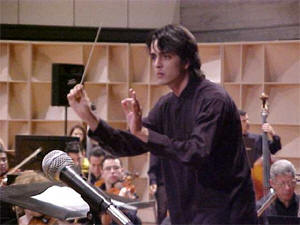
Cellist Carlos Eduardo Izcaray should have been directing the Venezuelan Symphony Orchestra yesterday in a performance of works by Sibelius and Dvorak's 8th symphony. Instead, he was recovering in a Caracas clinic after being brutally tortured and threatened with death by the national guard.

Izcaray's crime was to have been in the wrong place at the wrong time. His testimony, and that of dozens of other victims in recent days, highlights the ethical dilemma that helped bring about the resignation Thursday of his country's ambassador to the UN, Milos Alcalay, who - as it happens - is a friend of Carlos Eduardo's father, Felipe Izcaray.


Carlos Eduardo Izcaray

Alcalay, a career diplomat with over 30 years experience, said the past week's repression of opposition demonstrators revealed a pattern, "which closely resembles those totalitarian or authoritarian regimes . rejected by the peoples of Latin America in the 1980s".

In a letter to foreign minister Jesús Pérez, he said he could no longer represent a government which denied human rights, rejected dialogue and destabilized democracy.

Ironically, his friend's son was a mere bystander Monday night, during clashes between the national guard and demonstrators protesting the refusal of electoral authorities to schedule a recall referendum against President Hugo Chávez.

"People were throwing stones," he said. "And a molotov cocktail landed almost on top of me. So I was just leaving for home (he lives nearby) when the national guard made their move."

Since he was not part of the demonstration - he is not even an opposition sympathiser - Izcaray did not run from the guard, who caught up with him, grabbed him and began giving him a beating that went on for over 20 hours.

After hitting him with everything they had to hand, including their night-sticks, they forced him into a truck, where the torture intensified. One guardsman, "put a 9mm pistol in my mouth and said he would kill me then and there," Izcaray said.

The next step was to take the contents of a teargas canister and smear it over the faces of the four prisoners in the truck. "They even made me smear it on the other guys," the cellist recalled. "That was particularly humiliating."

All this was accompanied by taunts and insults. Their faces burning from the effects of the chemical, the four men were then forced to inhale the same substance from a burning rag. Then they were shut in the truck, with all exits and windows closed, and a teargas bomb was thrown in.

"I thought I was going to die," said Izcaray, who came close to passing out. Taken to the headquarters of the guard's 51st Detachment, he was placed with a dozen others in a corner, while the beatings continued, although at no point was any of the prisoners questioned individually.

Several were under-age - around 15 or 16 years old - but they received the same treatment as the others.

"The guard forced us to sing pro-government songs," he continued. "Then they made us sit in line with our heads bowed, and a guy came along with some kind of electric-shock apparatus - I couldn't see what it was, but they gave us shocks on the neck, hands and arms."

Izcaray was left with severe bruising and damage to muscles and nerves. He is now preparing to take legal action against his torturers, but admits to fearing reprisals. "An officer threatened me with death if I talked to the media," he said.

"Torture? No, chico!" said defense minister Gen. Jorge Luis García Carneiro in response to a Herald query. Meanwhile, vice-president José Vicente Rangel said yesterday there had been "not a single case of torture" and that security forces had acted in an "absolutely controlled and rational" fashion.

March 6, 2004

Something you don't see often...

...a pro-opposition story leads the main BBC news site...

Large and emotional

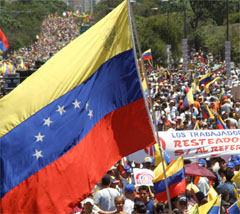
The opposition march today was large, peaceful and very emotional. Torture and mistreatment victims spoke to hundreds of thousands over loudspeakers, sandwiched in between the politicians. There was a large security presence just beyond the boundries set out by the military for the marchers: neither side provoked the other, for once.

Perhaps Chavez has finally realized that the best way to discredit the opposition leadership is to let them give speeches. By and large, they are amateurs of the harangue, minor leaguers compared to his Sammy Sosa status. They're just not even close.


Antonio Ledezma and Henrique Salas Römer

The speeches of Antonio Ledezma and Henrique Salas Römer, in particular, raised some alarm bells for me. "Speech" is the wrong word for them really, they were more like strings of antichavista strung one after the other and shouted into a microphone at the top of their lungs. The adeco style shout-fests had no real logical ordering that could pass as an argument; it really looked like an anachronism. It was a sad spectacle, and a sad comment on the opposition. I'm sorry for any PV readers here, but man, y'all need a better candidate than that.


Pompeyo Márquez

Pompeyo Marquez, the venerable 83 year old ex-communist leader and voice of the left's conscience reportedly gave a decent and sensible speech. He was the one come-flor voice in an afternoon dominated by talibanes. Pompeyo retains a certain moral authority that's hard even for opponents to overlook.


Felipe Mujica

Meanwhile, Felipe Mujica of MAS had a tough task ahead of him. He wanted to keep the Coordinadora's options open, but couldn't let anyone else out-antichavez him. With a politician's practiced skill for strategic circumlocution, he at least tried to leave a window open for possibly going to reparos. But he obviously felt obliged, given the emotional tone of the crowd, to crouch this argument in the most aggressive antichavista terms he could think of. The crowd would have stood for nothing else.


Enrique Mendoza

Miranda Governor Enrique Mendoza, our president in waiting, looked frankly the worst of bunch, even though he had the best speech. Mendoza can talk about social issues with some authority, because in Miranda he has a real track record to defend. And to his credit, he did talk about this political struggle as a fight for the 2.8 million unemployed and the 4 million in most critical poverty who do not know where their next meal is coming from.

It was a good effort, and it might even have been effective, had it not been shouted in a baritone shriek into the microphone. Once he'd gotten going, Mendoza literally panted into the microphone with each breath, gasping loudly for air and looking like nothing so much as a grandfather who has worked himself up into such a fury that he's about to give himself a heart attack. Two words: not presidential.

So there was little joy in watching the speeches for me, or at least for my inner come-flor. At times the speechifying drove me to the very edge of Ni-Ni territory, a frightening idea. If the opposition is turning off people like me with their cabeza caliente rhetoric, what chance do they have with the waverers, with the real ni-nis?

The thing about polarization is that each side ceases to believe the other side exists. If they'd let me anywhere near that microphone I would've gotten up and said something like.

"You know, there are eight million chavistas in this country right now who don't believe this event is happening because it's not being shown on State TV? And you know what else, they're Venezuelan, just like you and me. They eat the same arepas with the same diablitos, they drink the same polar, they go crazy over the same baseball teams, they have kids and uncles and cousins just like you who they love and cherish. Really, they're just like you. It's senseless to make them the enemy, because even today the majority of them are decent people, earnest in their beliefs. But also because in 25 years they will still be living in this country, just like you'll still be living here. The goal here is not the referendum. The referendum is a means to an end. National reconciliation is the end."

Not of course that the Coordinadora would let me anywhere near a microphone, and perhaps for good reason.

Venezuela: 25 Attacks on Media Workers in One Week

The following is a press release from Los del Medio an independent, non-partisan media NGO made up of reporters, photo-journalists, producers and other media professionals concerned to raise the professional standards of Venezuelan journalism, both public and private, and to protect the human rights of media professionals in Venezuela. Full disclosure: I am a member of Los del Medio.

Caracas, March 4th, 2004
The media professionals' NGO, Los Del Medio, condemns the aggressions against at least 25 journalists, photographers and cameramen and their assistants as they performed their jobs between Friday 27 of February and Wednesday March the 3rd, 2004. The number of attacks in this short period of just six days approaches that tallied by this organization over 18 months: 34 formal complaints between November 2002 and May 2003.

This time around, workers have not merely been attacked due to being present in the line of fire. The majority of the victims have been subjected to abuse from the forces of public order, especially the National Guard, and others have been assaulted by sympathizers of the government and the opposition. Similarly, three journalists have been arrested without due process guarantees.

The following is a summary of most of the aggressions, according to complaints gathered by Los Del Medio together with the National Union of Press workers:

1. Berenice Gómez Velásquez.
Journalist for the Ultimas Noticias afternoon tabloid. On Friday the 27th in the afternoon she was on Avenida Andres Bello, (Central Caracas) on a motorcycle with a driver from Cadena Capriles. A group of people who identified themselves as followers of the government intercepted them, beat the driver, took the motorcycle and their bullet proof vests, their wallets, a necklace and Gomez's tape recorder. They beat him, then shot into the air. At 8 pm they returned the motorcycle only and told the driver: "This is what you get for going around with Berenice Gomez."

2. Carlos Montenegro.
Televen camaraman. On Friday, February 27th, he received a bullet wound to his left leg, shot by a uniformed officer when, on Libertador Avenue around Mariperez, he covered the end of the opposition march that led to skirmishes between the National Guard and the protesters.

3. Luis Vladimir Gallardo.
Photographer in Caracas for the newspaper El Impulso, of Barquisimeto, Lara State. On Friday, the 27th, he was wounded after receiving a blast of shotgun rubber pellets shot at close range to his face by a National Guardsman. He was also nearly asphyxiated by tear gas.

4. Juan Carlos Mena.
From the Mexican news agency Notimex. Was wounded by rubber pellets shot by the National guard.

5. Edixon Gonzalez and Marlon Guzman.
Reporters for El Tiempo, in Anzoategui State. On Friday the 27th of february they were attacked at the doors of the municipal police headquarters at El Tigre, Anzoategui state, in the Northeast of Venezuela, by people who identified themselves as followers of the government.

6. Felipe Izquierdo.
Cameraman for Univision, the US spanish language broadcaster. On Friday he was wounded with a bullet to the leg. He told Inter-Press Service that the shot emanated from the opposition march in Mariperez, Caracas.

7. Juan Barreto.
Photographer for Agence France Press. Was shot in the hand and thorax during the February 27th march. "A young man who was in the opposition march shot me with a 9 mm. handgun. Fortunately, I was saved by the bullet-proof vest I wear," said Barreto to Inter Press.

8. Bernabe Rodriguez Ruiz.
Photographer in Caracas for El Tiempo, the Puerto La Cruz newspaper. On Sunday, February 29th a tear gas canister was shot at his face. It was shot by a National Guardsman during a protest in Barcelona.

9.Tito Diaz.
Photographer for the newspaper Avance, of Los Teques, Miranda State. On Sunday the 29th in the evening he was wounded with rubber pellets during coverage of the clashes between opposition neighbors and the National Guard in San Antonio de los Altos.

The report goes on to describe a total of 25 attacks against journalists and two illegal arrests. Fifteen of the attacks were perpetrated by government supporters or the Armed Forces, eight by groups supporting the opposition, and two could not be immediately attributed.

Los del Medio calls on press workers to lodge formal complaints against the attacks through our email: losdelmedio2003@yahoo.com

We also call on the Citizen Branch - the prosecution service and the people's ombudsman - and the Judicial Branch to defend the human rights of the victims and launch impartial and fair investigations into these attacks, following due process. We also call on the forces of public order and the parts to the conflict not to obstruct the work of media workers. We call on the State to guarantee journalists' security.

Equally, we invite both the private and public media, and especially reporters and those who conduct news and opinion programs, to carry out a balanced coverage of the events taking place and their consequences.

Only a fair reflection of the events, produced to high standards of professional ethics, can contribute to slow the violence on the streets and the excessive repression of State forces and thereby help find a positive outcome for the country.

March 5, 2004

¿Quién es más talibán que Jefferson?

"...We hold these truths to be self-evident, that all men are created equal, that they are endowed by their Creator with certain unalienable Rights, that among these are Life, Liberty and the pursuit of Happiness. --That to secure these rights, Governments are instituted among Men, deriving their just powers from the consent of the governed, --That whenever any Form of Government becomes destructive of these ends, it is the Right of the People to alter or to abolish it, and to institute new Government, laying its foundation on such principles and organizing its powers in such form, as to them shall seem most likely to effect their Safety and Happiness. Prudence, indeed, will dictate that Governments long established should not be changed for light and transient causes; and accordingly all experience hath shewn, that mankind are more disposed to suffer, while evils are sufferable, than to right themselves by abolishing the forms to which they are accustomed. But when a long train of abuses and usurpations, pursuing invariably the same Object evinces a design to reduce them under absolute Despotism, it is their right, it is their duty, to throw off such Government, and to provide new Guards for their future security...

...To prove this, let Facts be submitted to a candid world.

He has refused his Assent to Laws, the most wholesome and necessary for the public good.

He has forbidden his Governors to pass Laws of immediate and pressing importance, unless suspended in their operation till his Assent should be obtained; and when so suspended, he has utterly neglected to attend to them...

...He has dissolved Representative Houses repeatedly, for opposing with manly firmness his invasions on the rights of the people.

He has refused for a long time, after such dissolutions, to cause others to be elected; whereby the Legislative powers, incapable of Annihilation, have returned to the People at large for their exercise; the State remaining in the mean time exposed to all the dangers of invasion from without, and convulsions within...

...He has made Judges dependent on his Will alone, for the tenure of their offices, and the amount and payment of their salaries...

...He has kept among us, in times of peace, Standing Armies without the consent of our legislatures.

He has affected to render the Military independent of and superior to the Civil power...

...For Quartering large bodies of armed troops among us:

For protecting them, by a mock Trial, from punishment for any Murders which they should commit on the Inhabitants of these States:

For depriving us, in many cases, of the benefits of Trial by Jury...

...For taking away our Charters, abolishing our most valuable Laws, and altering fundamentally the Forms of our Governments:

...In every stage of these Oppressions We have Petitioned for Redress in the most humble terms: Our repeated Petitions have been answered only by repeated injury. A Prince whose character is thus marked by every act which may define a Tyrant, is unfit to be the ruler of a free people.

Nor have We been wanting in attentions to our British brethren. We have warned them from time to time of attempts by their legislature to extend an unwarrantable jurisdiction over us. We have reminded them of the circumstances of our emigration and settlement here. We have appealed to their native justice and magnanimity, and we have conjured them by the ties of our common kindred to disavow these usurpations, which, would inevitably interrupt our connections and correspondence. They too have been deaf to the voice of justice and of consanguinity. We must, therefore, acquiesce in the necessity, which denounces our Separation, and hold them, as we hold the rest of mankind, Enemies in War, in Peace Friends."

From the US Declaration of Independence, 1776.

Thank you, Erica!

Like a ton of bricks...

Coup by technicality
Washington Post Editorial.
Friday, March 5, 2004; Page A22

LATE LAST YEAR 3,448,747 of Venezuela's 24 million citizens turned out in just four days to sign petitions calling for a recall referendum on President Hugo Chavez. This extraordinary civic exercise, monitored by observers from the Organization of American States and the Carter Center, offered a democratic solution to years of political conflict in that important oil-producing nation -- trouble that threatened to push Venezuela into dictatorship or civil war. Now Mr. Chavez, whose crackpot populism and authoritarian methods provoked the crisis, blatantly seeks to stop the vote, in violation of his commitment to both the OAS and his own constitution. His actions have already prompted a new wave of unrest across the country, including demonstrations in which at least seven people have been killed. Unless he can be restrained, Mr. Chavez may complete his destruction of one of Latin America's most enduring democracies.

Though the constitution, drawn up under Mr. Chavez's own administration, requires 20 percent of all voters to back a referendum, opposition groups collected 1 million signatures more than should have been needed for the recall vote. These signatures were rigorously audited by a nonpartisan civic group before being forwarded to the electoral commission. Yet, after delaying its response for weeks, the commission, dominated by Mr. Chavez's supporters, rejected 1.6 million of them, or nearly half the total. To do so, it invented requirements that didn't previously exist. Most notably, it threw out 876,000 signatures, each accompanied by a thumbprint, because someone other than the voter had entered registration details on the petition.

Mr. Chavez's functionaries subsequently announced that they would give about a million of those stricken from the list a chance to restore their names -- but only if they appear in a limited number of registration centers during one two-day period. In practice, that poses a next-to-impossible logistical challenge to the opposition, even if there were no harassment from Mr. Chavez's police and civilian goon squads. But attempts by the foreign mediators to reverse this Kafkaesque coup have so far been unsuccessful.

Mr. Chavez, who has built a strong alliance with Cuba's Fidel Castro and imported thousands of Cuban personnel, appears eager for a domestic and international confrontation. Last weekend he called President Bush an "illegitimate" president, referred to him with a vulgar epithet and threatened to cut off oil supplies to the United States. Opposition leaders say that more than 300 people have been arrested in recent days, and that some have been tortured. Given the Bush administration's weak position in the region, hope for a peaceful or democratic solution rests mostly with Venezuela's Latin American neighbors, starting with Brazil. If Mr. Chavez continues to deny his people a democratic vote, leaders from those nations must be prepared to invoke the Democracy Charter of the OAS and threaten him with the isolation reserved for autocrats.

Suddenly, it's hip to publish statements on Venezuela

The European Union - via the Irish presidency - hangs tight to the OAS message. Though the language is, well, diplomatic: the meaning is clear. Everybody knows there are about 3 million valid signatures. OAS knows it, the Carter Center knows it, the European Union knows it, every diplomat in Caracas knows it. It's an open secret.

AFP: Venezuela opposition leader shot dead

From iafrica.com:

Posted Fri, 05 Mar 2004: Venezuela's opposition negotiated with the government on Thursday over the official refusal to hold a referendum to recall President Hugo Chavez, and a local opposition leader was shot dead during fresh protests.

Venezuela's UN ambassador Milos Alcalay quit his job in protest against the Chavez government's handling of the crisis, damaging the president's international standing.

The new crisis erupted after the National Electoral Council said only 1.8 million of the 3.1 million signatures collected by the opposition to demand a recall referendum were valid. Some 2.4 million valid names were needed for a referendum to be called.

More...

It's incredible, there are newspaper readers in Africa now hearing about us and probably shaking their heads...

Torture

I've been getting a lot of photos in my inbox of badly bruised bodies and other signs of torture. Devil's Excrement is publishing some of them.

I'm holding off because I have no way to substantiate that the pictures are of what they say they are, and in these cases it's crucial to be extra sure.

If you or someone you know has been tortured, it's important to document everything about the case. Times, dates, witness statements, photos, results of clinical examinations, the works. Start a file, and fill it carefully.

The government will not investigate these crimes. We have to do it ourselves.

Frances Robles on NPR

Miami Herald Bogota Bureau Chief Frances Robles gave NPR 5 minutes on Venezuela (RealOne link.)

The Mugabization of the Chavista State

One day, when the time comes to write the history of this last week, hard questions are going to be asked.

People who have spent a lifetime criticizing puntofijismo, attacking the old regime for its human rights abuses, will have a hell of a time explaining why those human rights abuses were an outrage when they were in opposition but have become "gallant" now that they are in power. Vicepresident Jose Vicente Rangel continues to deny that there are ANY cases of torture and blames absolutely anyone at all - from the protesters themselves to their mayors - except the people commiting the actual abuses.

Tarek William Saab, clearly having forgotten his brief experience as a political prisoner in 2002, sees no problem with the National Guard abuses, and says it's the guards whose rights are being abused. (Poshitos)

Over the last week, Venezuela has seen multiple, consistent reports of torture (including beatings, electric shocks, the use of harsh skin irritants during interrogations, the use of tear-gas canisters in enclosed spaces) as well as random shootings by state security forces into residential buildings and, at the last count, nine extra-judicial killings in a week.

When brought to task, government spokesmen brazenly blame the victims, explaining they have a plan to destabilize the country and praising the "gallantry" of the armed forces in suppressing them. The victims, needless to say, can rest absolutely assured that their attackers will not be punished for what they've done. That's the chavista way...

I have been sporadically criticized for comparing Chavez with Robert Mugabe. People tell me I'm exagerating. I wish they were right. But for a week now, directly after Mugabe's G15 visit - when Chavez went out of his way to praise him personally - we've seen Chavez borrow heavily from Zimbabwe's repertoire of repression tactics. The government's new M.O. - arrest, torture, release - has been a staple of political life in Harare for years. The single-minded, single-track attack on the opposition as "foreign puppets" is also lifted straight from the Mugabe (and Castro) playbook.

It's true that Mugabe's Zanu-PF supporters have been less shy about mass-scale murder than Chavistas in Venezuela. However, it's worth pointing out that 4 or 5 years ago, when the political crisis started in earnest in Zimbabwe, their level of violence was not so different from what we see now in Venezuela. They're just further along down the same road.

Certainly, once the country's legal and investigative institutions, from CICPC (judicial police) to the prosecutors to the courts, have all been hollowed out and packed with revolutionaries, there are no procedural guarantees worth a damn to opposition supporters anymore.

Even today this process of purging and packing continues, like it did in Zimbabwe in the late 90s, with independent-minded judges being unceremoniously fired to be replaced with advocates of revolutionary justice. A total breakdown in the rule of law, from the ground up. Rather than protecting citizens, we can look forward to courts being turned into yet another instrument of repression. In due time, Mugabe picked out the opposition's leader, Morgan Tsvangarai, and had him tried for treason. Their past, our future?

Meanwhile, many who should know better continue to provide propaganda cover for a regime that's plainly past deserving it. With every passing day they undermine their own credibility. In the fullness of time, people like Larry Birns, Greg Palast, and many others will be called to account. Questions will be asked of them. They will have to answer, they'll have to explain what, personally, they did to stop the human rights abuses they knew were taking place all around them. And they'll have to accept that they a-sided with the abusers and b-did nothing to stop the violence.

Things to keep in mind, down the road, when you hear them report in anguished tones of high moral righteousness about the terrible excess of the Carmona dictatorship, say, or what happens at Guantanamo Bay.

March 4, 2004

Quico's Believe It or Not

It's astonishing, but Attorney General Isaías Rodríguez had the balls to appoint none other than Danilo Anderson to "investigate" the death of Yormi Suárez Rivero, who was shot dead while he protested on Tuesday at 8:00 p.m. at Plaza La India in El Paraiso, in the west side of Caracas.


"Environmental" "prosecutor" Danilo Anderson

As for Danilo Anderson, well, where to even start? For those of you not privileged to have heard of him, his official title is "fourth environmental crimes prosecutor." He has no expertise whatsoever in criminal law, much less in muder investigations. Yet he has been appointed by the Chavez-puppet of an Attorney General we have to head up the investigation of almost every violent attack against the opposition.

Anderson, a known chavista, has never once gotten anyone convicted for shooting and killing an opposition activist, including in several cases where there was videotaped evidence linking chavista subjects to shootings. His appointment to the case is a slap in the face of Yormi's family as they grieve. It should shock and outrage anyone concerned with human rights in Venezuela, and confirms again the state of total impunity and increasing lawlessness that grips the country at this time.

Yormi was 23. His sister said he was very upset by footage of the National Guard beating up Elinor Montes, a despicable image many times magnified by endless repetition on the opposition media. While the government more than evidently bares the brunt of the blame in this sad affair, Globovision should think about the impact of tactics like repeating again and again emotionally charged images like the beating of Elinor Montes. The private media needs to be mindful of the human costs of the incitement it broadcasts.