September 26, 2007

El Otro Carrao


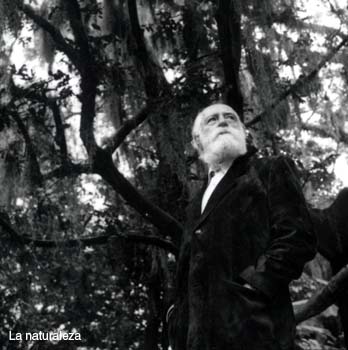
Quico says: It's 11 a.m. on a dazzling Paris autumn day and my favorite writer is telling me about his childhood in the Llanos during the Gómez dictatorship.

"I always wanted to learn how to cook. It really fascinated me, cooking. Knitting too...needle work in general. I would tell my mother to teach me, but as you can imagine, in those days, well, it was just out of the question. 'That's women's work,' she would tell me, 'you're supposed to be out on horseback, carrying a gun, getting into machete fights.' Imagine, that's what was expected of boys back then!"

It was with a mix of trepidation and bravado that I'd gone out to meet José Manuel Briceño Guerrero at his daughter's apartment in this immigrant-heavy corner of the 20eme Arrondissement, on a street named - impossible to omit this bit - Rue Lesage. He'd emailed me to say he would be spending a bit of his summer vacation there and, well, it's just a 3 hour train ride from Maastricht, so...

As I made my way there, I was terribly self-conscious of how little I really knew about the man. A journalist would get fired for turning up to an assignment this unprepared. But what can I say? There just isn't that much about him online. Worse, I've only read a couple of his books, and both of which were written decades ago. (As for the newer ones, I simply have no idea how to get them in Europe.)

The reason I wanted to - no, not "wanted to". The reason I felt I had to meet him was his 1981 magnum opus, The Labyrinth of the Three Minotaurs.

It's a book that shook me to the core. It split my understanding of my culture into two periods: before and after reading it. I've developed a deeply personal relationship with the book, coming to see it as a kind of road map to my own identity, a Rosetta with the power to decode the Venezuelan psyche. And now, here I am, clutching a glass of orange juice and sitting across from its author as he paints a portrait in words of his impossibly unlikely origins.

"This was all out in Apure," he goes on, "in a really tiny village called Palmarito. My mother was from there. My dad was an Andino, from Trujillo. Gómez had sent him out there as part of his drive to 'pacify the plains.' He was Civil Chief of the village even, and well, he met my mother there so that's where I was born. They wouldn't let me cook, or knit, but it was clear enough all along that I wasn't cut out to be out fighting other boys with machetes or carrying guns on horseback. The one place where I felt comfortable and where they didn't mind me spending time was my father's library. My father was a big reader, you see: he had a lot of books, so I spent my childhood surrounded by them. I loved it, really, and I've always treasured those memories.

"But it's also true that I got pigeonholed as the bookish one from very early on. In a way, I wish I'd learned more practical things. If somebody had to run an errand around the house, I was always excused because, you know, 'José Manuel está estudiando.' So I was never the one they sent out and round up the cows, or to ride to the pharmacy or whatever. 'Studying.' That was my role. I loved it, but at the same time, well, there's so much I never learned how to do."

I chuckle at this. Venezuela's leading classicist rues not being a better cook. A man who has memorized most of The Iliad, deep down, only wishes he'd been taught to crochet.

"It was another world back then, really. I always lived in small places in the llanos, it was only much later I first visited a city. Until I was a teenager, I'd never seen an automobile, or a telephone, even. We just didn't have them out there. But I never felt deprived because for not having those things. On the contrary, I see kids these days tapping away on cel phone keyboards and I always feel a little sad for them. I didn't have any of that, but I never felt that as a deprivation, because I had something else, something they don't have: time.

"Many years later I went back to Palmarito. They'd called saying they wanted to have a little ceremony to honor me as an Illustrious Son of the town. I went out there and the mayor welcomed me, but then apologized profusely, saying he felt terrible that they couldn't name the one street in town after me. He explained that, unfortumately, they'd already named it, and you know after whom? After el Carrao de Palmarito, you know, that folk singer? Picture that, he's also from there, and he'd already had the only street in town named after him! He was there that day, I even met him, and he stepped in to tell the mayor there was no problem, that they could name one side of the street after him and the other side after me!"

It's a good story, and suddenly I feel ridiculous remembering how hard it had been to work up the gumption to contact him. I'm not the easily intellectually-intimidated type, but the idea of meeting Briceño Guerrero had filled me with dread me for years.

I had been expecting...well, I don't know what, exactly. But not this, certainly. Not folksy charm. His books had dripped with erudition, even his emails were liberally sprinkled with latinazos: nothing about his work was straightforward, everything about it was challenging, difficult. So I'd been expecting...well, a difficult man I suppose.

But here he was, bantering and cracking jokes: as easy-going and avuncular as could be. As our conversation hit its stride, as we both overcame that initial period of reticence, I realized that his prodigious talent is no longer news to him, that he long ago stopped trying to impress it on people. However complex his oeuvre may be, however daring and iconoclastic his thought, the man himself struck me as the last thing you might expect: deep down, he is a simple man.

"It was always the ancients that drew me," he says, when I ask him how a boy from Palmarito ended up leading a life like his. "I really loved studying Greek and Latin - and later Hebrew - and I've always loved teaching them. I've been blessed with generation after generation of great students in Mérida. It's really the most rewarding thing I've done, teaching them. So, by now I've been eligible to retire from the Universidad de Los Andes for the last 26 years, but no way, I'm not going to stop. I love this work."

A kind of mischievous grin flashes through his face. Down to the outlandish personal appearance he's crafted, Briceño Guerrero clearly relishes the anachronistic-misfit-intellectual niche he's carved out for himself. Nobody but nobody in Venezuelan academia keeps working for a quarter of a century past retirement age. This is not normal behavior. Obviously, though, he couldn't care less.

It doesn't take you long to realize what underpins his achievements is simply a prodigious, photographic memory. It's an attribute that has yet to fail him. "Somebody once asked me what book I would take with me to a desert island, and I told him 'none': the books I love I have right here," he says, tapping his forehead.

I found our meeting impossibly entertaining, but slightly awkward as well. The books that made me an instant groupie - his cultural analysis of what he calls "the Latin American failure" - are books he wrote a very long time ago indeed. It soon becomes clear that, for most of the time I've been alive, his attention has been decisively elsewhere: on poetry, on philosophy and on the classics. At times, when I try to steer the conversation towards social topics, I have the odd feeling that his own writing from the 60s and 70s is considerably fresher on my mind than it is on his. I find myself laying out arguments for him that I plainly just picked out of his books.

It's not that he's forgotten them, it's that, these days - as he's the first to admit - his feelings about politics are something like a considered boredom, an annoyance at how superficial our political debates are. He accuses Chávez of "emotional vampirism" - of monopolizing the nation's attention, its emotive energy, to such an extent that he makes it nearly impossible to take a step back and consider the country's problems at a deeper level.

"Not that that's new: I remember, in previous decades, how the debates between Marxists and non-Marxists at ULA, or between Adecos and Copeyanos, were similar in many ways: terribly shallow, and centered on the sense of belonging to a group more than on a genuine give-and-take of ideas."

"At ULA, the faculty, which was always mostly marxist, didn't know what to make of me at all. All they noticed is that I wasn't a marxist and, as far as they could tell, that could only mean I was a reactionary. Personally, I never had any interest in these kinds of debates - which I always found basically sterile. My instinct, faced with confrontation, has always been to withdraw...and it still is."

I tell him one of my blog readers (here's lookin' at you, Escualidus Arrechus) had commented recently that the measure of how screwed up our public debate is is that 80% of what Chávez says the opposition would accept, if an opposition spokesmen had said it, and that most of what the opposition argues chavistas would accept, if it came from their guy. He stops, delighted with the thought, and instructs me: "please, send that reader my congratulations: I've often had that sense myself, and he managed to express it very well, very succinctly."

For all his writing on the Latin American failure, he still seems genuinely mystified about why it is that our public discourse can't seem to get out of the rut, generation after generation after generation. He looks me earnestly, right in the eye, and asks "¿por qué será, chico?"

And then he remembers the famous quote from Guzmán Blanco, when he was asked why he had become a conservative, and replied "we called ourselves conservatives because we saw that the others called themselves liberals. But if they had called themselves conservatives, then we would have called ourselves liberals."

"It's been over 100 years," he notes, "and that's still where we are. You have to be on one side or the other."

Against this backdrop, it's not surprising that Briceño Guerrero chose to turn his talents to other fields. Literature, and especially poetry, is what really gets his juices flowing these days. To read the ancient masters, he taught himself first ancient Greek and Latin, then Hebrew and finally, within the last couple of years, classical Chinese.

He mentions this last morsel all casual like, as though learning classical Chinese from scratch was a perfectly reasonable hobby for a septuagenarian, like canasta. I find it simply staggering. "But, but, but... why?!" I stammer, groping toward a suitably euphemistic way of hinting at the obvious: that he's far too old for that sort of thing.

"Why? The Tang Dynasty poets!" he says, "the verse they wrote, it's tremendously beautiful! It's like no other kind of poetry I've encountered. I was hooked instantly. Actually I spent half of last year in China, learning the classical language. I've only learned about 1,500 characters at this point. It's a slow process: you have to learn a character and forget it and learn it again many times before it finally sticks. But even now I've managed to translate a few poems, and my chinese teachers liked them very much."

As our meeting draws to an end I realize that, if anything, my intellectual infatuation has only grown. As I get ready to part, I feel this instinctive need to ask him for guidance, for counsel, this drive to get him to tell me what is and what is not worth doing with one's life.

"The challenge in Venezuela," he says "has always been the same: to find the space needed to reflect on a deeper level. The petty, little day to day quarrel in the front page of the newspapers always draws all the attention, all the energy. And these days it's worse than ever. The pleitico sucks away all the intellectual oxygen it takes to look deeper. But if you can find a small group of, I don't know, five or six young researchers, people competent enough and smart enough to think independently, with their own heads, and to look past the day-to-day quarrel at the forces that lay beneat the surface and drive the changes in our country...that, Francisco, is worth doing."

Tangled up & blue


Katy says: Dear readers: I apologize for being MIA. I have been swamped with work - my real work, that is - due to a pressing deadline. This should be done by the end of the week.

I also took a week-long vacation with my family. As most of you know, I don't live in Venezuela, and neither do most of my siblings. So my parents and the rest of us decided to meet in a neutral place - Panama. This gave everyone a good chance to spend their Misión Cadivi dollars. I reckon with the subsidies the government gave my relatives, you could feed a family of 12 for a year in Venezuela. Thanks, Misión Cadivi!

Too bad I haven't registered for Misión Cadivi yet. I could do it quite easily, given that I have a bank account back home and a credit card from my Venezuelan bank. All I would have to do is activate the credit card, and it's off to Chilean shopping malls and supermarkets, discounts courtesy of Uncle Hugo. Oh well, I may not be getting any of Chávez's free money, but it makes me a freer blogger.

So come back next Monday, when we'll open up the taguara again. And our apologies for this extended recess.

September 19, 2007

Sorry, everyone...

Quico says: Travel. Work. Overwhelmed. Same for Katy. Back when we have a sec.

September 9, 2007

An oppo harakiri in the making

Quico says: A little bird just put Hinterlaces' daily phone tracking poll for September 3rd, 4th and 5th in my inbox. It makes for some incredibly infuriating reading.

When asked whether they generally favor or oppose the Constitutional Reform proposal, 45% say they oppose it and 35% say they are in favor, while 20% are undecided or don't answer. 47% say the proposal threatens democracy, while 40% think it guarantees democracy. Only 26% think changing the constitution is necessary to shorten the workweek, while 54% think it could be done through a law. 64% want to be able to vote article by article, while just 26% think voting on the proposal as a block would be better.

Good news, right?

Wrong. Because, even though 45% of respondents generally oppose the reform, only 27% say they would go out and actually vote against it, while 26% say they wouldn't vote at all. Meanwhile, 31% say they would vote in favor of the proposal.

Which means Chávez could win without having to cheat, even though most people don't want the reform, all because we've psyched ourselves out of our best chance in years to clip the government's wings.

Abstentionism isn't politics, it's a vocación de martir...

September 6, 2007

Poll chart anyone?

Quico says: Datanalisis' latest poll, carried out between July 28th and August 7th (so, just before the official announcement) asked...

"If there was a referendum next Sunday to change the current constitution, how would you vote?"

In favor - 30%
Against - 40%
Don't know/no answer - 24%
Depends on the specifics - 5%

"...and if President Chávez publicly backed the reform of the current constitution, and one of the changes was the indefinite reelection of the president, how would you vote?"

In favor - 28%
Against - 50%
Don't know/no answer - 20%
Depends - 1%

Which brings us to the inevitable Chart.

So far, I've only gotten three polls, and all three were carried out before the reform's details were announced. If you happen to beg, borrow or steal some fresher ones, you know where to send them.

(Documented results only, please, so include a URL or a PowerPoint. I'm not going to post "my aunt heard that my cousin's uncle's boss said that Gallup has No on 89%" type stuff...)

Not Even the Dead are Safe in Caracas

Quico says: This article by Chris Kraul for the LA Times is instant fodder for the Reader's Guide.
Skulking in the dead of night in the remote and overgrown Las Pavas section of the Southern Municipal Cemetery, robbers armed with crowbars and sledgehammers first shattered the tomb's concrete vault and the granite marker that read, "To our dear wife and mother in heaven, Maria de la Cruz Aguero."

Then they lifted the coffin lid and stole leg bones and the skull of the woman, who had died Sept. 9, 1993. They sold the bones for $20 each, the skull for as much as $300, said Father Atilio Gonzalez, the cemetery's resident Roman Catholic priest.
It only gets weirder from there, including this jaw dropping tidbit,
On a recent day, the cemetery (del sur) was the scene of a macabre ritual that has become a regular occurrence whenever a young gang member is buried, Gonzalez said. It provided another example of the lawlessness here.

During the funeral procession for a 25-year-old gunshot victim, friends suddenly halted the cortege and removed the corpse from the coffin to give it one last joy ride around the cemetery on the back of a buddy's motorcycle.

As a final homage before burial, the dead man was given a 30-gun salute -- from pistols fired by his pals. One of the bullets punctured the umbrella of Father Gonzalez, who officiated at the burial.
Read the whole thing. No, really, read the whole thing.

September 2, 2007

Chávez vs. Chávez

Chávez says: “It's not true that I have a plan to perpetuate myself in power, and the proposal [for indefinite re-election] made by [then] Assembly member Luis Velásquez Alvaray, though surely it was made in good faith, I must say I don't share it, nor do I back it, and I'm sure that you, most of those who follow me, agree with me on this."

This was Chávez back in September 2004, according to his own Miraflores press flunkies. They note that he said that two terms of six-year is enough, and that cycling through leaders is important, particularly because he didn't seek to be an indispensable caudillo. "I am neither a caudillo, nor indispensable," he said.

Of course, like anyone else, Chávez is entitled to change his mind. There's no reason why he shouldn't be able to say, "hey, I used to be against indefinite re-election, for such and such a reason. Having thought more carefully about it, and in light of new circumstances, I've changed my mind. From now on, I have decided that I am a caudillo and/or indispensible, for this and this reason." I mean, if you're going to flip flop, do it honestly.

But, as Rory Carroll found out, that's not the way he's playing it. Having erased (in some cases, literally) his previous stance from the historical record, now he flies into a narcissist hissy fit when someone makes the exact same points he used to make. He hints darkly about their allegiance to foreign powers, blusters at length against them without addressing the substance of their points, and all without ever betraying the slightest whiff of understanding, the most oblique hint of self-awareness about the scale of the rhetorical U Turn involved.

I hate to be repetitive, but it's important to recognize it clearly: the problem here is only tangentially about politics. The guy is mental.

That's not a right-wing thing to say or a left-wing thing to say. Faced with this kind of behavior, it's as close to a plain statement of fact as it's possible to elaborate.

[Hat tip to feathers for an excellent catch.]

August 30, 2007

Recess


Katy says: Both Quico and I are traveling. Check back here next week for more fun under the sun.

August 28, 2007

Is Chávez too left-wing for The Guardian?


Katy says: This article by The Guardian on Chávez's tirade against the newspaper in Aló, Presidente is priceless. The dry English wit drips off the (web)page.

Rory Carroll, “Aló Presidente - Episode 291: When Chávez Reclaimed Las Malvinas,” The Guardian, August 28, 2007.

The question landed on Hugo Chávez's desk with a thud and he paused to inspect it. His nose wrinkled, as if the Caribbean which lapped metres away had thrown up something unpleasant.

It was a rare moment of silence in a seven-hour talkathon and did not last long. Venezeula's president hurled the question back out to sea, far over the horizon, and turned it into a harangue against Europe, the British navy, the Queen, racism, imperialism and that embodiment of old world vice, the Guardian. By the end of it, Mr Chávez had urged the Caribbean to reconsider membership of the Commonwealth, Latin America to recover the Falklands, and this newspaper, which he named about a dozen times, to stir republican sentiment in Britain.

"There is much cynicism in Europe. Europe competes with the United States. In Europe they do not recognise the African holocaust.

"In Europe they still talk about the 'discovery' of America. Never has a European journalist asked our opinion about the arrival of Christopher Columbus. 'Cultured' Europe, and us the barbarians. What cynicism!"

What prompted the ire was a Guardian query about a draft constitution and its most contentious provision: the abolition of presidential term limits to allow Mr Chávez to run again when his period in office expires in 2012. Given that he had ruled out a similar change for governors and mayors, on the grounds that they might become corrupt in power, why risk it with the president?

This was not a press conference but Aló Presidente, a TV show hosted by Mr Chávez. The live broadcasts have been called government by television, because it is here that important decisions are often announced.

To his supporters, the soldier-turned-president has won consecutive landslides through giving the poor oil wealth and political power, reversing decades of neglect. To his opponents, he is squandering a bonanza on to perpetuate his power. Sunday's episode of Aló Presidente, the 291st, came from Valle Seco, a picturesque coastal hamlet. Mr Chávez sat at a desk placed in the sand at the water's edge. In the audience sat ministers, mayors, legislators and ambassadors, almost all wearing red.

It was a freewheeling affair. Outside the official cordon, local women and girls stood up to their waists in the ocean cheering and blowing kisses to their leader. Several times a dog wandered up to the desk to receive a presidential pat. A green insect which landed on a book by the Marxist theorist Antonio Gramsci was flicked away.

The carnival mood curdled when Mr Chávez was asked about term limits. "Why don't they ask for a referendum in the Caribbean [Commonwealth] islands and ask people if they want the Queen to be their head of state? Why doesn't the Guardian make an investigation in Britain about the monarchy?" he asked. There was no chance to explain that the paper has advocated republicanism. "In the name of the Latin American people, I demand that the British government return the Malvinas islands to the Argentinian people."

Later, his voice softer, Mr Chávez said he needed to be able to run again because Venezuela's socialist revolution was like an unfinished painting and he was the artist. Giving the brush to someone else was risky, "because they could have another vision, start to alter the contours of the painting". Other officials were not responsible for the big picture and so did not need to run again and again, he said, looking at a row of governors and mayors. "Nothing personal." They smiled wanly and applauded.

August 25, 2007

A couple Chávez missed...

Quico says: In a morbid, quasi-masochistic kind of way, it's intriguing to think through some of the bits of the 1999 constitution Chávez forgot to mess with in the last minute dash to finish his reform proposal. I mean, it seems like some provisions he just kind of missed, like article 145:
Public employees are at the service of the state and not of any partiality. Their appointment and dismissal shall not be determined by their political affiliation or orientation...
(Though, admittedly, the analogous provision concerning the military - in Article 328 - did not escape his attention.)

Then there's article 314, which says:
No type of spending that has not been forseen in the budget law shall be carried out...
Leaving this one intact is particularly eye-brow raising given that the reform explicitly says the "misiones" shall be set up not by law, but by presidential decree. But the Budget is a law so, technically, the constitutional reform bars the misiones from spending public money! (As for Fonden and PDVSA's social spending: they will remain as unconstitutional as they have been for year.)

It's a fairly absurd parlor game, I realize, this kind of close textual analysis. It makes no sense to train a lawyerly eye on a document that was never intended to be interpreted by independent jurists. All it does is highlight the juridical Never Never Land that is chavismo's Potemkin Constitutionalism: but, at this point, that amounts to a fish-in-a-barrel massacre.

Nonetheless, it has its uses. Recently, Luis Miquilena argued that the reform mostly legalizes the constitutional violations the government has made routine. Clearly there's some truth to that, but just as clearly progress on that score will be only partial: a good number of the key constitutional provisions that have been most flagrantly violated in the last few years are not up for reform.

So, since they're not calling for these articles to be reformed, should we infer they intend to start respecting them? Or did Chávez just overlook them in the all-nighter he pulled to finish his proposal?

Quotable quotes

The continuation in authority of the same individual has frequently been the end of democratic governments. Repeated elections are essential in popular systems, because nothing is so dangerous as allowing a single citizen to remain in power for a long time. The people gets used to obeying him, and he gets used to ruling it; whence usurpation and tyranny arise. A proper zeal is the guarantee of republican liberty, and our citizens are more than justified in fearing that the same magistrate, who has already ruled them for a long time, may continue to rule them perpetually.
Simón Bolívar


Anyone who has a different project, a different leader, should leave, here in this party we want people who believe in the leadership of president Hugo Chávez Frías. Brothers, the only option here is called Hugo Chávez Frías and the people, there is no other option here. There will be no revolution in this country if we don't have Chávez, it's as simple as that. Nobody guarantees that this constitution will be followed if we don't have a president like Hugo Chávez and we must organize to defend that proposal.

August 24, 2007

It's the re-election, stupid!

Quico says: I'm frankly disheartened by the way the debate on Constitutional Reform has gone so far. The Opposition has decided to focus on an abstract, procedural and ultimately doomed call for the reform proposal to be voted on article-by-article rather than as a block. Others have taken the government's bait, criticizing the minutiae of the reform proposal: the bits on private property, for instance, or on the six hour work day.

It's not that these issues are not important, it's that they're moot: the government's ability to do these things doesn't depend on what the constitution says. Chávez doesn't need to reform the constitution to nationalize whole sectors of the economy (ask EDC or CANTV). He can - and has - made radical reforms to the labor market by decree, without having to change even the law, much less the constitution.

In fact, most of his stated rationale for constitutional reform is transparently bogus: we're told it's needed so the government can start doing things it has been doing for years, even decades. Reform, we're told, is a precondition for the status quo.

Hay que aterrizar. Chavismo has never recognized the principle of constitutionally-limited executive power. None of the institutions set out in the 1999 constitution to rein in the executive are operational. Without effective limits on executive power, without the rule of law, without any form of functioning oversight, it makes no sense to argue about the specific new powers the reform would technically grant the executive. These are powers he already has, in practice if not in law.

The debate over "soft constitution" reforms is more than just useless, more than just absurd: it's actually counterproductive. It muddies the waters. It plays into the government's hand, propping up chavismo's Potemkin Constitutionalism, its increasingly threadbare simulation of constitutional legality.

The only reform that makes a difference is the abolition of presidential term limits and the extension of the president's term: that's hard constitution stuff. That's the only goodie the government can only get by changing the constitution. In practical terms, that's the only thing that would be different if the reform is approved.

Barely ten days after the reforms were unveiled, the Opposition has already lost sight of this basic reality. They've already turned their focus away from a transcendent, resonant issue that the voters overwhelmingly agree with them on to a dry, lifeless, technical-juridical debate nobody sane could care about. It's not even September yet and they're already out chasing red (very red) herrings.

When this whole thing started, my only question was how the opposition could manage to blow its huge lead in the early polls. The answer should've been obvious from the start: by failing to coordinate, letting the government set the agenda, focusing on peripheral issues and taking the spotlight off of the issues where most voters agree with them. Here we go again.

August 23, 2007

Boli-mumbo-jumbo

Katy says: Article 345 of Venezuela's Constitution says: "The Constituional Reform project approved by the National Assembly will be submitted to a referendum within the thirty days following its approval. The referendum will be about the reform in its totality, but separate voting will be allowed for up to a third part, if at least one third of the members of the National Assembly approves it, or if were so requested in the reform initiative by the President or by no less than five percent of voters registered in Civil and Electoral Rolls."

Today, chavista legislator Carlos Escarrá said that, since the initiative had not come from voters, the part about five percent of signatures asking for some sort of article-by-article referendum did not apply. According to him, the rule about the five percent of the voters only applies when the voters themselves are presenting the project. Any guesses as to how chavista magistrates in the Supreme Tribunal would interpret this rule?

Sadly, it sounds like this initiative is dead in the water.

PS.- On an unrelated note, Information Minister (for populist power yadda yadda yadda) Willian Lara said today that the New York Times attacks the Chavez government because it is part of the Bush administration's propaganda machinery. I'm sure the editors in New York, not to mention the TImes' readers, are rolling on the floor laughing at the sheer stupidity of this comment.

August 22, 2007

Populism and your health

Katy says: In the past few months, the Venezuelan government has dramatically increased its threats against private health-care providers, repeatedly attacking them for "fleecing" the public and for illegally jacking up prices. Hardly a day goes by without a new threat being hurled at private health-care, doctors or insurance companies. At the same time, the government curiously reiterates something few people believe - that it does not want to eliminate private medicine.

In classic populist style, Pres. Chávez said the other day that "... someone arrives at a private clinic and the first thing they are asked about is insurance, money, savings accounts, and if they don't have it, take them away... This has to be denounced, attacked and eliminated. Whoever has a private clinic and does that, does not have a right to have it."

"We have to reach that point and I am willing to reach it," Chávez stressed, saying that he does not wish to "eliminate" private medicine in the middle of a speech marking the inauguration of a hospital ward named after someone who thought it necessary.

Dictionary.com lists one of the definitions of populism as "any of various, often anti-establishment or anti-intellectual political movements or philosophies that offer unorthodox solutions or policies and appeal to the common person rather than according with traditional party or partisan ideologies." This definition fits Chavez's vision of health care to a T.

Private clinics are in the business of providing a service called "health care," and resources will only flow towards that activity if investors see a return to their investment. The only way this can happen - the only way private health care can even exist - is if people pay for the service they receive, be it via their insurance, the state or their own pockets.

Charging for health care is a necessary condition for having private health care, and most of us would agree that private health care is better than no care at all. Still, there is something about denying health care to people who can't pay that just seems unethical.

At this point, nobody serious believes the government's agenda toward health-care is anything but ideological. Sure, the government has invested in primary care, and it has recently opened new facilities that give the appearance that we are moving forward. Yet, as we have pointed out before, investment in infrastructure has not yet translated into improved health indicators, and the gains we have had fall short of the money apparently being invested. Health indicators do not suggest any significant departure from the trends they carried prior to Chávez.

Only hard-core chavistas and their foreign pamphleteers would confuse a couple of shiny new hospitals with actual health-care policy that delivers, whose results can be assessed and audited. What these "common men" don't understand is that there is more to public policy than simply writing checks and cutting ribbons. The notion of cost-benefit analysis or thinking about the medium- and long-term financing aspects of providing affordable health-care to millions of Venezuelans is as foreign to PSFs as a Reina Pepeada.

Health-care in Venezuela simply cannot be sustained through the State alone.

A government focused on results rather than rhetoric would keep this in mind and act accordingly. A government interested in improving access, yet conscious of the importance of private providers, would understand that being denied service at the door is caused by either clinics' inability to charge people *after* they have received service, or by people's absolute inability to pay. Any serious government would look to attack one or both of these root causes.

A results-oriented government could sit down with private health-care providers and suggest "good practice" guidelines to ensure that patients first receive care and then billing issues are addressed. It could push for a "patients bill of rights". It could offer to pay for the private provision of health care for poor Venezuelans through some sort of voucher scheme, allowing people to choose whether to go to private or public hospitals.

But these kinds of policies are too boring for the current administration, and working with the private sector to solve a problem that affects us all is something they are genetically unable to do.

Instead, we get threats. Clinics will now have to accept anyone coming to get treatment, and the few patients with resources will end up paying most of the bill. Adverse incentives will run amok, raising the cost of private health care. But the government has already hinted it will not tolerate price increases. In the end, the government isn't out to ban private health care, it's out to bankrupt it.

Private clinics will be expropriated without compensation. Before long, we will have an exclusively state-run health care system for 30 million Venezuelans. Anyone who thinks the system can survive with oil below $45 a barrel - if not sooner - has never been to a public hospital in Venezuela.

Chavez's big-oil policy style is typical of the way military caudillos usually handle things. His ham-fisted, yes-sir approach to complex social problems puts the "tank" in "think-tank." It's our loss that nobody bothers with the "think" part.

Charming, ain't it?

Katy says: This is the Venezuelan Embassy in Peru, as it used to look:


This is the same Embassy, as it currently stands:


Hmmmm...why on earth would Peruvians think such a government would use relief for earthquake victims to score cheap political points?

Revolutionizing Time

Quico says: Sometimes, the revolution feels like one of those confused dreams you have when you eat too much before going to sleep. You know the ones: dreams where time gets all confused, where stuff that just happened hasn't happened, then happens again and again before it happens for the first time. Dreams where time's arrow goes all squiggly on you, doubling over and turning back on itself for no reason.

Reading the Venezuelan press seems to call up that dream-like feeling more and more often. Like when I read this ABN write-up on AN Finance Committee Chair Ricardo Sanguino's feelings on constitutional reform. Sanguino argues that the reform "will end any vestige of the hegemony of private property on the means of production, so that social property over them becomes pre-eminent, on the road to a socialist economy."

It's that "will" that stands out in my mind. Thirty years after nationalizing the oil industry, months after renationalizing the power and telecoms sectors, long after state regulation of every single aspect of business life has left the notion of "property" an empty husk, Sanguino tells us that everything the state has already shown it can do, and indeed done, it will do once the constitution is reformed.

The constitutional reform debate is full of this kind of thing: grand declarations about its absolute necessity in order to enable the state to do stuff that filled yesterday's newspapers. In a way, Chavismo is trying to sell us the Constitutional Reform as a necessary precondition for the status quo.

In this debate, verb tenses seem to come all unhinged. The long ago consummated end of the Central Bank's autonomy becomes a bold new proposal for the future. Language banning "latifundios", which had been written into the constitution all the way back in 1961, is dusted off and hawked as this season's latest arrival. The recent expansion of Conatel's authority over PayTV is served up again, as if it were a shiny new morsel. This must be what Trostkyites mean by Permanent Revolution: the permanent recasting of the routine as revolutionary.

Amid all this craziness, it's almost fitting that Chávez is moving forward with a proposal to fuck even with our wrist-watches: moving Venezuela half a time-zone back into the past. Once there, one suspects he'll set out to undo some of what he had already done so that he can repackage its prospective redoing as a constitutional innovation.

August 21, 2007

Bored

Quico says: Sorry, folks, but the comments' forum got too boring to read. I'm calling a general time out.

Catastrophic Absence of Self-Awareness Chronicles, Part Umpteen

Quico says: I loved this bit, from The Economist's piece on Chávez's proposed constitutional reform. After explaining how the proposal would do away with presidential term limits, it notes:
State governors and mayors will still be subject to term limits—otherwise they might become caudillos, Mr Chávez said recently, without irony.
Classic...

August 20, 2007

Chavismo hits new lows


Katy says: Peruvian portal www.peru.com has a story about victims of Peru's deadly earthquakes receiving canned gods labeled with political propaganda and slogans in favor of Chávez and defeated presidential candidate Ollanta Humala.

The labels on the cans (pictured above) read: "To face the looting, blockages, desperation and chaos (sic). Solidarity towards our compatriots."

It also reads: "In the face of the natural disaster that has struck Peru, and in particular our region Ica, the Peruvian Nationalist Party, along with our sister Bolivarian Republic of Venezuela, its leader Hugo Chavez and our leader Ollanta Humala, makes itself present because the Peruvian government acts in a slow, inefficient and heartless manner, not caring about the pain of the victims and leaving them suffering from hunger, thirst and theft."

PS.- Both the Venezuelan government and Humala's party deny being involved. I wonder if whoever sent these cans sent can-openers as well.

Thor in the NYT


Katy says: I don't know Thor Halvorssen personally, and I don't believe I have ever corresponded with him. However, we're all fighting for the same side, so I guess you could say all of us share some sort of cyber-kinship.

I've seen his name come up once and again in the international debate about Hugo Chávez, and I've been struck by his eloquence and his media savyness. Anyway, Thor got a lengthy, mostly positive profile in the New York Times movie section, and I wanted to make sure people checked it out. Sorry, free subscription is required to access it.

August 17, 2007

This constitution is brought to you by Jolt Cola

Quico says: I just gave Chávez's constitutional reform proposals a closer read and all I can say is I'm laughing my ass off. Not as a political analyst, mind you: as an editor. This thing is so deliriously, comically miswritten you have to go through it a couple of times before it fully hits you.

I'm not even talking about politics here, I'm talking about grammar. Take this bit from the new Article 18:
All citizens [...] shall enjoy and be entitled to the Right to the City, and that right should be understood as the equitable benefit that each inhabitant receives, conforming to the strategic role the city articulates, as much in the urban regional context as in the National System of Cities.
(I swear that isn't a tendentious translation. The original makes just as little sense:
Todos los ciudadanos y todas las ciudadanas [...] disfrutarán y serán titulares del Derecho a la Ciudad, y ese derecho debe entenderse como el beneficio equitativo que perciba, cada uno de los habitantes, conforme al rol estratégico que la ciudad articula, tanto en el contexto urbano regional como en el Sistema Nacional de Ciudades.)
Now, set aside for the moment the unbearable flightiness of a constitutional "Right to the City", look past the sheer cloudy vagueness of a formulation like "the strategic role the city articulates," and focus on the grammar. Is it just me, or is there a clause missing from this sentence!?

Seriously, read it again. It's not just me, is it?

More than ungrammatical, though, the text is by turns deliriously vague, weirdly redundant and bizarrely self-contradictory. Much of it is written in language that's just not lawyerly at all. I'm thinking of bits like the new article 141, the supposedly pivotal inclusion of the misiones into the fabric of the constitution:
The public administrations are organizational structures designed to serve as an instrument to public power, for the exercise of its function and the provision of services. The categories of public administrations are: the bureaucratic or traditional public administrations, which are the ones that attend to the structures foreseen and regulated in this constitution and the laws; and the misiones, constituted by organizations of various natures, created to attend to the satisfaction of the most keenly felt and urgent necesities of the population, whose provision calls out for the application of exceptional or, even, experimental systems, which shall be established by the executive branch through organizational and functional regulations.
Again, you have to read this one through a few times before the sheer lunacy of the text quite strike you. Take your time, chew on it a bit. Turns out the supposedly central misiones are "exceptional"! And, if I'm getting this right, what this article says is that the misiones have the constitutional role of fulfilling duties that are not foreseen by the constitution. Erm...ummmm...whaaa?!

But nevermind that. Look at the language. Closely, the way a lawyer would. The article tells us the misiones are "constituted by organizations of various natures [...] whose provision calls out for the application of exceptional or, even, exeperimental systems"!?

First question: what is the juridical purpose of specifying the misiones are constituted by organizations of various natures? It's a throwaway add-on: legally, it means nothing. It may be perfectly appropriate in a departmental memo, but it's bizarrely out of place in a constitutional text.

And then there's the thing that really caught my eye: that even (incluso). What kind of lawyer writes that way? "Sistemas excepcionales e, incluso, experimentales"?! This is supposed to be a constitution, dude, not an Aporrea post!

It's that "incluso" that gives the game away. An actual lawyer couldn't have written that. What's going on here? Who wrote this thing?

Soon enough, we get our answers. A few hours before his speech to the National Assembly, Chávez told reporters - and I swear I'm not making this up - that everyone was going to say he'd gone crazy because the proposal was full of "extremely innovative" provisions. And why is that? "Because I gave birth to this one in the wee hours of the night" ("porque esto lo he parido en la madrugada").

Suddenly, it all makes sense! The reason the text looks like it was written by a lunatic at three in the morning is that it was written by a lunatic at three in the morning!

It's no joke, folks...it's not an exaggeration at all. I really think he wrote it - or at least big chunks of it - by himself. The guy literally pulled an all-nighter the night before it was due. In fact, he told us so!

And it shows. I mean, we've all been there. We all know what happens when you leave an assignment to the last minute, work through the night, and end up handing in a paper you didn't really have time to double check: it's a huge, steaming mess. Grammar mistakes slip through. Chunks of it are just redundant. Others make less and less sense the more you read them, like the borderline hallucinogenic new Article 16*, which will be remembered as a kind of monument to dadaist jurisprudence.

All the pieces fall into place. Now we know why the Constitutional Reform Committee had to work in secret: Chávez's plan all along was to rip up their draft and re-write it, by himself, in his pijamas, in some last-minute caffeine-fueled binge. What we have here is a constitution not just of Chávez and for Chávez but, very literally, by Chávez.

Be afraid...be very afraid...


* I have neither the time nor the psychiatric stability to translate article 16 without causing permanent damage to my psyche, but for the Spanish speakers out there, here it is in all its bizarre glory:

Artículo 16:

El territorio nacional se conforma a los fines político-territoriales y de acuerdo con la nueva geometría del poder, por un Distrito Federal en el cual tendrá su sede la capital de la República, por los Estados, las Regiones Marítimas, los Territorios Federales, los Municipios Federales y los Distritos Insulares. La vigencia de los Territorios Federales y de los Municipios Federales quedará supeditada a la realización de un referéndum aprobatorio en la entidad respectiva.

Los Estados se organizan en Municipios.

La unidad política primaria de la organización territorial nacional será la ciudad, entendida esta como todo asentamiento poblacional dentro del Municipio, e integrada por áreas o extensiones geográficas denominadas Comunas. Las Comunas serán las células geo-humanas del territorio y estarán conformadas por las Comunidades, cada una de las cuales constituirá el núcleo espacial básico e indivisible del Estado Socialista Venezolano, donde los ciudadanos y las ciudadanas comunes tendrán el poder para construir su propia geografía y su propia historia.

A partir de la Comunidad y la Comuna, el Poder Popular desarrollará formas de agregación comunitaria Político-Territorial, las cuales serán reguladas en la Ley, y que constituyan formas de Autogobierno y cualquier otra expresión de Democracia Directa.

La Ciudad Comunal se constituye cuando en la totalidad de su perímetro, se hayan establecido las Comunidades organizadas, las Comunas y los Auto Gobiernos Comunales, estando sujeta su creación a un referéndum popular que convocará el Presidente de la República en Consejo de Ministros.

El Presidente de la República, en Consejo de Ministros, previo acuerdo aprobado por la mayoría simple de los diputados y diputadas de la Asamblea Nacional, podrá crear mediante decreto, Provincias Federales, Ciudades Federales y Distritos Funcionales, así como cualquier otra entidad que establezca la Ley.

Los Distritos Funcionales se crearán conforme a las características históricas, socio-económicas y culturales del espacio geográfico correspondiente, así como en base a las potencialidades económicas que, desde ellos, sea necesario desarrollar en beneficio del país.

La creación de un Distrito Funcional implica la elaboración y activación de una Misión Distrital con el respectivo Plan Estratégico-funcional a cargo del Gobierno Nacional, con la participación de los habitantes de dicho Distrito Funcional y en consulta permanente con sus habitantes.

El Distrito Funcional podrá ser conformado por uno o más Municipios o Lotes Territoriales de estos, sin perjuicio del Estado al cual pertenezcan.

La organización y funcionamiento de la Ciudad Federal se hará de conformidad con los que establezca la ley respectiva, e implica la activación de una Misión Local con su correspondiente plan estratégico de desarrollo.

En el Territorio Federal, el Municipio Federal y la Ciudad Federal, el Poder Nacional designará las autoridades respectivas, por un lapso máximo que establecerá la Ley y sujeto a mandatos revocables.

Las Provincias Federales se conformarán como unidades de agregación y coordinación de políticas territoriales, sociales y económicas a escala regional, siempre en función de los planes estratégicos nacionales y el enfoque estratégico internacional del Estado venezolano.

Las Provincias Federales se constituirán pudiendo agregar indistintamente Estados y Municipios, sin que estos sean menoscabados en las atribuciones que esta Constitución les confiere.

La Organización Político-Territorial de la República se regirá por una Ley Orgánica.

I'm sorry, but only Chávez could've written that.

Cuna de Bolívar y Reina del Guaraira Repano Chronicles

Quico says: So I cracked pretty early on and read Chávez's constitutional reform proposal. My initial assessment stands: what we're looking at here is seven year presidential terms, infinite re-election, and a bunch of bla bla bla.

As you'd expect, the thing is written in chavismo's trademark style: a wooly, hopelessly imprecise but ever so trendy administrative gobbledygook I like to think of as Bureaucratic Chavistese.

You can always spot Bureaucratic Chavistese by its liberal use of the hyphen to join together disparate abstractions: for chavismo, every plan is strategic-functional, every entity is politico-territorial, every cell has to be geo-human. Compounds like these exude technocratic savoir-faire, they leave you with the unmistakable sense that whomever wrote them must be terribly sophisticated. Of course, they're essentially content-free, but who cares? They sound swish...

Stylistics aside, there's not that much to say - which won't prevent me from saying it at length, bien sur. With the possible exception of the (very vaguely worded) proposals for new forms of territorial organization, there's almost nothing else in the proposal that actually requires a constitutional change. The social policy stuff you can do with a law, a lot of the rest of it (like gutting FIEM, establishing a chavista militia and regulating pay-TV) is stuff they're already doing, and the remainder the state has no administrative capacity to enforce.

The second of those categories - the post-hoc constitutionalization of stuff the government is already doing - speaks volumes about chavismo's attitude towards the Soft Constitution. I mean, if you propose to change the constitution to allow something you're already doing, doesn't that amount to admitting that what you're doing now is unconstitutional? If it isn't, why would you need to change the constitution to allow it? And if it is, how come you're doing it? And how come none of the oversight institutions is stopping you?

To put it differently, supposing the reform proposal were defeated at referendum, do you really think the government would stop regulating pay-TV? Start funding FIEM? Disband the Guardia Territorial? Of course they wouldn't...but in that case, what exactly is the point of asking us to vote on it?

And then some of the reforms are just plain cursi: does the Constitution really need to specify that Caracas will be referred to as the "Birthplace of Bolívar and Queen of Guaraira Repano"?!!?!

(Guaraira Repano is, btw, the indigenous name for that big mountain on my banner.)

There's so much that's infuriating about this last one, it's hard to know where to start: the dime-store indigenism, the grandiloquence, the hubris of trying to dictate to people how they will refer to the place where they've always lived, the absurdity of giving constitutional standing to the equivalent of the city's license plate motto, and the infuriating dissimulation involved in trying to cover up Chávez's attempt to stay in power for life through this kind of minutiae.

Of course, it's also chavismo's Nth little contribution to that age old Venezuelan dysfunction, the chasm between the world of Official Papers and the real world, between legal dictate and actual practice. Because I will eat my hat if, in 2027, caraqueños are going around calling their town the Cuna de Bolívar y Reina del Guaraira Repano. I mean, it's been over 20 years since the government decided that the Cota Mil wasn't the Cota Mil anymore, but do you know anyone who calls it the Avenida Boyacá?

August 16, 2007

Political Terra Incognita

Quico says: As Chávez unveils his Constitutional Reform proposal, it bears stopping to note how very far from convinced the Venezuelan electorate is at the outset.

From July 14th to the 24th, Oscar Schemel's polling firm, Hinterlaces, carried out 1,148 face-to-face interviews with people in 20 of Venezuela's 24 states.

The caveat is that the poll was carried out before the details of the reform were announced, so the poll measures people's general feelings about a notional reform that includes Indefinite Re-election, rather than about the specific proposal Chávez presented last night. I don't think that's a very serious caveat, though: by mid July it was already clear what the reform would be about.

With that in mind, the results look very bad for the Narcissist-in-Chief:


Ouch! These are brutal, brutal numbers for Chávez. It's not actually close at all: really, a 2-to-1 margin.

If the polls stay like this, but CNE turns around and announces the "Yes" won a Constitutional Reform referendum, we will be looking at a very, very unfamiliar dynamic in Venezuela.

Some other interesting results from the Hinterlaces poll:


Chavismo may be far from a majority, but the Opposition 'brand' remains in the utter dumps. People just don't want to identify as that.


This last result strikes me as especially significant. Chávez's approval rating - or Hinterlaces' composite measure thereof - is far from its lowest point. In fact, it's up 10 points on May, when the RCTV episode put a severe dent in his popularity.

Yet that personal bounce hasn't translated into increased support for the idea of Constitutional Reform: in July, 45% broadly approved of the guy, but just 26% approved of the reform.

Chávez has a mountain to climb to win over public opinion here. If he can't turn these numbers around, the scale of the cheating it would take for him to claim victory would simply be unsustainable.

August 14, 2007

Lonely Planet, petro-state style

Katy says: Pick up a Lonely Planet Venezuela and it'll tell you that one of the highlights of the country's Eastern shore is the seaside village of San Juan de las Galdonas, set on a remote inlet on the breathtaking Paria Peninsula, in Sucre state. Sandwiched between a picture perfect Caribbean beach and a rainforest mountain, it's just a special place, unspoiled by mass tourism.


More than a few foreigners settled there in the last thirty years, convinced they had found a slice of paradise. It's no wonder - Christopher Columbus stumbled across this stretch of coastline 500 years ago and came to the same conclusion.

Having heard all this, my friend Roger decided to drive out there for his vacation this year. The other day he wrote in to tell me about it. He said that, though it sure looks pretty, the mood in San Juan de las Galdonas has changed rather drastically since Lonely Planet last dropped in for a visit. The place might look like it was purpose-built for tourism, but these days, the townies treat visitors more as a nuisance than an opportunity.

To hear him tell it, it doesn't take long before you start noticing something isn't quite normal about San Juan de las Galdonas. The town is overrun with very expensive cars. People behave aggressively toward tourists. A deafening, thumping reggaeton pours out of every car, house and business. Parts of the once pristine vegetation around the town have been squatted on and crime has shot up.

What the hell is going on here? Asking around, Roger found out: the town has become a magnet for smugglers and drug traffickers.

One of the more profitable venture apparently involves the town's only gas station. It's being used as a port of departure for gasoline smugglers, who ship it off to nearby Trinidad and sell it at multiples of its regulated price. Rent-seekers that we all are, it looks like a lot of people in town have decided that arbitraging gas in Trinidad is a much more attractive way to make a living than making piña coladas for tourists. I guess this is what Petrocaribe is all about, right?

Obviously, PDVSA and the National Guard are in on this scam. Roger tells me that several gas trucks have to go to San Juan every day to refill the gas station's deposit. Any marginally awake bureaucrat would have found it odd by now that San Juan "consumes" as much gasoline as Maturín. The National Guard is, in fact, supervising the whole operation.

As for tourists, the town folk are doing what they can to keep them away. People like Roger, who only came looking for a parasol and a cold Polarcita to keep him company on the beach, get in the way of their little operation, and a mean-spirited campaign is underway to drive out the foreigners who run the beachside guest houses (posadas).

Roger spoke at length to the owner of the "posada" he stayed at. She's an older Swiss lady, who came to this place looking for a bit of tropical heaven and built her guest house from of scratch. She has genuine affection for the people, for the country and the overwhelming nature that surrounds her. Her affection does not extend, however, to the squatters who took over the lush, green patch of mountainside directly in front of the entrance to her business. What used to be a wall of green is now a shantytown, and the unending reggaeton serves as a constant reminder that she would be better off leaving.

Ever the Swisswoman, she ventured all the way to the state capital, Cumaná, to speak with the Sucre government's tourism commission about her problem. The official there told he couldn't help her, but that if - cough-cough - she decided to call it a day, he could find a buyer for her guest house in two days.

Roger tells me his vacation left him depressed, as if the general lawlessness that is gripping the country has reached even its purest, most picturesque places. At this rate, it won't be long until we see the walls of Angel Falls covered with graffiti glorifying the revolution.

On his way out of town, he saw a couple of teenagers hitch-hiking and decided to give them a lift to Carúpano. They were awfully nice, as kids tend to be in that part of the country, but they sadly reported that the whole town is being spoiled. In the town's only high-school, the girls' main aspiration is to bed one of the narcos running the show: it's easy to spot them, they're the only ones who can afford the flashy cel phones and showy motorbikes.

There's a book, based on a soap opera, making the rounds in Venezuela and Colombia: Sin tetas no hay paraíso - literally, "No tits, no paradise," set in the Colombian city of Pereira. It's a dramatic take on how the main aspiration of poor girls in Pereira's slums is to get a boob-job and land a nice narco-"Goodfella" to wisk them away from the barrio life.

Just as the lure of easy drug money is proving too much for any prudish Pereira girl to resist, the lure of a 300% return rate for siphoning gasoline is too much for the good people of San Juan de las Galdonas.

Sin tetas no hay paraíso, y sin rentas no hay revolución.

Scandals Generate Terrorism

Quico says: Sometimes, I feel like this blog has turned into a kind of masochistic hunt for the one chavista outrage so bizarre, so over-the-top, so plain in its authoritarian edge and its contempt for decency, that only the criminally insane could find any justification for it. But Carabobo State Governor Luis Felipe Acosta Carlés takes all the fun out of it. The hunt's just not a challenge if he serves 'em up on a platter like this:


Or like this one, ("inciting sex generates rape") which sets out to denounce the evils of showing pictures of cute girls in bikinis by...showing pictures of cute girls in bikinis:


[Added bonus: who do you think Foreign Minister Nicolás Maduro blames for Maletagate? I'll give you three shots; first two don't count... give up?]

August 13, 2007

We've been reduced to borrowing our scandals...

Quico says: I'm not going to write in detail about the $800,000 suitcase scandal, basically, because I haven't really followed it. Follow the link if you want the details.

I can't help but feel a bit of nostalgia, though, seeing the way the story's been reported. Time was when this sort of thing filled Venezuelan newspapers. Powerful people who fucked up paid a price: if not a jail sentence, at least social disgrace. It doesn't work that way anymore.

Back in January, I argued that Scandal is not possible in Venezuela these days, because the chavista state elite is, in the literal sense of the word, shame-less. And that's still true.

What really strikes me about this suitcase-full-of-cash story is that it's not really a Venezuelan scandal at all. It's one we're borrowing, from Argentina, from a society that still maintains the pre-requisites for Scandal. Our officials plainly don't care: there are any number of outrages much worse than Antonini's flight around. The only reason this one is getting so much attention is because Argentina's institutions are still sturdy enough to shame the powerful into changing their behaviors - to force resignations, for instance. Our institutions, whether formal or informal, no longer perform that role.

Think of it this way: if Antonini had been busted carrying hundreds of thousands of dollars in cash on a PDVSA flight from Maracaibo to Caracas, would anyone have cared? Would it have stayed in the papers for more than a day?

August 11, 2007

Lashing out in Montevideo

Quico says: Reading through the transcript of Chávez's speech in Uruguay on August the 8th - sorry, no link, I got it via email - is genuinely frightening. Not so much for the lunatic political rants sprinkled throughout as for what it shows about Chávez's mental state these days, about his increasing paranoia, his sense of victimhood, his serial bullying, about the bizarre extremes his narcissism has reached.

Certainly, his propensity to fly off the handle when he can't get what he wants has always been clear. But, in Uruguay, his outsized sense of personal grievance reached a scary new plateau.

In one especially telling riff, he railed against the media for lying when they said he'd given a ultimatum to the Brazilian and Paraguayan parliaments over Venezuela's accession to Mercosur. And how did such a queer idea wriggle its way into journos' minds? Merely because Chávez announced Venezuela is only interested in joining Mercosur if it can accede by September.

"We won't wait any longer than that," cryptochavista newswire IPS reported him saying last July the 5th, "The Brazilian and Paraguayan Congresses have no reason not to approve our entry: no political, legal, economic or moral reasons."

But in Uruguay this week, he slammed all who took that as some sort of ultimatum.
I was telling him [Uruguayan President Tabaré Vásquez], listen this is like if we were neighbors, good neighbors and good friends, and I decided for some reason to go knock on my neighbor's door. Knock knock! And I look through the window and I see there are people inside and the lights are on - knock knock knock! - I spend half an hour knocking and nobody comes to the door. I retire to wait for new conditions. They can't come to the door, they don't hear me, they have some problem in there so they can't open. It's something similar; it's very simple.
That anyone could have mistaken such a stance for an "ultimatum" seemed genuinely to baffle him. Chávez was even gracious enough to extend Venezuela's, erm, unilaterally set deadline (...must...resist...urge...to use...U-word...) until the end of the year. Otherwise, he said, Venezuela would have to look at "other options."

On second thought, "baffle" is the wrong word: for Chávez, the solution to any such enigma is always at hand. If newspapers misreported what was merely a unilaterally set deadline as an "ultimatum", he could only surmise "they're playing the role of lackeys of the empire."

The fact that "ultimatum" is the word ordinarily used to describe a unilaterally set deadline never enters into it: the only material fact here is that something happened that Chávez hadn't wanted to happen. Ergo, the gringos must be involved somehow.

Obvio, ¿no?

The episode neatly captures the psychic niche Uncle Sam fills in Chávez's private demoniary. The US is a psychological crutch he can't do without, the all-purpose explanation for an otherwise intolerable, incomprehensible, baffling anomaly: that reality, sometimes, fails to bend to his will.

At some point, this debate ceases to be about politics in any recognizable sense of the word. The evidence is now overwhelming that Chávez does not share the cognitive style of a normal, well person. The ultimatum hissy-fit captures the extent of his pathology neatly: we're dealing with a man convinced that even the dictionary is in bed with the CIA.

Psychiatrists have a term for the amalgamation of traits Chávez exhibits: narcissistic personality disorder. The DSM-IV diagnostic criteria for NPD read like a journalistic profile of the guy. This has long been obvious, but now it's really, really getting out of hand.

Three years ago, I posted this essay by Stephen McDonnell. I really think it's worth reading again.

Narcissist Rage

by Stephen McDonnell

The narcissist who is frustrated, who is publicly humiliated, who can't get what he wants, usually will react with anger and rage. They are like frustrated children throwing a fit. Most adults can handle frustration, but narcissists have a low tolerance for denial. A narcissist is always boiling, always thinks others are conspiring against him. Narcissists are always conspiring against others, they tend to think other people are like them.

Paranoia is a problem with narcissists. They want it their way, they want their dream to come true and any deviation or anyone stepping on their toes sparks immediate anger. If they are in seduction mode, they will forgive for the moment, but years later the anger will come back in spades. They never forget a slight or an insult. They plan revenge. Or at least some of them do.

Other narcissists will act as though above the fray, not deigning to be upset. But they remember.

Think of a 6 year old child, think tantrum, remember how kids can say something terrible to you and then forget they said it, but if you reprimand them, they break into tears or they start breaking things.

For a narcissist, rage is the ultimate response to loss of control, and they use it to gain back control over the situation and others. They can be physically abusive and hurtful. If all their words of seduction and gifts do not work, then they will physically intimidate you. Rage can either be feigned or real. As long as it works.

Is it real? Is it a game? Even the narcissist doesn't know. He is playing out his life out of touch with his real self, so who knows what he's really feeling.

I have watched narcissists use rage to get their way, to vent their frustration on someone, then I have watched them walk away, cool as a cucumber, as if nothing happened. Other times, I have seen them break things. No doubt the prisons of the world are filled with narcissists who let their rage get the upper hand. The murderers and rapists with narcissistic disorders learned to like the rush of adrenaline, the loss of control that gave them more control over their victims in the end. If someone dies when a narcissist is angry, he blames the victim for "provoking him." Remember, the narcissist is never wrong, never remembers his own mistakes, and is always in control.

If you want to see them enraged, disagree with them, make fun of them or their opinions, fight back when they attack you. If they feel they're loosing, they will fly off the handle, in a desperate attempt at control. Or they will break down in tears and try to get attention that way; beware, they are experts at manipulation.

August 10, 2007

Projection Chronicles

Chávez says: Demonize someone, demonize him and then you can justify anything. That's the empire's plan. They satanized everything, I remember Tabaré [Vásquez, president of Uruguay], when I was a teenager you would read things about a president there was in Africa, in Uganda. Now I have my doubts, because back then we believed, for sure, that he ate children, that he ate human flesh, he was a cannibal, Idi Amin Dada, I remember it clearly, I don't know if he died yet, that African. He lives in France, he must be very old now, because it was about 30 years ago when I was a young man and you could read that Idi Amin ate human flesh. I have my reasons to doubt, because they say almost the same about me, that's about all that's missing, for them to call me a cannibal. [They say] I persecute people, kill people, I shut down media outlets, all those gigantic lies and all you can say is, "my God!"

-From his speech in Uruguay 2 days ago

August 8, 2007

Labor's love lost

Quico says: One abiding irony of leftist authoritarianism is the way the self-described vanguard of the working class cannot abide working class organizations it can't control.

Interior Minister Pedro Carreño makes it clear that this is one of the many, many points of congruence between 20th and 21st century socialism. In the context of a society-wide transition towards socialism, "all organizations must become agents of that transformation."

The typical rhetorical ticks, the ropaje de palabras involved, barely conceals the authoritarian drive involved. We've all been conditioned by long experience to understand that when chavistas talk about the "urgent need for profound changes in the labor movement," that's code for subordinating it to Chávez's personal dictates.

The particular alibi chosen - the appalling corruption and racketeering flavor of the labor movement - is both genuine and immaterial: chavistizing the unions will mean replacing anti-chavista racketeers with chavista racketeers.

Unions are a prime source of patronage opportunities, in Venezuela and everywhere else...and exactly what is it that's supposed to dissuade the new class of chavista union bosses from using them as such? Contraloría oversight? The prosecutor general's watchful eye? Right.

Back in 2001, Chávez's decision to force CTV into a CNE-organized renewal election gave us one of our first, clear peeks at the scope of his autocratic ambitions. Six years ago it backfired. Newly emboldened by now nearly-complete hegemony over the apparatus of state, he's up for another go. It doesn't seem like a fight the unions are likely to win.

August 5, 2007

The heat is on

Katy says: And the rhetorical about-face continues.

I saw some recent polling data that shows that the only way the Constitutional reform could pass is if Chávez bundles his proposals for indefinite re-election with something more popular. Without missing a beat, Chávez comes up with his latest scheme: to include his "misiones" social programs in the Constitution.

Since these are the most popular of the government's programs (never mind how ineffective they are), it seems like a move destined to make the reform referendum winnable. So now, instead of a referendum for indefinite re-election, we have a referendum to include "misiones" in the Constitution, with a little side-order of indefinite power. I wonder if Misión Cadivi will be included in the Constitution as well?

This campaign is beginning to heat up. It's up to the people on our side to convince the majority that, all rhetoric aside, they should not end up voting for something they clearly do not want.

August 4, 2007

Revolutionary Surplus Value

Quico says: So the Cuban government denies that it's getting Venezuelan oil for free, noting that La Isla pays for most of its oil bill through the services of Cuban doctors, sports trainers and other professionals in Venezuela.

Lets pick this one apart.

In the comments' section, Omar proposes the provocative concept of the Cuban-professional-to-oil-barrels terms of trade. The question is, what is the implicit cost to the Venezuelan treasury of a Cuban professional?

The short answer is, I don't know - and neither do you - because the terms of the deal are secret, and nobody knows precisely how many Cubans are working in the country. The original oil-for-Cubans treaty was never submitted to the National Assembly for approval, as the constitution mandates.

But lets guesstimate, generously, that there are 80,000 cubans working in Venezuela. We know that, last year, Cuba got $3.4 billion worth of oil shipments from Venezuela. Dividing $3.4 billion by 80,000 gives us an implied-cost-per-Cuban-per-year of $42,500.

Now, ask yourself this: how much of that does a Cuban professional actually get?

Turns out they get paid $2,400 per year, plus they get subsidised housing and food. Just to put a number to it, their all-in compensation package (wages + subsidies) might generously be estimated at $6,000 per year.

Fidel, on the other hand, gets seven times that much in Venezuelan oil.

To put it in terms chavistas can understand, the Cuban government made off with $36,500 in surplus value for each Cuban working in Venezuela last year. Or, in savage neoliberal terminology, their work in Venezuela was taxed at a rate of 86%...by a foreign government!

Granted, you can quibble with the numbers: they are admittedly (though necessarily) plucked from thin air. Cuba says it pays for about half its oil bill in cash: if true, then the cost-per-cuban-professional is less. Then again, 80,000 is a very high estimate of the number of Cuban professionals in the country: if there are fewer, then each one costs more.

That we even have to engage in this kind of speculation is a testament to the opacity of the whole deal. But whichever way you want to jig the numbers, the basic point stands: Fidel appropriates the lion's share of the remuneration for these people's work.

Because the basic issue here is one of ethics, not economics: Where the fuck does Fidel get off using his citizens' labor as payment for anything? If Chávez wants to buy professional services, how come it's Fidel that he pays, rather than the professionals? Are they Fidel's property?

In important ways, that's how they're treated. After all, when you want to rent a lawn-mower, you don't "pay" the lawn-mower, you pay its owner. And when Chávez wants to "rent" some Cubans, he doesn't pay the Cubans, he pays Fidel. Chávez and Fidel treat them as a rental good, as things whose use they're entitled to buy, sell or barter.

The actual Cubans are bystanders to the transaction: little more than chattel. Realistically, they can't refuse to go, because they have no negotiating power vis-à-vis the government: no independent unions, no right to strike, no possibility of working for someone else. Cuban professionals face a complete labor monopsony: it's the commie way or the highway. So it's not surprising that, at the end of the day, the amount of money that reaches their pockets is a tiny fraction of the amount their "owner" gets.

Now, can you imagine what the Penns and Glovers, the Tuckers and Chavezes of the world would say if the US government tried to exploit people quite this crudely? Can you picture the howls of outrage?

And then...how would you feel if, tomorrow, your government decided that it was going to start "paying" for imports of, I dunno, French cheese with your labor? How would you react if your government told you it had a secret agreement with France and it was going to ship you off to Marseille, where you would be paid one-seventh of the value of the cheese your government would get in return for your work?

Any takers?

...didn't think so...

Added later: the title turn-of-phrase, "Revolutionary Surplus Value", (plusvalía revolucionaria) is one of the many rhetorical jewels in J.M. Briceño Guerrero's The Savage Discourse, which also includes this chilling, prophetic passage:
I've also seen - and I wish I hadn't - that the revolution, when it's carried out seriously and succeeds, brings forms of injustice and oppression even more abominable than the current ones. I've seen those new forms of injustice and oppression in the eyes and the words of the most sincere, hardest working, most loyal revolutionary leaders. They feel themselves messianic saviors, avatars of history; they think they know my interests, my wishes, my needs, better than I do; they don't consult me or listen to me; they've struck off on their own as my representatives, as vanguards in my struggle; they are paternalist tutors; they pre-configure today that future olympus where they will make all decisions for my well-being and my progress; they'll make the decisions and they'll impose them on me in my name, through fire and blood in my name.